
The Philippines: Where Western Legacy Meets Eastern Resilience
Nestled in the heart of Southeast Asia, the Philippines is more than an archipelago of over 7,000 islands; it is a nation of profound contrasts. It is a place where ancient Malay roots intertwine with centuries of colonial imposition, where deep-seated Catholic faith coexists with enduring animist traditions, and where a vibrant democracy is perpetually tested by the shadows of oligarchy and corruption. This is the story of a people whose famous resilience—lakas ng loob—has been forged through a history of resistance and adaptation.

Cultural & Social Aspects: A Tapestry of Imposition and Adaptation
A blend of East and West is the cornerstone of Filipino identity. But to truly understand it, we must look deeper than just influence; we must see it as a layered history of resistance and assimilation.
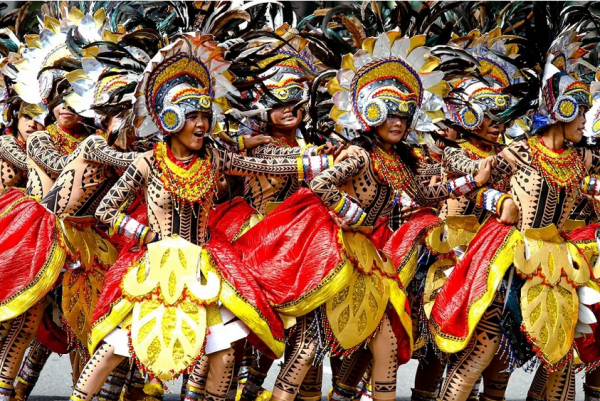
- The Spanish Imprint (1565-1898): The Spanish didn’t just influence religion; they systematically rebuilt society. They introduced the encomienda system, a precursor to feudal landownership that created a powerful landed elite class—the ilustrados and later, the oligarchs who still wield significant power today. Catholicism was a tool of pacification, but Filipinos syncretized it with pre-colonial beliefs, creating a unique folk Catholicism where church rituals blend with indigenous spirit-world traditions. This is evident in festivals like Pahiyos:

Image 2: …at Lucban, Quezon Province. or the intense, sometimes bloody, devotion of Black Nazarene:

Image 3: In a homily at Mass ushering the feast of the Black Nazarene, Cardinal Tagle urged devotees to distinguish between true devotion and fanaticism. - The American Alteration (1898-1946): Following the controversial Treaty of Paris (where Spain sold the Philippines to the U.S. for $20 million), American rule was framed as “benevolent assimilation.” This period was arguably more transformative in daily life than the Spanish era. The Americans established a universal public education system taught in English, effectively making the Philippines one of the largest Anglophone nations in the world. This created a cultural pipeline that persists today, fueling the massive Business Process Outsourcing (BPO) industry and the exodus of nurses, teachers, and seafarers (OFWs) to the West. The American model of government was also implanted, though it would be constantly manipulated by the local elite.

Image 4: Ten days after Spain sold our country to the United States in the Treaty of Paris, another American invasion of The Philipines took place on this day in 1898. President William McKinley issued a proclamation, which he called “Benevolent Assimilation”, in which the United States declared that they would now subject The Philipines to their rule and that the military would carry out the scheduled annexation of The Philipines. - The Core Concept of “Kapwa”: Beyond the Western imports lies a core indigenous value: Kapwa. This is a profound concept of shared inner self, recognizing the fundamental interconnectedness of all people. It is the philosophical root of Filipino hospitality (pakikitungo), camaraderie (pakikisama), and the deep-seated sense of community and family (pamilya). This is why, despite the Western individualistic framework of their institutions, Filipino social life remains intensely communal and collectivist.

Image 5: The concept of kapwa is not merely a cultural expression; it is a way of life for Filipinos. In a world often characterized by individualism and competition, the Filipino belief in interconnectedness offers a refreshing perspective on what it means to live in harmony with others.
Political Landscape: The Democratic Façade and Oligarchic Reality
Labeling the Philippines a “democracy” is technically correct but functionally incomplete. Its political system is better described as an oligarchic democracy or a “cacique democracy,” a term coined by historian Benedict Anderson.
- The Dynasty Problem: Political power is concentrated among a few families. A study by the Philippine Center for Investigative Journalism found that more than 80% of Congress comes from political dynasties. Power and wealth are perpetuated through name recall and control of local resources, making it incredibly difficult for new voices to break through.
- The Populist Playbook: This structure creates fertile ground for populism. Leaders like Ferdinand Marcos Sr. and, more recently, Rodrigo Duterte, have risen by positioning themselves as strongmen fighting the corrupt elite—only to often enrich their own circles and employ authoritarian tactics. The current president, Bongbong Marcos (son of the former dictator), embodies this very dynastic cycle.
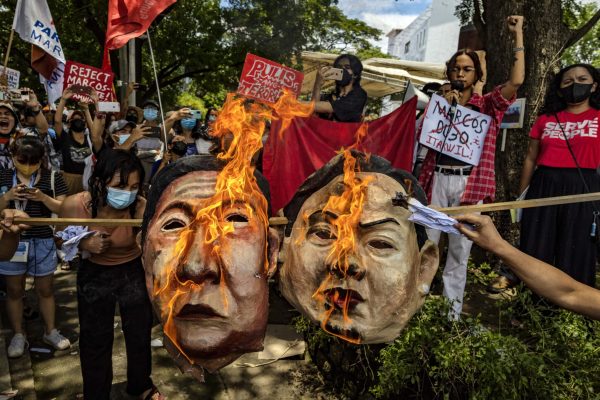
Image 6: Strongman nostalgia, conspiracy theories, and lies. It’s a powerful blend that keeps populists in power. In the Philippines, political clans have weaponized these messages against each other. - The Revolutionary Spirit:It is crucial to remember that this is also the nation of the People Power Revolution (1986), a largely peaceful uprising that ousted a dictator and inspired the world. This spirit of protest remains alive, constantly challenging abuses of power, as seen in the widespread opposition to Duterte’s bloody “War on Drugs.”
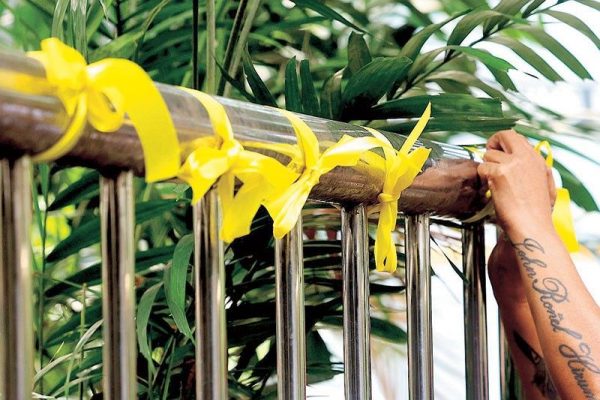
Image 7: Yellow ribbons are tied on the railings around the EDSA Shrine in Quezon City during a mass held ahead of the 39th anniversary celebration of the People Power Revolution.
Economic & Geopolitical Realities: The Geostrategic Pawn
The economic challenges are not merely internal failures; they are also a legacy of colonial and neocolonial economic structures.
- The OFW Lifeline: The phenomenon of Overseas Filipino Workers (OFWs) is the country’s most successful export policy and its greatest social failure. Over 10 million Filipinos work abroad. Their remittances account for nearly 10% of the GDP, providing a vital economic lifeline that stabilizes the currency and fuels domestic consumption. However, this comes at a devastating social cost: fractured families, the “brain drain” of skilled professionals, and the vulnerability of workers to exploitation and abuse abroad. The state benefits from their sacrifice while often failing to protect them adequately.
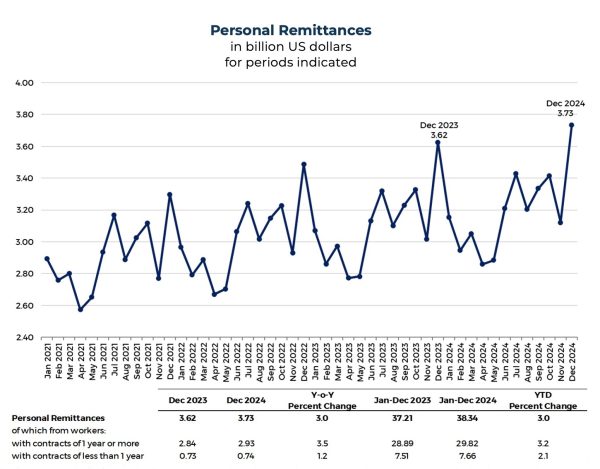
Image 8: Of the personal remittances from OFs, cash remittances coursed through banks reached US$3.38 billion in December 2024, higher by 3.0 percent than the US$3.28 billion posted in December 2023.
On a year-to-date basis, cash remittances rose by 3.0 percent to US$34.49 billion in 2024 from the US$33.49 billion registered in 2023. - The New Cold War Arena: The Philippines’ geographic location makes it a prime battleground for 21st-century great power competition between the U.S. and China. The South China Sea (West Philippine Sea) dispute is not an abstract issue; Chinese coast guard and militia vessels constantly harass Filipino fishermen and military resupply missions within the Philippines’ own Exclusive Economic Zone (EEZ). The country is trapped in a difficult balancing act: its mutual defense treaty with the U.S. provides a counterweight to China, but confronting Beijing directly risks devastating economic retaliation. The presence of renewed U.S. military bases under the Enhanced Defense Cooperation Agreement (EDCA) makes the Philippines a potential frontline state in any future conflict.
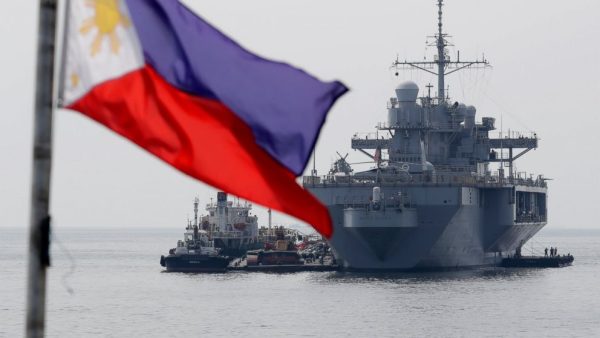
Image 9: Philippines becoming battleground amid heightened US and China rivalry
The Vicious Cycle: Oligarchy, Corruption, and the Political Theater of the Elites
To understand why Philippine politics feels like a never-ending game of musical chairs among a few familiar names, one must look past the democratic façade and into the engine of oligarchic power. The much-publicized rivalry between the Marcos and Duterte families is not a battle of ideologies; it is a temporary fallout between business partners fighting over the spoils of power.
- The Unholy Alliance (That Fractured):
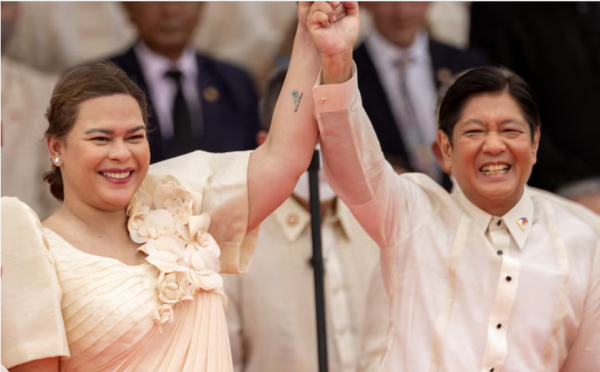
Image 10: Vice President Sara Duterte raises the arm of elected President Ferdinand “Bongbong” Marcos Jr., during the inauguration ceremony at the National Museum in Manila, Philippines, June 30, 2022. REUTERS/ The 2022 presidential election was a masterclass in oligarchic consolidation. Sara Duterte (the former president’s daughter) ran as vice-president alongside Bongbong Marcos (the dictator’s son). This “Uniteam” ticket was a strategic merger of two powerful political machines:
- The Marcos Base: Strong in the Ilocos region (their traditional stronghold) and among those who cling to the nostalgic, fabricated myth of a “golden era” under Marcos Sr.
- The Duterte Base: Rooted in the southern island of Mindanao and built on a populist, strongman appeal of “law and order” from Rodrigo Duterte’s bloody drug war.
They won in a landslide. But the alliance was always a marriage of convenience, not conviction. The current very public feud is not about governance; it’s about the distribution of funds, key government appointments, and control over the machinery of the state—the very perks they promised to share.
- The Anatomy of Corruption: “Where’s the Money?”
The question every Filipino asks in frustration after every administration is, “Nasaan ang pera?”(Where is the money?).@redjasper143 Mr. President may karapatan kaming malaman kung nasaan ang Billion Billions na pera ng bayan . Ang daming naghihirap ang daming nagugutom ? Bakit ang mahihirap lalong ng hihirap ?#buwaya #crocs #magnanakaw #ganid #swapangsaperangbayan #corrupt
- Systemic, Not Sporadic: Corruption is not a bug in the system; it is the system’s primary function. It operates through “pork barrel” funds (discretionary budgets for legislators), overpriced infrastructure contracts awarded to crony-owned companies, and the blatant sale of patronage and protection.
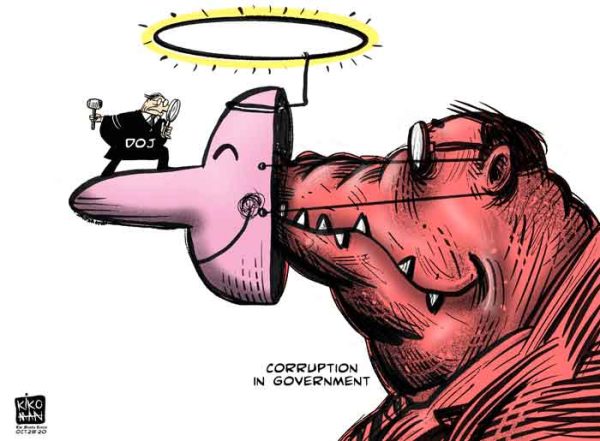
Image 11: CORRUPTION IN GOVERNMENT - The People’s Toll: This grand theft has direct consequences. It means underfunded hospitals without medicine, overcrowded public schools with no new books, and dilapidated infrastructure that fails during every typhoon. The money that should build a nation lines the pockets of a few families.
quote:“THE PHILIPPINES ISN’T POOR, IT’S PLUNDERED”This line circulating on social media cuts straight to the bone. Poverty here is not natural. It is created. Not by fate or bad luck, but by the very people chosen to lead.Look around. Billions vanish in fake projects, overpriced supplies, padded deals. Money for schools, hospitals, and farmers goes straight into the pockets of the powerful. Yet people are told to tighten their belts and sacrifice, as if hunger was their fault, not the result of theft. And when disaster strikes – floods, typhoons, earthquakes – we are told it is simply nature’s anger, too overwhelming to fight. But the truth is different. What makes disaster deadly is not nature alone, but the stolen funds that should have built strong roads, floods control walls, safe homes, and reliable rescue.Philippine land is fertile, the seas are rich, and the people are skilled and hardworking. What is missing is not resources but honesty in government. Corruption does more than steal money. It kills chances. It robs students of books, patients of medicine, workers of fair pay.And the cruelest trick of all is the lie. The lie that the Philippines is poor. Poor countries cannot send billions abroad in stolen money. Poor countries cannot keep dynasties who live like royalty while citizens beg for rice and water. No, the Philippines is not poor. It is being drained by leaders who treat public office as their family business.Calling the Philippines plundered tells the truth. The fault is not with the people, but with the thieves in politics.Let’s stop repeating the lie. The Philippines is rich, and its people have been robbed. The question is whether we will keep allowing the robbery, or finally say: enough.
- The Poverty Trap: Why a Vote is Sold for 1000 Pesos
You have perfectly identified the heartbreaking reality. To judge a poor voter for selling their vote is to misunderstand the calculus of poverty.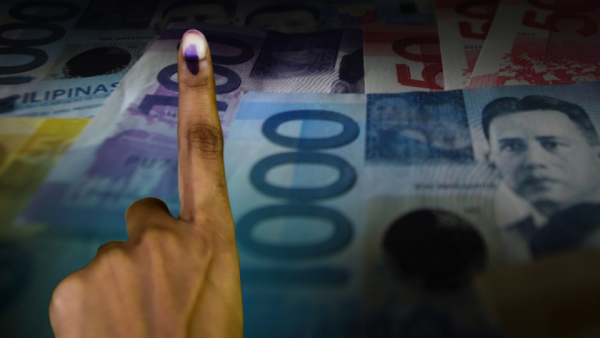
Image 12: Vote-buying seems unstoppable, even if the candidates are aware that under the Omnibus Election Code the offence is punishable by law. PHOTO: PHILIPPINE DAILY INQUIRER
- Immediate Need vs. Abstract Future: For a family struggling to eat today, a 1000 peso bill (and a promise of more help from the local official later) is not a bribe; it is a lifeline. The abstract concept of “good governance” that might bring progress in three years is a luxury they cannot afford.
- A System of Dependence: Politicians have perfected this. They create a system of total dependence where constituents come to them for everything: money for a funeral, a job recommendation, help getting a child into school. This creates a patron-client relationship (utang na loob, or a debt of gratitude) that ensures loyalty come election day. The politician is not a public servant but a benefactor, and the vote is the payment.
- The Culture of Impunity and Forgetting
The most potent tool of the Philippine elite is historical revisionism, funded by immense wealth.
- The Marcos Resurrection: The return of the Marcoses to power is the greatest propaganda victory in Philippine history. A family that plundered an estimated $10 billion from the nation successfully rebranded itself on social media, targeting the youth who did not live through the martial law era. They replaced images of torture and poverty with myths of golden ages and strong leadership, effectively making the public forget the very reasons they were overthrown.
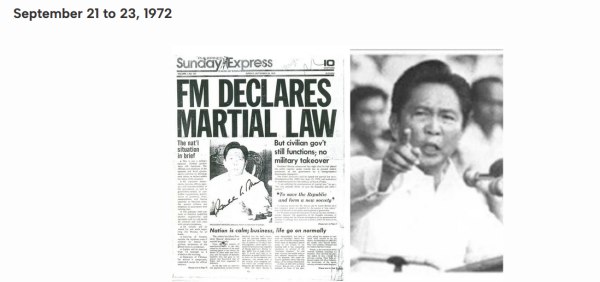
Image 13: On September 21, 1973, the country was placed under Martial Law by the late dictator through Proclamation No. 1081, without making any such public declaration to the public. On the succeeding day, September 22, numerous politicians, especially from the opposition, were arrested and rounded up by military men, including the late senator Beningo “Ninoy” Aquino Jr., who was Marcos Sr.’s main rival and critic at the time. By September 23, this is the time when Martial law was imposed through the announcement of then-press secretary Francisco “Kit” Tatad, with the late dictator himself announcing it on television. - No Accountability: Not a single Marcos has been truly jailed for their crimes. This sends a clear message: the elite are untouchable. You can steal the country’s future, and your children can run for office to reclaim it.
Conclusion of the corruption Section:
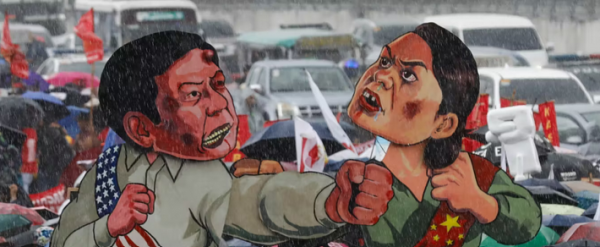
The fight between Marcos and Duterte is a distraction—a telenovela designed to entertain the public while the real business of consolidating wealth and power continues uninterrupted. The Filipino people’s tolerance is not a character flaw; it is a survival mechanism forged in a system designed to keep them poor, dependent, and grateful for the crumbs fallen from the master’s table. Until this cycle of oligarchic rule is broken—through genuine land reform, aggressive anti-dynasty laws, and a mass movement that demands more than just 1000 pesos—the Philippines’ true potential will remain held hostage by its own political elites.
Final Conclusion: A Nation Defying Simple Labels
The Philippines cannot be understood through simple binaries. It is both deeply religious and fiercely pragmatic; a democracy run by dynasties; a nation with a revolutionary heart and a resilient, overseas workforce that keeps its economy afloat. Its identity is a continuous negotiation between its pre-colonial past, its colonial trauma, and its neocolonial present.
The Filipino people, with their unparalleled lakas ng loob (inner strength) and spirit of bayanihan (communal unity), remain the nation’s greatest asset. They navigate the complexities of global power games and domestic inequality with a relentless optimism that is both a cultural trait and a necessary strategy for survival. To know the Philippines is to understand the enduring spirit of a people forever dancing between the shadows of empire and the unwavering hope for genuine sovereignty.