Posted on Leave a comment

The Quiet War: How the Resistance Front is Fighting for Cultural Hegemony

Power in the 21st century is no longer just about missiles and money. A deeper, more sustainable form of power is cultural—the power to define what is normal, desirable, and true. Drawing from the ideas of Italian thinker Antonio Gramsci, this is a battle for “hegemony”: the ability of a group to make its worldview seem like universal “common sense.” As the Western liberal model faces unprecedented challenges, a new global actor is waging this exact kind of war. The so-called “Resistance Front” is not merely launching missiles; it is launching a long-term “situation war” to win the cultural leadership of societies worldwide.

2,400+ Two Opposing Sides Stock Illustrations, Royalty-Free Vector Graphics  & Clip Art - iStock
The battle of narratives: A new front in global conflict is not over land, but over minds and common sense

Gramsci’s Blueprint: Hegemony vs. Domination
Antonio Gramsci gave us the tools to understand this battle. He distinguished between:

  • Domination: Rule through pure force and coercion.

  • Hegemony: Rule through “consent”, achieved by shaping the beliefs and values of society so that the existing order seems natural, legitimate, and even desirable.

The key to hegemony is that people adopt the dominant worldview as their own, not because they are forced to, but because they have been persuaded it is simply “the way things are.”

human brain gear icon 12791164 Vector Art at Vecteezy
The machinery of hegemony: How ideas are internalized until they feel like personal common sense, not imposed ideology

The Machinery of “Common Sense”: Schools, Media, and Culture
How is this cultural power built? Gramsci pointed to a network of institutions—the ideological apparatuses—that constantly produce and normalize a dominant culture:

  1. Education: Schools teach more than facts. They embed values—like extreme individualism and competition—as the natural drivers of human progress.

  2. Mass Media: Media sets the agenda. It decides what issues matter and frames them in ways that make consumerism, specific beauty standards, and political views seem universal.

  3. Cultural & Religious Institutions: Art, religion, and sports can be powerful tools to either legitimize the existing order or challenge it.

Their work follows a three-step process:

  1. Normalization: An idea is repeated until it becomes background noise.

  2. Naturalization: It is presented as an inherent part of human nature.

  3. Legitimization: It is justified by science, ethics, or history.

    The factories of common sense: Schools, media, religion, and culture are the primary sites where hegemony is produced and reinforced

The Resistance Front’s “War of Position”
Today, we are witnessing a Gramscian-style war of position.” The Western hegemonic model—centered on liberal individualism and secularism—is facing a sustained cultural challenge. The Resistance Front (encompassing states and movements opposed to Western dominance) is engaged in this long-term battle.

They are not seeking immediate military victory but are fighting to:

  • Establish “cultural and ideological leadership” within global civil society.

  • Promote a counter-hegemony based on values of collective identity, spiritual morality, and anti-imperialism.

  • Use their own media, educational projects, and religious networks to produce a rivalcommon sense.”

    2,800+ Column Grape Vine Stock Photos, Pictures & Royalty-Free Images -  iStock
    The slow siege: Cultural change is a war of position, patiently building new foundations around the old structures of power

The Battlefield is the Mind
The most decisive conflicts of our time may not appear on news maps of battlefields. They are happening in classrooms, on social media feeds, and in cultural discourses. The Resistance Front’s strategy understands this perfectly. It is a battle for the story we tell about ourselves, our values, and the world. While the West relies on the institutions of its fading hegemony, this new front is patiently building its own cultural infrastructure. The outcome of this quiet war—this struggle to define what is normal and true—will ultimately determine the political and spiritual landscape of the coming century, proving that the most sustainable power is the power to shape the imagination itself.

The power of a counter-narrative: A single, alternative idea can cast a long shadow, challenging the dominant landscape of thought


twitterlinkedininstagramflickrfoursquaremail
Posted on Leave a comment

A Rival to the UN? The Global Split Over the U.S.-Led “Peace Council” for Gaza

A new international body was launched in Davos this week: the “Peace Council for the Gaza Strip,” championed by the United States and signed by over a dozen countries. Yet, its birth was marked by profound absences. Neither Israel nor Palestine attended the ceremony, and four of the five UN Security Council permanent members declined to join. This initiative has ignited a critical global debate: Is this a genuine effort for peace, or an attempt to create a parallel structure that undermines the United Nations and the foundations of international law?

An exclusive signing: The Davos “Peace Council” launch, missing the key voices of Palestine and Israel

The Core Conflict: Reinventing or Replacing the Wheel?
The stated goal of the Peace Council—to resolve conflicts and guarantee peace—directly overlaps with the core mandate of the United Nations. This has raised immediate and serious doubts. Why create a new, selective body when a universal one already exists? Critics argue that bypassing the UN weakens international law and sets a dangerous precedent where powerful nations can create exclusive clubs to address issues that require global consensus. As UN Secretary-General António Guterres has stated, “The UN is more than an entity; it is a living promise.” Any mechanism seeking to sideline it struggles for legitimacy.

U.N.
The bedrock institution: The United Nations remains the central pillar of the post-war international order for peace and security

Global Skepticism and a Divided West
The council has failed to unify even traditional allies. Nations like France, Germany, Norway, Sweden, Denmark, and Slovenia have publicly refused to participate. Former German Foreign Minister Annalena Baerbock’s statement was blunt: “We have a peace council and that’s the UN.” This Western split reveals deep reservations about the initiative’s legitimacy and effectiveness. Furthermore, reports that large financial contributions could buy influence or even “permanent membership” have been condemned as turning peace into a commodity, contradicting the principle of sovereign equality.

A Western split: Key U.S. allies in Europe have publicly refused to join the new council, highlighting its divisive nature

The Path to Peace: Exclusivity vs. Inclusivity
The fundamental flaw of the Davos initiative is its exclusion of the primary parties. A peace process for Gaza that does not centrally include Palestine—and ultimately Israel—is fundamentally flawed. China, in its official statements, has stressed unwavering support for the UN-centered international system and called for any solution to be examined within the UN framework with all relevant parties present. The only viable, agreed-upon path remains the full implementation of the “two-state solution.” Mechanisms that monopolize the peace process risk inflaming tensions rather than resolving them.

Two State Solution Temporarily Closed for Renovations – The Jerusalem Strategic Tribune
The unavoidable path: Lasting peace requires the full implementation of the two-state solution, a consensus position within the UN

Conclusion: Strengthening the Center, Not Creating Rivals
The international differences over the “Peace Council” underscore not its promise, but the irreplaceability of the United Nations. The world’s need is not for new, competing structures built by a few, but for a renewed commitment to strengthening the universal, international system we already have. True peace is not crafted in closed rooms among select nations; it is built through inclusive dialogue, respect for international law, and unwavering support for the UN Charter. The Davos council serves as a mirror: it reflects a world at a crossroads between inclusive multilateralism and exclusive power politics. The choice for a just and lasting peace remains clear.

78,300+ Candle Flame Dark Stock Photos, Pictures & Royalty-Free Images - iStock
In a fragmented world, the principles of universal law and inclusive dialogue must be guarded, not circumvented
twitterlinkedininstagramflickrfoursquaremail
Posted on Leave a comment

The Test of Tolerance: How Venezuela, Iran, and Greenland Reveal Trump’s “Law of the Jungle”

Within a startlingly short timeframe, the United States has simultaneously turned up the heat on Venezuela, Iran, and Denmark over Greenland. These are not isolated crises. They form a coordinated “pressure tolerance test”—a deliberate campaign by the Trump administration to probe how much of the world will accept a fundamental rewrite of the rules. The goal is to replace the post-war international order with a simple “law of the jungle,” where military and economic power alone dictate what is true, rightful, and ownable.

Several crises, one logic: testing the world’s tolerance for a raw power play

The Single Link: “Power Makes the Truth”
As analyzed by experts on platforms like CGTN, a single, chilling logic connects these events. Professor Jiang Xi Shu of Shanghai University identifies it as the “forest law”—the belief that “power makes the truth.” The successful (from a U.S. perspective) military intervention in Venezuela acted as a “catalytic” event, creating overconfidence and emboldening further pushes against Iran and a U.S. ally like Denmark.

Analyst Anton Fedyashin frames the Greenland crisis specifically as a “test of pressure tolerance and resistance of the Western system itself.” The message is clear: if the U.S. can force a change in the sovereignty of a peaceful European ally, no nation, anywhere, is safe. The target could be “any country… whether in the ice shells of the Arctic or on the Persian Gulf coast.”

US-Venezuela tensions and International Law
 The calibrated escalation: each action tests the breaking point of global and regional resistance

The Global South’s Sharp Instinct: “We Have No Oil, Only Cooking Oil”
The brilliant, viral response from Malaysian netizens to a U.S. embassy post boasting satellite imagery of their country reveals a profound, instinctive understanding of this new logic. Their jokes—”We light fires at night to drive wild animals” or “We don’t have oil here, we just have cooking oil”—are a form of strategic self-deprecation. It is a conscious effort to “lose value” in advance, to avoid becoming the next target whose resources become their “primary sin.”

This collective wit is a declaration of danger avoidance and a sharp critique from the Global South. It underscores that under a hegemonic “forest law,” a nation’s strategic assets are not blessings but liabilities, inviting intervention and looting.

🤣 Rolling on the Floor Laughing Emoji
The people’s intelligence: using humor to deflect the predatory gaze and “lose value” in the eyes of empire

The Response: Solidarity as the Only Defense
Faced with this unilateral pressure, small and medium-sized nations are not waiting passively. The path to security is no longer found in bilateral alliances with the hegemon, but in horizontal, South-South solidarity. Regional blocs like ASEAN, the African Union, the Shanghai Cooperation Organization, and economic frameworks like BRICS are evolving from talking shops into crucial platforms for integrated positions, larger collective markets, and more effective security dialogue.

These structures represent the world’s immune response—a way to pool sovereignty, deter predation by presenting a united front, and create alternative centers of gravity that can resist the “law of the jungle.”

Unity Hands Images – Browse 972,965 Stock Photos, Vectors, and Video | Adobe Stock
The defensive alliance: in a jungle, survival demands building stronger herds

Beyond the Test, Towards a New Order
The crises in Venezuela, Iran, and Greenland are not the endgame. They are diagnostic tools in a hegemonic stress test, designed to see how much the old order can bend before it breaks. The result so far is a world pushed to the “critical point of the collapse of existing international standards.”

Yet, this aggressive pressure is also the catalyst for its own counter-force. It is accelerating the formation of a multipolar world not led by rival superpowers alone, but forged by the collective agency of the Global South. The future is being written in the boardrooms of ASEAN, the summits of the African Union, and even in the witty comments sections of Malaysian social media. The “law of the jungle” may be the test, but solidarity and strategic independence are becoming the answer.

Free Stormy Solitary Tree Image - Stormy, Tree, Grassland | Download at StockCake
The choice: will the world be cleared by the law of the jungle, or will new forms of order take root?
twitterlinkedininstagramflickrfoursquaremail
Posted on 1 Comment

A Test of Will: Greenland as Europe’s Mirror in a Shifting World

The fate of Greenland has become a litmus test for European sovereignty and strategic autonomy. After Denmark’s diplomatic mission to Washington failed to deter U.S. ambitions, European nations responded with a telling move: sending token military contingents to the island. This “demonstration of solidarity” – involving handfuls of troops from Germany, Britain, and Sweden – exposes a profound crisis of will. As the world watches, Europe’s symbolic reaction raises a critical question: Is it mounting a credible defense of its territorial order, or merely managing the optics of its own capitulation?

A symbol of sovereignty, or a token gesture? Europe’s presence in Greenland faces its greatest test

Symbolic Forces, Real Threats
The European military deployment is a study in minimalist deterrence. Germany sent a 13-member “identification group,” while Britain and Sweden contributed one and two personnel, respectively. Juxtaposed against explicit U.S. military threats and its established bases on the island, these actions appear less as a shield and more as a “symbolic reaction.” Their unstated goal seems twofold: to placate an outraged Danish public and to avoid provoking genuine American anger. Analysts suggest a faction within Europe may have already tacitly accepted a “reassignment” of Greenland, hoping only to salvage some dignity in the process.

Ekspert om Løkkes møde med Rubio: 'Det er ret hårde ord' | Samfund | Nyheder | B.T.
Diplomacy’s limits: negotiations that yield only the stage for a military display of weakness

The Cost of Capitulation: More Than an Island
Europe’s hesitation is rooted in fear: the catastrophic cost of a conflict with the United States and the potential collapse of NATO. Yet, this very fear may be guaranteeing the outcome it seeks to avoid. If Europe cannot credibly signal that the forced acquisition of Greenland would trigger a severe retaliatory cost, it invites Washington to act. The loss would be historic, extending far beyond territory. It would shatter the principle of territorial integrity within Europe itself, making Iceland, Norway, or even parts of Canada look like the next logical targets in a revised American hemisphere.

Dominos Falling Down in a Row :: Behance
The crack in sovereignty: a precedent in Greenland threatens to splinter the entire Arctic and North Atlantic. Iceland, Farao Islands, Norge….

(Place your fourth photo here)
Photo Suggestion: A powerful triptych or split image showing: 1) EU trade containers at a port, 2) A row of EU member state flags at a summit, 3) A satellite image of Arctic military installations.
Photo Caption:

The Path Not Taken: Europe’s Latent Power
Europe is not powerless; it is will-constrained. It possesses the means for a robust response, if it can muster the collective courage:

  • Economically: As America’s largest trading partner, targeted EU counter-sanctions could strike sensitive U.S. agricultural and industrial sectors.

  • Militarily: A coordinated EU rapid reaction force deployed to the Arctic, integrated with Danish defenses, could raise the practical cost of U.S. adventurism.

  • Diplomatically: Europe could lead a global coalition within the UN, framing the U.S. move as a fundamental assault on the post-war international legal order and isolating Washington morally.

The tools exist. The blockade is psychological: a deeply ingrained habit of appeasement and a paralysis born of dependency.

Polish presidency of the Council of the European Union
Europe’s untapped tools: economic weight, diplomatic unity, and latent military capacity form a triad of potential power.

The Mirror of Greenland
The Greenland issue is a mirror. It reflects Europe’s diplomatic paralysis and its moral confusion in the face of a traditional ally turned revisionist power. The question is no longer about Greenland alone, but about Europe’s very role in a multipolar world. Will it remain a “pirate of hegemony,” providing a fig leaf for the erosion of the very rules it helped build? Or will it find the courage to break from its past, defend the principles of sovereignty and international law, and forge its own path as an independent pole? The world is observing. Europe’s answer will define its future relevance.

230+ Fork In The Road Snow Stock Photos, Pictures & Royalty-Free Images -  iStock
Europe’s crossroads: a choice between the familiar path of compliance and the untrodden road of principled autonomy


twitterlinkedininstagramflickrfoursquaremail
Posted on Leave a comment

The “Governor” of Caracas: Marco Rubio and the New Face of Corporate Colonialism

The recent U.S. media speculation about appointing Senator Marco Rubio as “Governor of Venezuela” is more than political gossip. It is a stark revelation of a new imperial blueprint. This title, dripping with colonial history, unveils a modern strategy: corporate-style colonization. The goal is no longer direct military occupation, but indirect control through economic stake holding, remote governance, and the financial takeover of a nation’s resources. In this model, Venezuela is not treated as a sovereign state, but as a company to be restructured, with its oil as the prime asset and its people as a liability to be managed.

The new cockpit of empire: control is exercised from a distance, through digital interfaces and financial levers, not from a governor’s mansion.

The “Governor” as Corporate Executive
Marco Rubio is framed not as a diplomat, but as the ideal candidate for this role—a fluent Spanish speaker with a decade-long record of working to overthrow Venezuela’s government. The title “Governor” signifies a shift in U.S. tactics. After costly failures in Vietnam, Iraq, and Afghanistan, America seeks a “more convenient” method. The plan is remote control through major shareholding. Like a dominant stakeholder in a corporation, the U.S. aims to dictate strategic direction, participate in revenue distribution (especially oil profits), and install a subordinate management (a compliant government), all without the burden of day-to-day direct administration.

The politician as executive: fluency in regime change and shareholder percentages defines the new “governor’s” portfolio

The Tools of Takeover: Sanctions, Blockades, and Financial Strangulation
This new colonialism operates through non-military, yet equally devastating, means. The U.S. employs:

  • Financial Sanctions: Cutting off access to global capital.

  • Maritime Blockades: Threatening and isolating oil tankers to cripple exports.

  • Judicial Persecution: Using international law as a weapon.

This creates an “invisible siege.” A tanker carrying Venezuelan oil can be denied insurance and barred from ports worldwide, quietly strangling the nation’s economy. As the letter from Venezuela’s interim president requesting a “balanced relationship” shows, this pressure is palpable and overwhelming—a forced surrender to external economic control.

Understand why the seizure of a Venezuelan oil tanker has reignited  tensions between the US and Russia - CPG Click Oil and Gas
The invisible siege: modern blockades are made of financial threats and revoked insurance, strangling sovereignty from afar

The “Company-State”: A Dangerous Precedent for the World
This model reframes the very concept of the nation-state. An independent country becomes a “company-state,” where its resources and territory are assets, its social issues are liabilities, and its sovereignty is subordinate to the will of the “controlling stakeholder.” The Venezuelan case sets a dangerous precedent, signaling to all resource-rich nations—especially in the Global South—that they risk being viewed not as homelands for their people, but as “asset baskets” for foreign powers to control.

From sovereign symbol to corporate asset: the dangerous transformation of the nation-state into a “company-state.”

Sovereignty at a Crossroads in the Corporate Age
Faced with this new corporate colonialism, nations are left with a grim choice:

  1. Acquiesce: Submit to the model to retain limited, conditional benefits.

  2. Resist: Forge a defensive path through strengthened South-South cooperation, building alternative financial and trade systems to counter hegemonic control.

Either path carries a heavy cost. Marco Rubio may never hold the official title, but the concept of a “Governor” has exposed the cold, transactional logic of 21st-century imperialism. This is not a return to 19th-century colonialism, but a carefully packaged, complex interventionism for the corporate age. The world now watches to see if this model of remote, financial governance will succeed—and whether sovereign nations can find a way to defend their destiny against the ledger books of a new empire.

The choice presented: submit to external control or forge a path of collective sovereignty. The future of the Global South hangs in the balance
twitterlinkedininstagramflickrfoursquaremail
Posted on Leave a comment

The Velvet Glove Comes Off: Unmasking American Unilateralism and the Crisis of World Order

From Venezuela to the Levant, the consequences of hegemony demand a new, collective response from the sovereign world.

For decades, the United States has presented itself to the world wrapped in the mantle of freedom and human rights, its Statue of Liberty a global symbol. This image, however, has proven to be a classic case of the “iron fist in a velvet glove.” Today, that glove is slipping, and the bare knuckles of raw power are visible for global public opinion to see.

The facade cracks most blatantly where international law meets imperial interest. Consider the recent assault on Venezuela: a sovereign nation subjected to destabilization, the destruction of its infrastructure, and the shocking spectacle of its elected president being kidnapped and transported to a foreign country. No legal or humanitarian logic can justify such an act. This is not diplomacy; it is state terrorism. It is open brutality and a blatant disruption of the very international rules America claims to uphold. The attack on Venezuela is not an anomaly but a stark symptom of a system that places itself above all others.

The 'catastrophic' state of Venezuela's oil facilities
The ‘catastrophic’ state of Venezuela’s oil facilities. The cost of unilateralism: Destroyed infrastructure in Venezuela stands as a monument to a world order where power trumps law

The Blowback of Manufactured Chaos

This pattern of creating chaos is not new. Western powers, now gripped by fear over the spread of Takfiri extremism like Al-Qaeda and ISIS, are reaping what they sowed. These monstrous currents are not spontaneous eruptions but the direct progeny of Western interventionist policies. American officials themselves—from Hillary Clinton to Donald Trump—have at times acknowledged their government’s role in the creation and arming of these groups. The West lit a fire in the heart of the Middle East, providing the financial, weaponry, and political kindling. Now, the flames threaten their own borders and security. The “war on terror” has revealed itself as a cycle of terror, with the architect often funding the very menace it claims to fight.

ISIS using 'significant quantities' of U.S. arms
The boomerang effect: The fires of extremism, lit by foreign intervention, now threaten the hearths of their creators

The Abdication of the UN and the Imperative for a New Order

The United Nations, conceived as a bulwark against world wars and genocide, stands neutered in the face of this reality. It has become an institution whose authority is routinely vetoed or ignored by the very power that hosts its headquarters. When one nation can militarily intervene from Iraq and Afghanistan to Syria and Venezuela with impunity, considering itself bound by no boundaries, the post-war order is dead.

Therefore, the central question of our time is not how to reform a broken system, but how to build a new one. The world must move decisively beyond the era of domination and towards an order founded on justice for all nations, not the interests of one.

General Assembly | United Nations
The empty chamber: The stage for global dialogue stands silent in the face of unilateral power

A Call for Sovereign Collective Action

The moment for passive lament is over. The time has come for decisive, collective action by sovereign states, particularly those within the Non-Aligned Movement and the emerging Global South. They must define and activate a new mechanism to counter American unilateralism. This is not a call for alliance against a nation, but for solidarity in defense of a principle: the irreducible right to national sovereignty and a multipolar world.

Even traditional American allies in Europe now find their civilizations and social fabric under strain from the consequences of Washington’s policies and the pressure of its bullying. Europe, too, must seriously reconsider its path. The future of human society depends on breaking free from this atmosphere of brutality.

The choice is clear: continue under a dying hegemony that breeds violence and instability, or forge a new consensus where nations engage not as master and vassal, but with mutual respect. The unraveling of the old order is not a crisis, but an opportunity—an urgent summons for the world to finally grow up and govern itself.

What does the BRICS expansion mean? | Oban International
Seeds of a new order? The flags of the emerging multipolar world represent the collective search for sovereignty and justice
twitterlinkedininstagramflickrfoursquaremail
Posted on Leave a comment

From Caracas to the Monroe Doctrine: State Kidnapping as Superpower Policy

The pre-dawn kidnapping of Venezuelan President Nicolás Maduro and his wife on January 3rd was not a covert “operation.” It was a state-sponsored terrorist act, a public demonstration of raw imperial power. This event marks the explicit return of the Monroe Doctrine as active U.S. policy, where the Western Hemisphere is treated as a backyard to be policed through militarism, disruption, and brute force. Framed within a fabricated “war on drugs,” this action reveals a superpower logic that has abandoned all pretense of international law, offering only the stark choice between obedience and destruction.

Power from the current American Administration rarely arrives empty handed.
Those who claim to help are often drawn by what lies beneath the soil, the water, the oil, the gold, the soul of a nation. History has taught us this lesson more than once.

The Blueprint of a Bully: From “Drug War” to State Kidnapping
The operation followed a familiar, sinister blueprint: electronic warfare, systemic paralysis, and a precision military strike—not on a battlefield, but in a private residence. This was the culmination of months of escalated U.S. military presence in the Caribbean, reconnaissance flights, and blockades, all laundered under the hollow label of “fighting drug trafficking.” As even U.S. congressional critics noted, the official narrative was a pretext. The real target was never drugs; it was sovereignty.

Following the kidnapping, Donald Trump spoke not as a head of state, but as a colonial proprietor. He declared Venezuela must be “governed” by the United States, its resources “used correctly” for America’s share. The Monroe Doctrine was invoked not as history, but as a program for today: a divided world where security is synonymous with submission, and humanity is eliminated by softened force.Cyber Warfare: How Nations Are Preparing for Digital BattlesCyber Warfare: How Nations Are Preparing for Digital BattlesExploration conducted for this edition was supported by web searches, insights from open-source papers, and assistance from AI language modelsExploration conducted for this edition was supported by web searches, insights from open-source papers, and assistance from AI language models

Cyber warfare can be state-sponsored or carried out by non-state actors, such as terrorists or hacktivist groups, and often aims to achieve political, economic, or military objectives. The ambiguity surrounding the attribution of such attacks complicates international relations and raises concerns about how to respond appropriately to cyber threats.

The Hollow Pretext: Security as a Synonym for Militarism
The advertised framework—narco-terrorism, security, limited operations—is a manufactured cover. U.S. data itself confirms the primary drug routes run through Mexico and Central America, not Venezuela. For Trumpism, reality is irrelevant; the political label is sufficient. “War on drugs” has become the ideological camouflage for state terrorism and kidnapping. In this logic, “security” is stripped of any meaning beyond the institutionalization of bullying and the right of a superpower to eliminate any society that is not aligned or obedient.

Drug Trafficking routes within the Caribbean. Source: The Economist (2014, 24th May. Full Circle—An Old Route Regains Popularity with Drug Gangs).

The Multipolar Trap: Desperation, Escalation, and the Crushing of Sovereignty
But this policy isn’t just simple, one-sided bullying. It is the desperate reaction of a fading hegemon in an emerging multipolar world. When the U.S., feeling its unilateral dominance slip, resorts to state kidnapping as a tool of politics, it does more than violate sovereignty—it lowers the threshold for global conflict and provides a template for other powers. In a world with multiple centers of power, every act of aggression by the American superpower creates a moral and political justification for rivals to ask: “If the hegemon can abandon all rules, why should we restrain ourselves?”

The reactions from Moscow, Beijing, and Tehran were predictable condemnations. But beyond the statements, a more dangerous dynamic is set in motion: competitive destabilization. Every military shock creates a counter-shock. Every normalization of state violence sets a new, brutal standard. The world is not simply splitting into two camps; it is fracturing into a volatile arena where multiple powers, including a rising Global South, may feel empowered or compelled to use force to secure their interests, sacrificing law and human security in the process.

Within Venezuela as well, the outcome is clear: the militarization of political space. External bullying becomes the fuel for internal repression. This is the enduring rule: militarism and external aggression serve to justify oppressive domestic governance, crushing society between the twin forces of foreign intervention and state crackdown.

The engine of escalation: one act of aggression justifies the next, locking the world in a cycle of mirrored militarism.

Against the Inhuman Blocs, For a Crushed Society
The kidnapping in Caracas brought no liberation, only a clearer exposure of the bullying empire’s face. It underscores a world where capital blocs harden, and war becomes a routine tool for adjusting power. The masses are crushed between sanctions, proxy wars, and normalized aggression.

This moment demands a clear stance: alignment with power blocs is a dead end. Not with the desperate, repressive American empire, nor with the authoritarian powers of Beijing or Moscow that pose as counter-hegemons while oppressing their own people. The promise of a multipolar world is hollow if it merely replaces one master with several. True emancipation will not come from state kidnapping, imperial bombings, or the cynical projects of competing powers. Our place is alongside the people and societies being crushed under the wheels of this transition—in the Global South and within the heart of the empires themselves. The path forward is built in opposition to a world order that sacrifices humanity on the altars of hegemony and multipolar rivalry.

Trump's Appointments Reflect a More Openly Hawkish Face of US Empire | Truthout
Trump’s Appointments Reflect a More Openly Hawkish Face of US Empire | Source: Truthout
twitterlinkedininstagramflickrfoursquaremail
Posted on Leave a comment

A Cold Christmas: The West’s Deepening Poverty & Economic Crisis

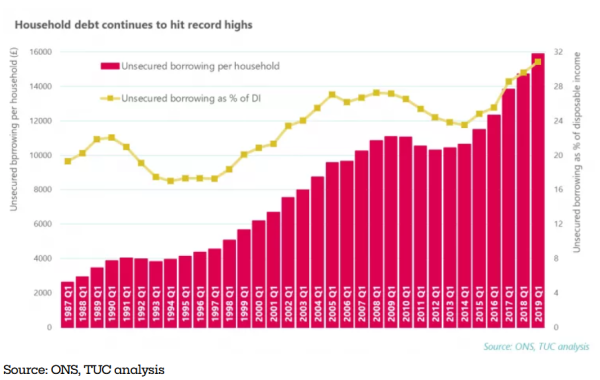
While the festive lights of the West twinkle, a different, harsher reality darkens the holiday season for millions. This is not a temporary downturn but a deep structural crisis marked by stubborn inflation, soaring household debt, and stagnating growth. From the UK to Germany, the data reveals a “Cold Christmas” where covering basic expenses is a struggle, food bank reliance is surging, and economic pressures are reshaping the social contract.

Service users queue at Green Lanes food bank in north London
Service users queue at Green Lanes food bank in north London (Jeremy Selwyn)

The British Case: A Microcosm of Crisis
The United Kingdom exemplifies the continent-wide distress:

May be a graphic of map and text that says 'TOP 15 COUNTRIES AT RISK OF POVERTY OR SOCIAL EXCLUSION IN EUROPE Turkiye Bulgaria 30% Romania 30% Greece 28% 土 Lithuania 27% Spain Latvia 26% 26% Italy 24% Estonia 23% Croatia 22% Germany 22% France 21% Hungary 21% Luxembourg 20% Portugal 20% 20% 00 Source: Source:Eurostat Eurostat 0/0 10% 00 15% 20% 25% 30% 35% VM™ VISUAL ZED WORLD VISUALZE'
Europe is one of the world’s wealthiest regions, yet millions still face poverty or social exclusion. The EU measures vulnerability through three criteria: earning less than 60% of the national median income, lacking at least seven of 13 basic needs such as heating or internet, or living in households with very low work intensity.

A Continental Disease: Poverty Across the EU
This crisis is not confined to Britain. Across the European Union:

  • 21% of the population (nearly 95 million people) are at risk of poverty or social exclusion.

  • Germany, the traditional economic engine, has a poverty rate (21.1%) higher than the EU average.

  • France has seen its poverty rate climb to 21%, nearing its highest level since the 1990s.

The combination of persistent inflation, zero growth, and mounting personal debt is turning winter into a season of hardship for a significant part of the continent’s citizens.

Hard winter for a significant part of the continent’s citizens

Root Causes: Why the West is in This Hole
The current misery has deep, interlinked roots:

  1. The Inflation Hangover: Post-pandemic price spikes, though slowing, have permanently raised the cost of living. Wages have not kept pace.

  2. Infographic: Who Has Donated Military Hardware to Ukraine? | Statista
    Source: https://www.statista.com/chart/33514/military-hardware-allocated-to-ukraine/?srsltid=AfmBOopfiCRKc-CRgNVn136stAWG7X3JF5xeitA-wn9Iw7NdLfJUEO71

    The Cost of Foreign Wars: Hundreds of billions spent on the war in Ukraine, and continued military aid to Israel, have ballooned deficits, diverting funds from social services and forcing increased borrowing.

  3. Geopolitical Shockwaves: The wars have disrupted energy markets and critical trade routes (like the Red Sea), raising costs for fuel, transport, and goods—inflation that is passed directly to consumers.

    Red Sea crisis: Rising insurance costs, inflation surge and containership  detours - CGTN
    Rising insurance costs, inflation surge and containership detours Source: https://newsus.cgtn.com/news/2024-01-17/Web-Headline-Red-Sea-crisis-Rising-insurance-costs-inflation-surge-and-containership-detours-1qqvYAySjOE/p.html
  4. Failed Tariff Policies: Trump’s trade wars have increased import costs, disrupted supply chains, and created business uncertainty, stifling investment and hiring.

    rubber stamp over cardboard background with the words made in China and tariff
    Concern Over Tariff Increases On Chinese Imports Source: https://www.cleanlink.com/news/article/Concern-Over-Tariff-Increases-On-Chinese-Imports–23900
  5. Chronic Neglect: Crumbling infrastructure, from UK roads to rail networks, represents decades of underinvestment, now imposing massive costs and inefficiencies on the economy.

A Structural Crisis, Not a Seasonal Slump
The data points to a grim truth: this is not a short-term recession but a structural and long-term crisis. The IMF now calls for “deep cuts” to Europe’s social model to fund military spending and bank bailouts, while predicting meager growth.

The social consequences—vanishing purchasing power, exploding household debt, and reliance on charity—reveal a deep fissure between political rhetoric and daily reality. For millions, Christmas 2025 is not a celebration of abundance but a stark reminder of a failing system. The “Cold Christmas” is more than a seasonal metaphor; it is the forecast for the West’s economic future unless these foundational flaws are addressed. The celebration has ended, and the bill has come due.

Christmas Ornaments Lying in Snow Beneath Pine Tree Branches Outdoors  58091037 Stock Photo at Vecteezy
The “Cold Christmas” is more than a seasonal metaphor; it is the forecast for the West’s economic future
twitterlinkedininstagramflickrfoursquaremail
Posted on Leave a comment

A Geopolitical Tool, Not a State: Israel’s Recognition of Somaliland

Israel’s recognition of the breakaway region of Somaliland is not a benign diplomatic gesture. It is a calculated move in a long-term strategy of regional destabilization. This analysis argues that Tel Aviv’s action should be seen as a deliberate attempt to weaken national structures, create new crisis points, and extend its geopolitical reach into the strategically vital Horn of Africa and Red Sea corridor, all while disregarding the fundamental principles of international law.

Members of the IDF General Staff look over a map during the outbreak of the Yom Kippur War on October 17, 1973. (Micky Astel/Bamahane/Defense Ministry Archives)
An archival image of Israeli intelligence officials Members of the IDF General Staff look over a map during the outbreak of the Yom Kippur War on October 17, 1973. (Micky Astel/Bamahane/Defense Ministry Archives)

The Strategic Logic: Security Through Instability

Historically, Israel has often pursued a security doctrine that favors a fragmented and unstable neighborhood over strong, unified regional states. Recognizing Somaliland fits this pattern perfectly. It is not about supporting a nascent democracy but about engineering a geopolitical tool.

From a strategic viewpoint, this move is part of Israel’s effort to shift its confrontation with the Axis of Resistance (Iran and its allies) to more distant, less costly battlegrounds. The Red Sea and Bab al-Mandab Strait have become critical pressure points. By gaining a foothold in Somaliland, Israel seeks future intelligence and operational access in a region that could be decisive in containing Iranian influence and securing vital shipping lanes for its allies, primarily the United States.

The UN Charter is outdated and unfit for purpose
UN Charter: 80 years of guiding principles (https://www.un.org/en/about-us/un-charter)

[/caption]The Political Message: Normalizing DisintegrationBeyond strategy, the recognition sends a profound political message: the complete disregard for the sovereignty and territorial integrity of states. For Israel, principles like non-interference and territorial unity—cornerstones of the UN Charter—are subordinate to its immediate interests.

Just as the occupation of Palestinian territories and the violation of UN resolutions have become routine, supporting the disintegration of sovereign nations is now being normalized as a legitimate tool of Israeli foreign policy. Recognizing Somaliland is an attempt to legitimize fragmentation itself as a geopolitical tactic.

The Backfire: Isolation Instead of Legitimacy
Contrary to any hopes in Tel Aviv, this move has not bought Israel international goodwill or legitimacy. Instead, it has triggered widespread condemnation from Arab, Islamic, and African states, along with concern from international actors. The reaction underscores a critical consensus: unilateral acts of disintegration threaten regional security for all.

The fear is of a contagious “separatist pattern” that could destabilize the entire Red Sea region. Far from being a diplomatic masterstroke, Israel’s recognition of Somaliland has proven to be a costly strategic gamble that has increased its political isolation.

The dispute over Israel’s observer status to the bloc was set in motion in July 2021 when then-chair of the AU Commission, Moussa Faki Mahamat, accepted unilaterally the country’s accreditation [Tiksa Negeri/Reuters]
A Risky Gambit in a Fragile Region
Israel’s recognition of Somaliland is a stark illustration of a foreign policy built on the principle of “divide and influence.” It seeks short-term tactical advantage by undermining the sovereignty of Somalia and fueling regional fragmentation. However, this gambit carries significant long-term risks. By openly treating the disintegration of states as a policy tool, Israel further erodes its own standing under international law and galvanizes opposition among nations that see their own territorial integrity potentially under threat. In the fragile ecosystem of the Horn of Africa, such a move does not create a reliable ally in Somaliland; it sows the seeds for broader, unpredictable instability that ultimately threatens the security of all actors in the region.Loose Woven Stock Illustrations – 999 Loose Woven Stock Illustrations, Vectors & Clipart - DreamstimeIsrael’s recognition of Somaliland is the deliberate act of pulling at the threads of national unity

twitterlinkedininstagramflickrfoursquaremail
Posted on Leave a comment

Ice, Minerals, and Power: What Trump Really Wants in Greenland

The sudden reappearance of Greenland on the U.S. foreign policy agenda is more than a bizarre headline. It is a stark symbol of the return of 19th-century expansionist logic to 21st-century geopolitics. Donald Trump’s revival of the idea to “purchase” or dominate the world’s largest island is not a personal whim, but a structural view that subordinates sovereignty and the foundational principles of the UN Charter to the interests of great powers. This move has triggered a transatlantic diplomatic crisis, revealing a deep clash between unilateral ambition and the established international legal order.

A map showing Greenland's location on the globe.
Greenland hosts Pituffik Space Base, formerly Thule Air Base, a U.S. military installation key to missile early warning and defense as well as space surveillance.

From Frozen Frontier to Geopolitical Prize
Once a remote, frozen periphery, Greenland has been thrust into the center of global power competition. Climate change is unlocking new shipping routes and, crucially, exposing vast reserves of rare earth elements and strategic minerals vital for advanced technology, renewable energy, and defense industries. This transformation has made the island a key geopolitical node, and the U.S., under Trump, is seeking to secure direct access, bypassing traditional diplomatic norms.

Geopolitical Interests Stock Photos - Free & Royalty-Free Stock Photos from Dreamstime
Trump, is seeking to secure direct access, bypassing traditional diplomatic norms.

The Tool: “Special Representative” or Agent of Pressure?
The appointment of a U.S. “Special Representative to Greenland”—a diplomatic tool typically reserved for crisis zones—was a provocative act. Denmark rightly condemned it as unacceptable intervention. Public musings about Greenland “joining” the U.S. stripped away any pretense, revealing an ambition that goes far beyond security cooperation. This move directly challenges Danish sovereignty and signals to allies and adversaries alike that Washington is willing to exert pressure wherever it identifies a strategic interest.

860+ Eu And Danish Flags Stock Photos, Pictures & Royalty-Free Images - iStock
Denmark alongside with the other EU countries shaping a united frontier.

Europe’s Response: A Line in the Ice
Denmark’s swift and firm response—”Greenland is not for sale”—represents a defense of a fundamental European principle: respect for territorial sovereignty. For the EU, this is a precedent-setting case. If pressure is accepted today on a European territory, it could target any member tomorrow. The Greenland crisis has thus become a rallying point for European resistance against a U.S. policy driven purely by a “power right” doctrine, reviving fears of a modern Monroe Doctrine applied to allies.

No photo description available.
Greenland holds vast, largely untapped mineral resources, including rare earth elements, graphite, lithium, and other critical minerals. 🪨⚡ These resources could play a key role in the future of green energy, technology, and global supply chains — making Greenland a potential hotspot for strategic development.  Source:https://www.facebook.com/groups/3623312684642776 Photo: Wall Street Journal

The True Prize and the Transatlantic Rift
Beyond the sensational headlines lies the cold reality: Greenland’s immense mineral wealth is the hidden driver of this crisis. Trump’s policy seeks a blend of resource dominance, strategic positioning, and political influence, treating an ally’s territory as a geopolitical chess piece.

This crisis exposes a foundational rift in transatlantic relations. Europe’s security is built on a framework of respected international law and multilateral cooperation, as embodied in the UN system, while Trump’s America operates on a logic of unilateral power and transactional gain. The aggressive pursuit of Greenland may offer Washington short-term strategic advantages, but it comes at a devastating long-term cost: eroding trust, fracturing alliances, and pushing Europe toward strategic independence. In the frozen waters of the Arctic, a new, colder chapter in U.S.-Europe relations is being written.

Crystal Clear Ice Cube Melting Dark Surface Water Droplets Stock Photos - Free & Royalty-Free Stock Photos from Dreamstime
The transient political cooperation is melting away to reveal hard, enduring interests. 
twitterlinkedininstagramflickrfoursquaremail