Introduction: 🇺🇸💰⚠️
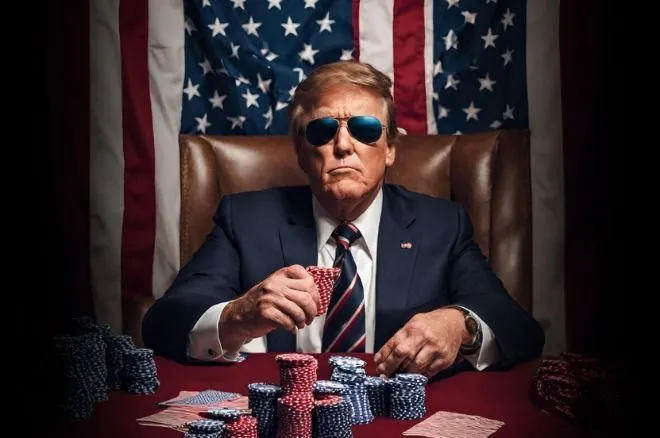
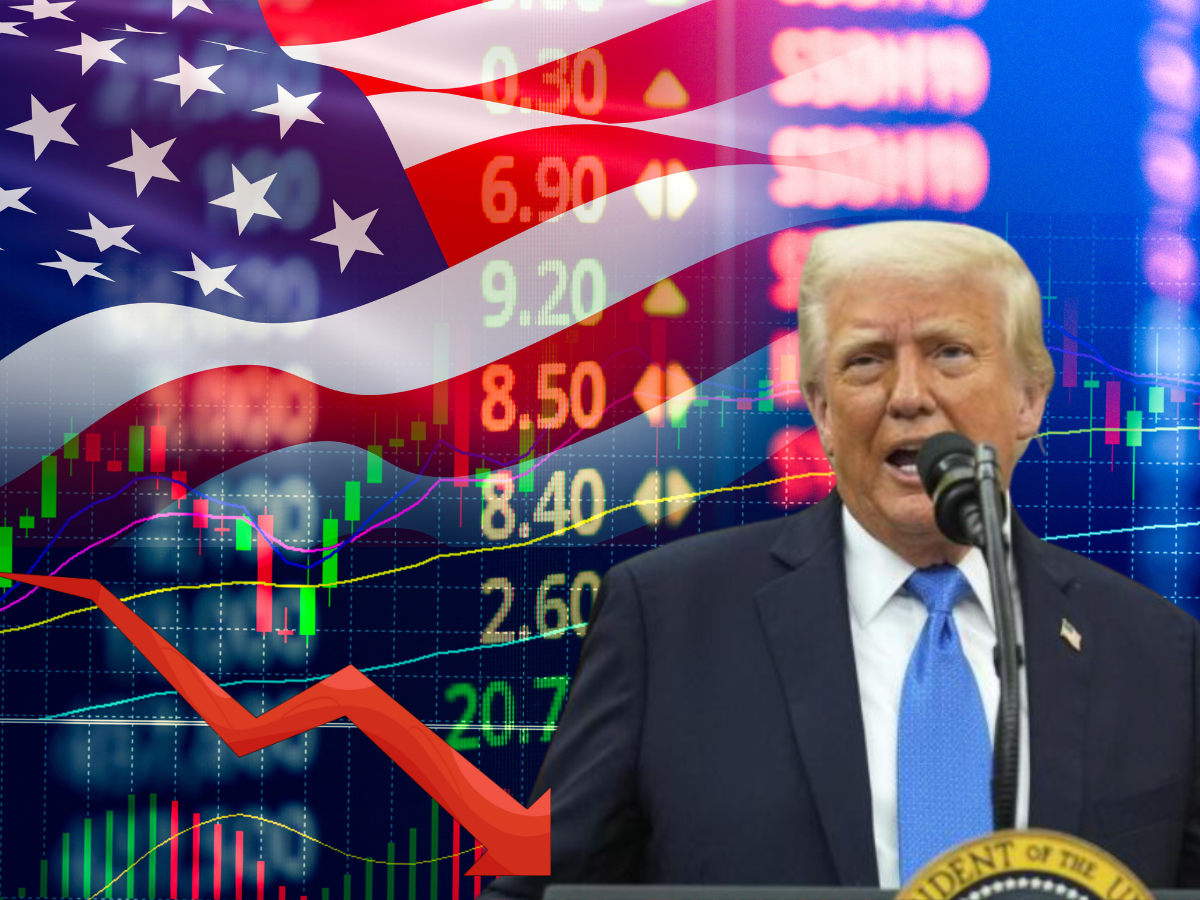
The recent disclosure of Trump’s financial transactions—hundreds of millions of dollars in the first quarter of 2026 alone—has raised a serious question: Is Trump simply politicizing, or is he actively swinging from power as president to build personal wealth? 🤔💵
According to Reuters, during this period, Trump engaged in between $220 million and $750 million in transactions involving shares and bonds of major American companies—companies that are directly influenced by government decisions. 🏛️📊
From the perspective of experts, Trump shocks the markets with contradictory positions about war, tariffs, and negotiations—including the recent negotiations with Iran—while he, his family, and those around him quietly benefit from the very volatility he creates. 🎭💸
&format=webp&quality=medium)
Wealth Building from Power: Trump, Family, and Close Oligarchs 🏰💼
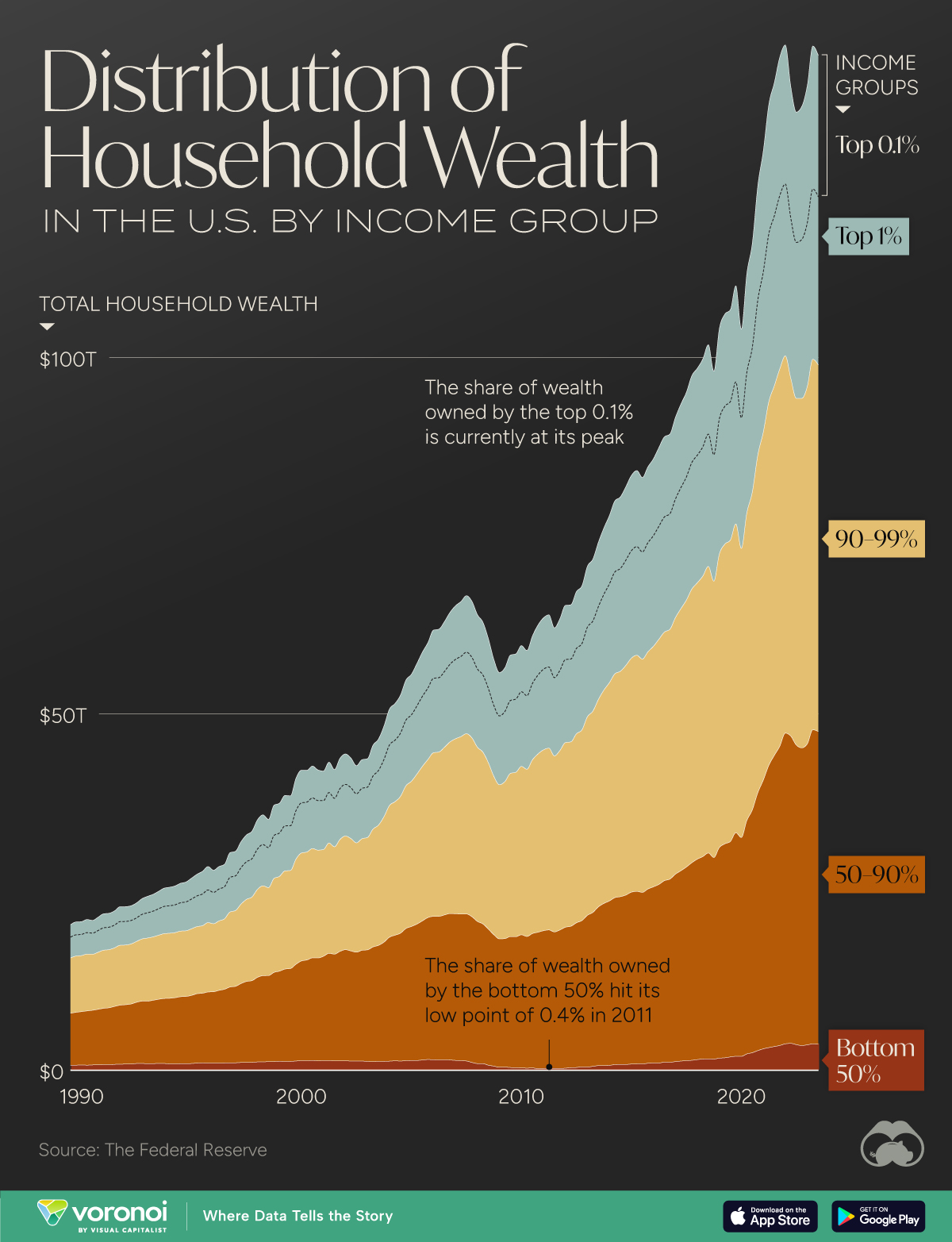
Many believe that Trump’s return to the White House was not just a political event. For him, his family, and a circle of billionaires close to power, it became a great opportunity to increase wealth and financial influence. 📈💰
The main issue is not that Trump or those around him are rich. The problem is that in his era, the line between public power, private interest, family brand, and market interests has been blurred in an unprecedented way. 🔀❌
This is no longer politics. This is wealth extraction through governance. 🏛️➡️💵

1. The President with Increasing Wealth and Intertwined Interests 📈🏛️
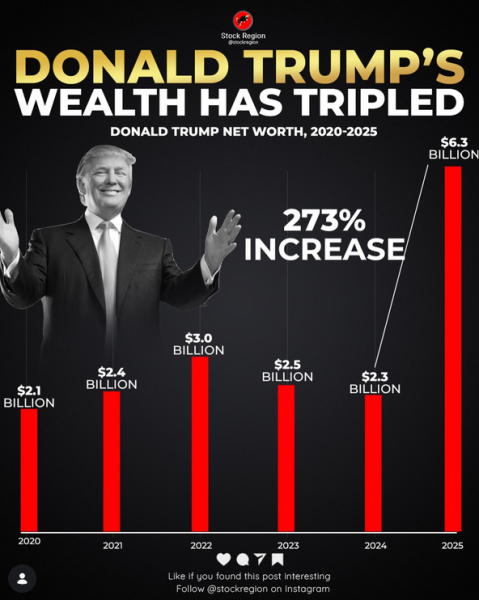
Forbes estimates show that Trump’s wealth reached approximately $6.5 billion in 2026**—about **$1.4 billion more than the previous year. Even if these figures are not perfectly accurate, they clearly show that Trump’s return to power was accompanied by a major leap in his personal wealth. 💰🚀
Beyond this increase, new financial disclosure documents reveal:
-
At least $220 million in transactions involving bonds and shares of American companies in the first quarter of 2026
-
The total value of these transactions could reach up to $750 million in the announced periods
The Trump Organization has stated that these transactions were carried out by third-party managers. But the ethical issue remains: should a president whose policies directly affect the shares of technology, defense, banking, and energy companies have such broad and active financial interests at the same time? 🤔⚖️
2. The Trump Family: Turning a Last Name into a Revenue Machine 🏷️💸
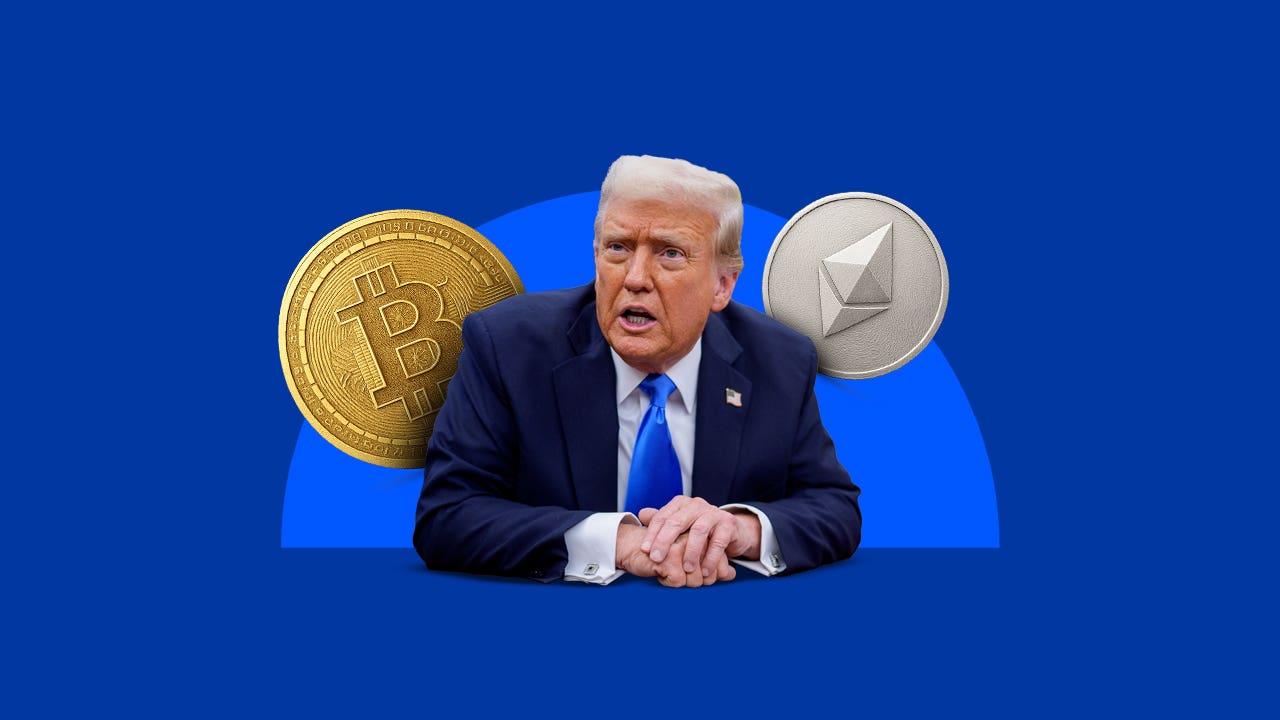
In the case of the Trump family, the field of crypto and cryptocurrency has become one of the clearest examples of turning political power into economic benefit. 🔗💰
According to Reuters’ investigative report:
-
The Trump family earned more than $800 million from the sale of crypto assets in the first half of 2025 alone
-
They likely have billions of dollars in unrealized profits or “on paper” gains
The Trump Organization had approximately $802 million in revenue from crypto projects in the same period—a figure that completely overshadows the family’s traditional income from real estate, golf, and branding. 🏌️♂️🏢
This is no longer a question of an ordinary family business. The president’s family is active in a market where his government decides on regulations, legitimacy, and future. 📜🔮
3. Elon Musk: The Oligarch Close to Power 🚀💰
Elon Musk is a clear symbol of the oligarchy close to Trump—someone who is not just a wealthy entrepreneur but a political actor with direct influence on the government and the market. 🎭🏛️
According to Reuters:
-
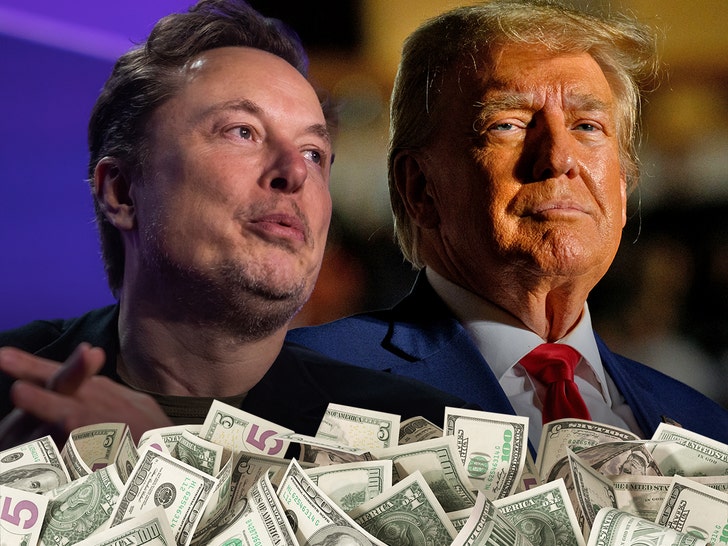
Musk spent more than $250 million to help Trump win the 2024 election
-
This makes him not just a political supporter but a major investor in Trump’s return 💵✅
Musk’s fortunes reached record highs during this same period:
-
In May 2026, Forbes estimated his assets at approximately $782 billion
-
Business Insider estimated his wealth at $722 billion
Not all of this increase can be directly attributed to Trump. But Musk’s political closeness to the government, his enormous corporate contracts, his influence in policymaking, and the jump in his assets cannot be ignored simultaneously. 📈🤝
4. The Circle of the Rich Around the Government: Cabinet and Friendship Economy 💼🤝
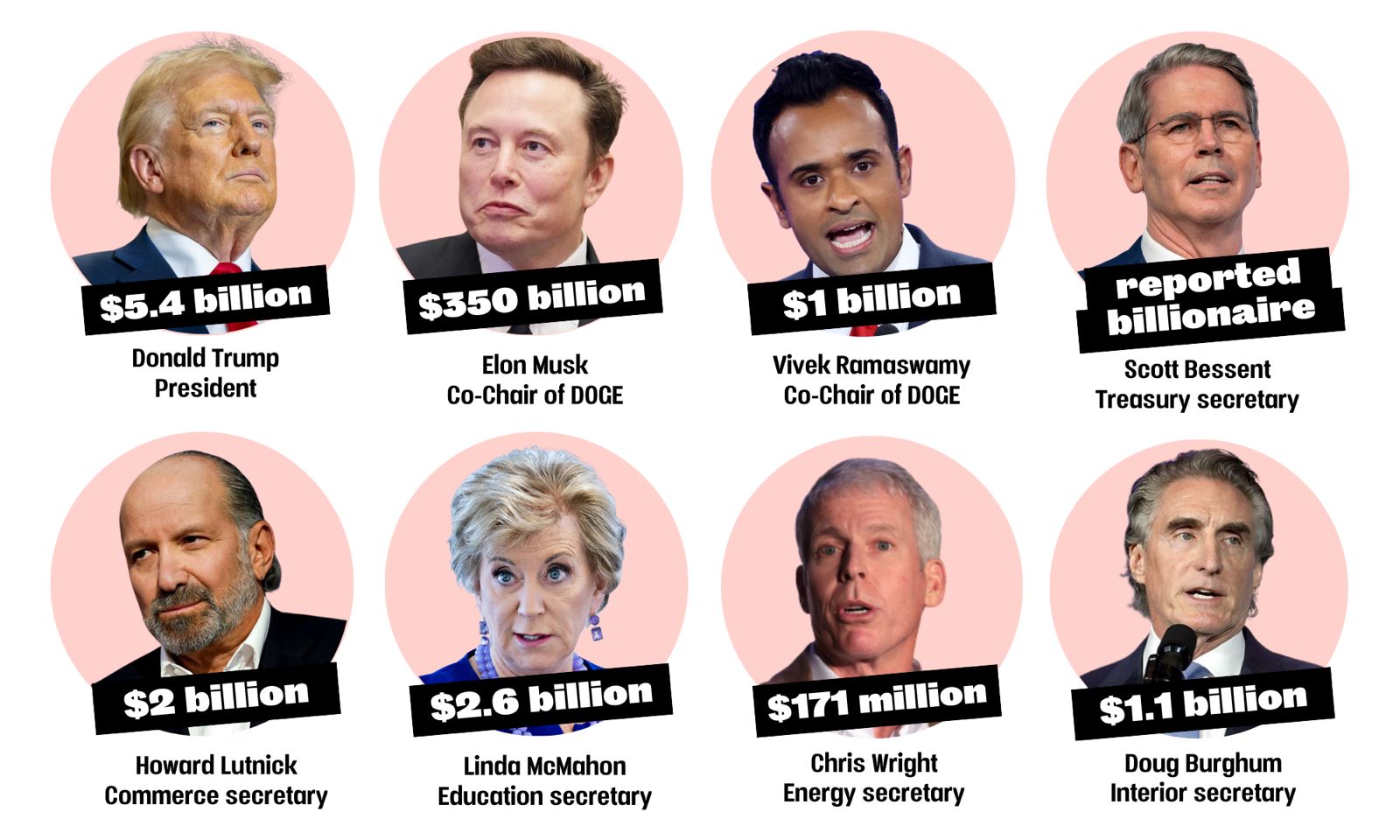
From the very beginning, the second Trump administration was known for the strong presence of billionaires and very wealthy managers. Forbes described Trump’s cabinet as the richest cabinet in American history. 🏛️💰
This combination shows that his government not only has the support of the rich but has become an environment for the direct presence of the rich in public decision-making. 🎭⚖️
This pattern is not limited to the cabinet. Companies in Trump’s financial portfolio—including technology and defense firms—are directly affected by government policies.
When the president, his family, his financial backers, and his close billionaire allies are simultaneously interested in the same markets the government decides about, the name for this is not economic success. It is the friendship economy—where proximity to power becomes an asset. 🔗💵
Political Volatility: From Belligerence to Playing with Negotiations 🎢🗣️
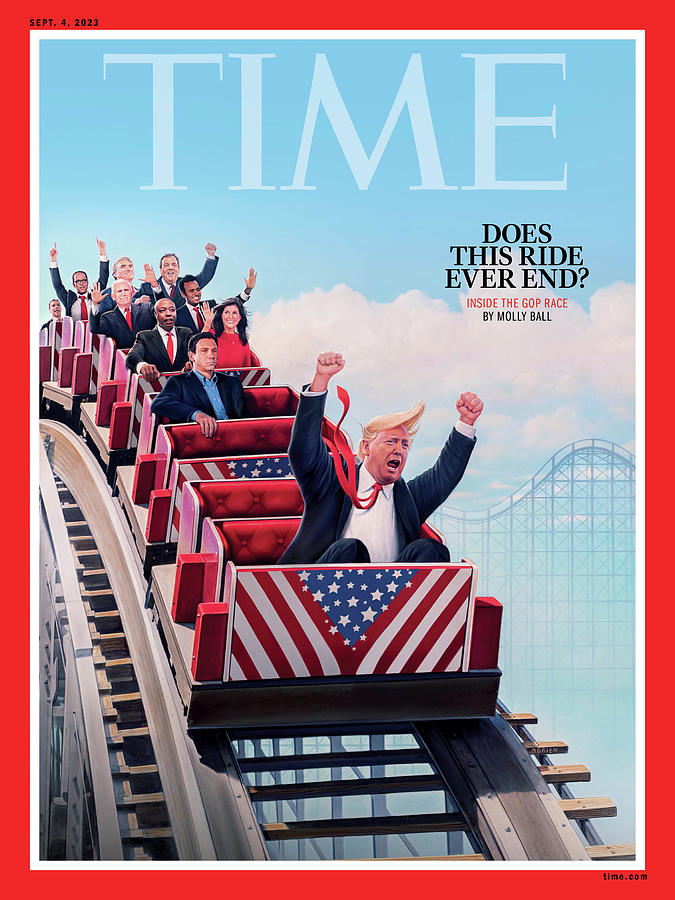
Trump is not just present in the market. He has become one of the main producers of fluctuations in the market.
He differs from an ordinary investor in a critical way: his every sentence, threat, retreat, or promise can move stock prices, oil, gold, dollars, and risky assets. 📊💥
When such a person has a financially active portfolio at the same time, the issue is no longer personal asset management. It is the transformation of political power into a lever to influence the market. 🏛️➡️💰
The disclosure of thousands of stock transactions in the first quarter of this year—in companies affected by his government’s policies—is deeply concerning from this angle.
The Iran Pattern: Contradiction as Strategy 🔄🇮🇷
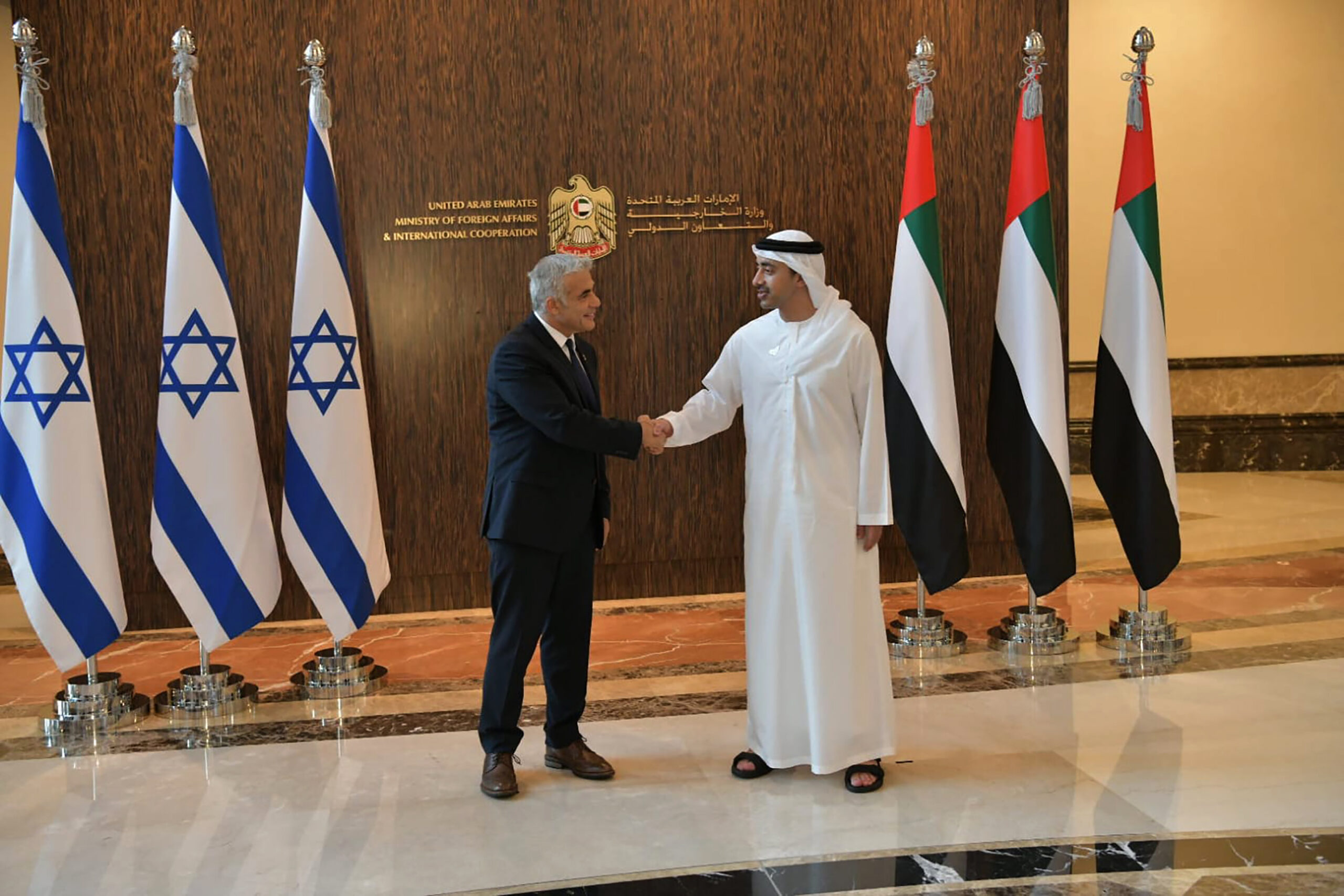
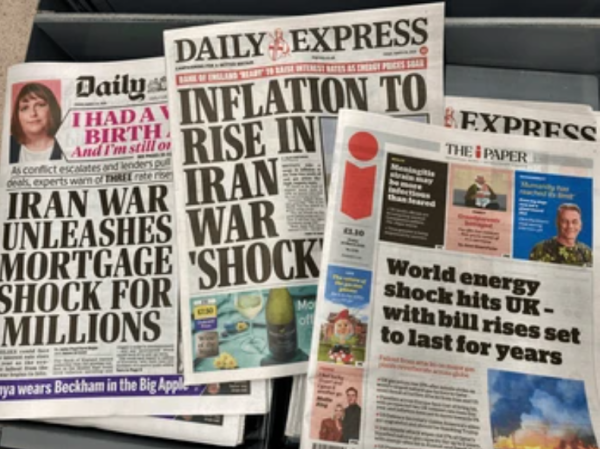
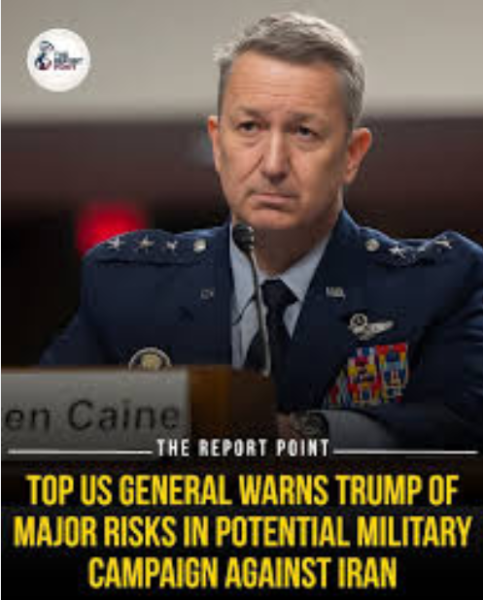
Experts believe Trump’s behavior pattern feeds the market not with stability but with shock. On tariffs, trade wars, military threats, embargoes, negotiations, and agreements, he has repeatedly pushed investors from risky markets to safe havens—and then back to risk again—with sudden messages and rapid changes in position. 🎢💼
The same pattern has repeated in the face of Iran:
-
One day: Trump speaks about the progress of negotiations and how close an agreement is 🗣️✅
-
The next day: He emphasizes he is not in a hurry and the blockade remains until the agreement is signed 🗣️❌
-
One day: He talks about reopening the Strait of Hormuz within the framework of an agreement 🗣️🌊
-
The next day: He threatens that if Tehran does not accept Washington’s terms, America can resume or intensify attacks 🗣️💣

The Erosion of Trust and Political Responsibility 💔🏛️
This contradiction is the dangerous point: instead of being a tool to reduce crises, American foreign policy under Trump has become an engine of fluctuation production. 🔄💥
Who pays for this fluctuation?
-
Ordinary people 👨👩👧👦
-
Energy consumers ⛽
-
Economies dependent on oil imports 🌍
Who benefits?
-
Trump and his family 👨👩👧👦💰
-
The oligarchs around him 🏦
-
Those with insider knowledge of the next contradictory statement 🎭
From the perspective of public morality, this behavior represents:
-
The erosion of trust in government 💔
-
Disregard for political responsibility 🚫
-
Turning war, negotiation, sanctions, and peace into tools of private interest ⚔️🕊️💰
The disclosure of Trump’s financial transactions is not just about one man’s wealth. It is about a system where power has been privatized, where crisis-making is profitable, and where the line between public service and private gain has been erased. ❌🔀
When the president profits from the volatility he creates, democracy is not functioning. It is being auctioned. 🏛️🔨