Posted on Leave a comment

400 Wars and Millions Dead: The Legacy of 250 Years of “American Civilization” 🇺🇸

What is currently known as the 250-year-old American civilization is the result of more than 400 wars that have left millions dead around the world and destroyed the infrastructure of countless nations. 🌍💥

Since its establishment in 1776, America has waged war after war—justified by nation-building, internal development, global domination, and ultimately, control over the Middle East and Africa. 

The estimated cost of wars since September 11 alone—including the costs of war wounded and loan interest—reaches approximately $6.4 trillion. Hundreds of thousands have been killed, and millions have been displaced. 

The claims of civilization, freedom, democracy, and human rights that America has used to justify its wars? According to the evidence, they are nothing more than excuses. The true purpose has always been the same: secure American interests and plunder other nations. 

A timeline of U.S. wars and conflicts since 1950. Did I miss any? #worldhistory #geopolitics #historyfacts #USA #iranwar
* 250 years. 400 wars. Millions dead. This is the legacy of American “civilization.”


19th Century Wars: Continental Conquest and Early Imperialism 

The wars of this period reflect America’s transition from “continental development” —the dominance of North America—to “foreign development” —the expansion of influence across oceans and distant lands.

War Period Key Outcome
Mexican-American War 1846-1848 Acquired California, New Mexico, Texas; expansion to the Pacific
Spanish-American War 1898 Acquired Puerto Rico, Guam, Philippines; control over Cuba
Philippine-American War 1899-1902 Colonial control over the Philippines; military bases in the Pacific

The Mexican-American War saw the death of 1,733 American soldiers and the participation of 78,718 American troops. Its most important result: the acquisition of vast territories and the completion of American expansion to the Pacific Ocean. 

The Spanish-American War marked America’s rise to the ranks of the world’s great imperialist powers. It created a prototype for imperialist interventions and regime changes outside the continent, opening commercial markets and securing naval bases. 

The Philippine-American War was a harsh example of counter-insurgency warfare and the suppression of national liberation movements—a pattern that would repeat itself many times in the decades to come. 

r/MapPorn - [OC] The United States of Expansionism: Mapping the territorial evolution of the United States.
* From 13 colonies to global empire. Every inch of expansion came through war

World Wars and Cold War: America’s Rise to Global Dominance 

Although the First and Second World Wars were not started by the United States, they were largely effective in securing American international interests and changing international balances in America’s favor. 

After World War II, America emerged as an undisputed global power. With the collapse of the Soviet Union, the unipolar system with American rule officially began. 

War Period Key Outcome
Korean War 1950-1953 Division of the peninsula; reshaping of alliances
Vietnam War 1965-1973 American withdrawal; erosion of trust in US institutions

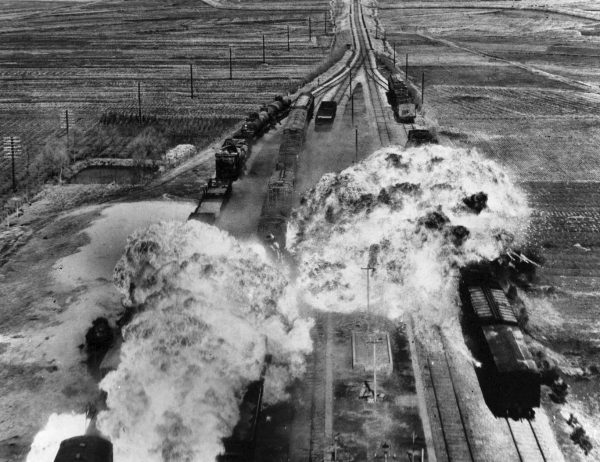
The Korean War was fought without a formal declaration of war—a pattern that would become increasingly common. It ended with a ceasefire and the permanent division of the Korean peninsula. 

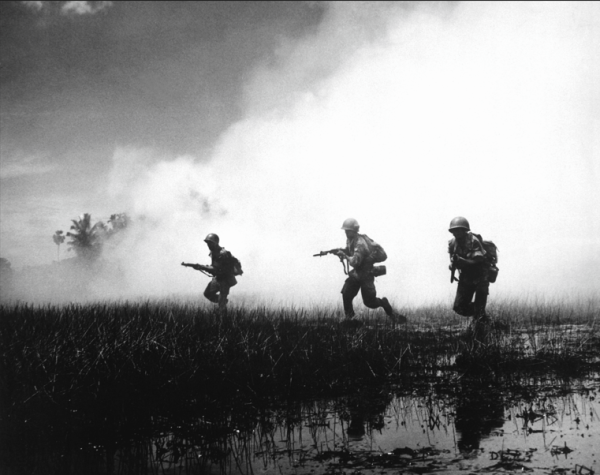
The Vietnam War became a long, costly process of attrition that ended with America’s withdrawal in 1973. More importantly, it eroded internal trust within the United States and undermined the legitimacy of foreign military intervention. 

* ARVN forces assault a stronghold in the Mekong Delta; Source Wikipedia


* US Air Force attacking railroads south of Wonsan on the eastern coast of North Korea; Source: Wikipedia


Post-Cold War Wars: Unipolar Hubris and Endless Attrition 

After 1991, America entered a new era of war—unipolar, technologically superior, and increasingly trapped in wars of attrition. The pretext: the “war on terrorism” following September 11, 2001. 

War Period Key Outcome
First Persian Gulf War 1990-1991 Expelled Iraqi forces from Kuwait
Kosovo War 1999 Ignored UN Security Council resolutions
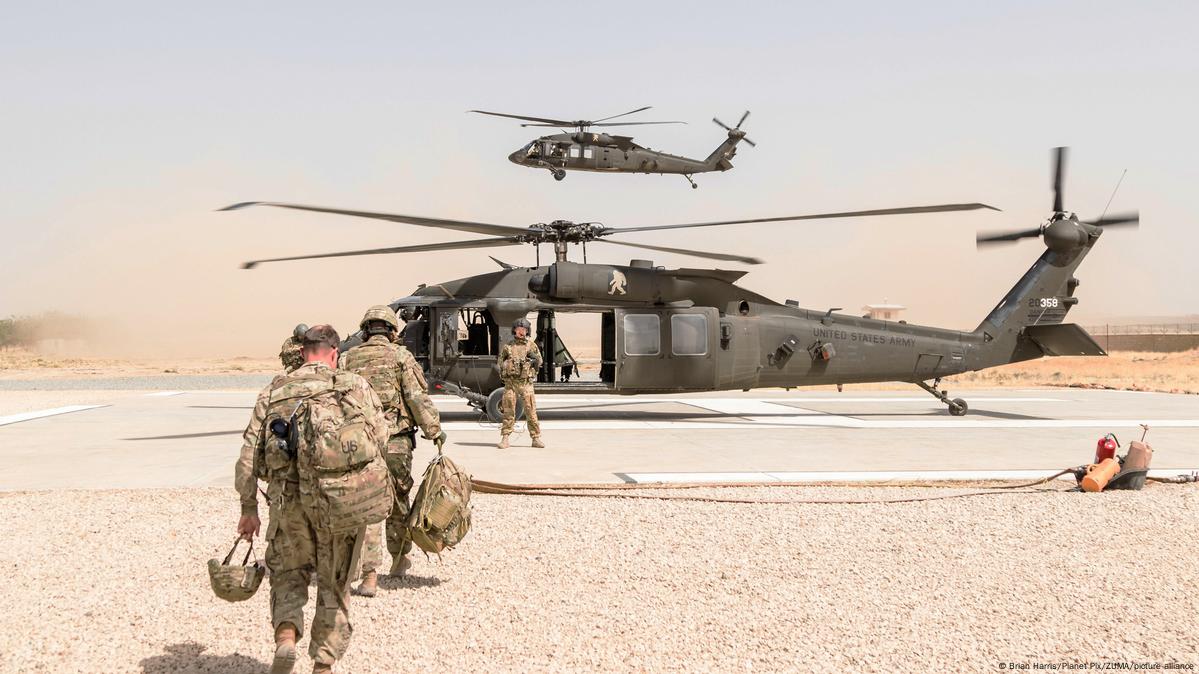
Afghanistan War 2001-2021 Longest US war; ended with Taliban return
Iraq War 2003-2011 Overthrew Saddam; long occupation; trillion-dollar cost
Syria/Iraq (ISIS) 2014-2019 Intense airstrikes, limited ground occupation
Iran War 2026 Ongoing; heavy economic costs; new technologies

The First Persian Gulf War was fought to expel Iraqi forces from Kuwait and destroy military capabilities America had previously given to Saddam Hussein’s regime. 

The Kosovo War was distinctive for ignoring UN Security Council resolutions and relying entirely on intense aerial bombardment without ground forces. 

The Afghanistan War was America’s longest war of attrition—20 years of fighting that ended with the complete withdrawal of US forces and the return of the Taliban to power. It left a huge economic cost and countless human casualties. 

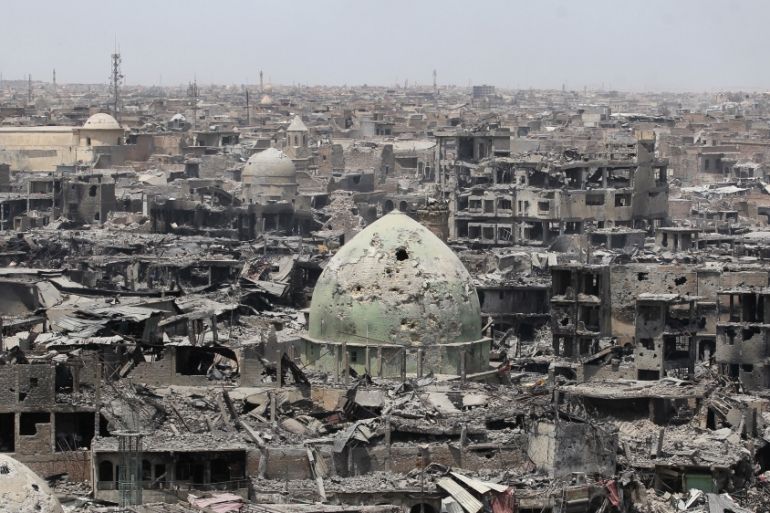
The Iraq War overthrew Saddam Hussein’s regime but led to a long-term occupation and erosion. The US spent more than a trillion dollars and claimed more than a million Iraqi lives. 

Mosul: A city reduced to rubble | Interactive News | Al Jazeera
* The war on terror. A trillion dollars. A million dead. And no victory

The Iran War: A New Chapter of Destruction 

The 2026 war with Iran represents the latest chapter in America’s long history of military adventurism. It has imposed heavy financial and economic costs on the international economy and introduced new technologies such as drones into the battlefield.

The justifications have been layered and shifting:

  • The nuclear case 

  • Regional security 

  • Regime change in Iran 

The pattern is familiar. The result, as always, is predictable: more death, more destruction, more instability. 

r/MapPorn - a map of countries/regions with different colored states
* The region America promised to stabilize. Instead, it left it in flames ; Source: https://www.reddit.com/r/MapPorn/comments/g1osjg/the_middle_eastern_cold_war_breakdown_oc/

What Do the Numbers Say? 

Between 1776 and the present, America has launched hundreds of wars. The numbers are staggering:

Category Number
Total military interventions Approximately 400
Estimated cost of post-9/11 wars $6.4 trillion
Dead (Iraq War alone) Over 1 million
Displaced (millions) Countless

And the justifications have always been the same:

  • 19th century: Civilization and freedom 🏛️

  • Early 20th century: Opening markets and sea crossings 🚢

  • Cold War: Curbing communism ☭

  • Post-Cold War: Regional stability, oil, terrorism, WMDs ☣️

980+ War Headlines Stock Photos, Pictures & Royalty-Free Images - iStock
* The excuses change. The outcome does not

The Disaster Called “American Civilization”

The American civilization, as presented to the world, is a story of freedom, democracy, and human rights. But the historical record tells a different story entirely.

The facts are undeniable:

  • 400 wars in 250 years

  • Millions killed across the globe

  • Trillions spent on destruction

  • Countless lives shattered

  • Nations destabilized and destroyed

The wars against the natives, against Mexico, Spain, and the Philippines. The two World Wars. Korea, Vietnam, the Gulf. Afghanistan, Iraq, Syria, and now Iran.

All fought under different justifications. All with the same result: death, destruction, and the enrichment of American interests at the expense of others. 

The claim of civilization? It is an excuse.

The claim of freedom? It is a mask.

The claim of democracy and human rights? History proves otherwise.

The disaster called 250-year-old American civilization is not a story of progress. It is a story of constant war, endless destruction, and the systematic looting of nations.

The world is still waiting for the “civilization” America claims to bring. Instead, it has received only bombs, blood, and broken nations. 

Crosses for military cemeteries
* Millions dead. For what?
twitterlinkedininstagramflickrfoursquaremail
Posted on Leave a comment

The War That Failed: How Trump’s Iran Gamble Backfired at Home 🇺🇸💥🇮🇷

Introduction: 🇺🇸💥🌍

Donald Trump is now facing one of the most difficult challenges of his political career. On one hand, he wants to maintain the image of a powerful and decisive president. On the other, he is confronting a growing wave of domestic criticism, economic concerns, and political opposition. 🏛️😤

The war against Iran—presented as a show of American power—has instead become a political nightmare. The US Senate has voted on a resolution aimed at limiting Trump’s war powers over Iran. Democratic Senator Raphael Warnock wrote on X:

“The Senate has taken an important step towards ending Trump’s illegal war against Iran. This war has failed in the most severe way, and I will continue to hold this president accountable.” 🗣️⚖️

The failure is no longer just on the battlefield. It is now inside the halls of Congress, on the streets, and in the polls. 📉🇺🇸

Trump touts economic record in State of the Union, seeks reset ahead of  midterms
* The president who promised a quick victory now faces a crisis he cannot control


The Illusion of Deterrence: What Trump Got Wrong 🎭❌

At the beginning of this conflict, Trump tried to present military attacks against Iran as a show of power—the return of “American deterrence.” He and his inner circle believed that heavy military pressure would force Iran to retreat while strengthening the president’s domestic position. 💪🇺🇸

But the course of developments showed that the White House’s calculations were far from the facts on the ground.

What Trump Expected What Actually Happened
Quick Iranian retreat Steadfast Iranian resistance
Strengthened domestic position Growing domestic criticism
Allies would follow Allies stayed out
A show of power A show of failure

Not only were America’s declared goals not achieved, but the increase in insecurity in the region, the rise in economic costs, the threat to US interests, and the concern of Washington’s allies have caused the internal atmosphere of the United States to gradually turn against the continuation of the war. 🔄❌

How a sparse protest became a Capitol Hill riot - POLITICO
* Public opinion is turning. And Washington is listening.

The Ghosts of Iraq and Afghanistan: A Nation That Remembers 👻🏜️

American public opinion has not yet forgotten the costly wars in Iraq and Afghanistan—two conflicts that cost Washington trillions of dollars and ultimately produced no clear achievement for America. 💸💔

Many American politicians are now worried that Trump is once again taking the United States down a path where:

  • The end is uncertain ❓

  • The costs are too heavy ⚖️

  • The strategic achievements are invisible 👁️❌

Even some political currents that previously supported pressure against Iran are now warning about the continuation of the war. The memory of past failures is too strong to ignore. 🧠⚠️

American Soldier sitting alone After War 😨🇺🇸 #military #USArmy #emotional
* The memory of Iraq and Afghanistan is still fresh. America does not want another endless war

The Economic Nightmare: What War Costs at Home 💰📉

Another critical issue is the economic consequences of war for ordinary Americans. Increasing tension in West Asia has always been a driver of instability in energy markets and the global economy. ⛽🌍

As conflicts spread, concerns are growing about:

  • Rising oil prices 📈

  • Disruptions in world trade 🚢

  • Further pressure on the US economy 💥

This has become a serious political threat to Trump, especially when the American economy is already facing:

  • Inflation 🏷️

  • Heavy national debt 🏦

  • Deep social dissatisfaction 😤

Many American analysts believe that continuing the war will increase economic pressure on American citizens and lead to a further decline in the president’s popularity. 📉👎

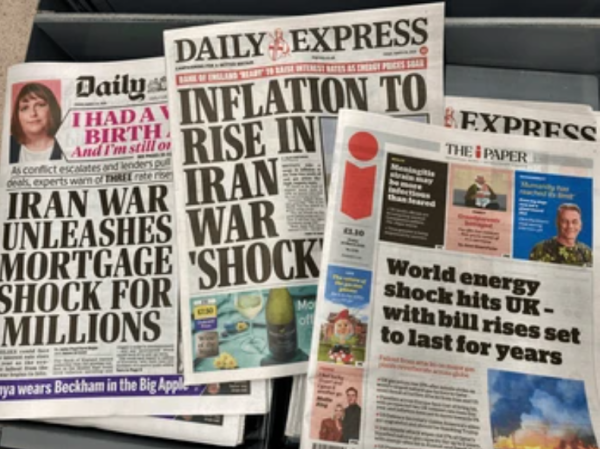
Inflation rose to its highest level in years, and energy costs accounted  for nearly half of the monthly increase.
* War is expensive. And American families feel it in their wallets

The Senate Revolt: War Powers Under Attack 🏛️⚔️

The approval of the resolution to limit Trump’s war powers in the Senate is more than a political maneuver. It is a sign of the increasing gap within the American political structure. 🔍💔

Senators opposing Trump are sending a clear message: the American president cannot lead the country into a major war without the supervision and approval of legal institutions. 📜❌

This shows that even within the American government, concern about Trump’s unpredictable decisions has increased. Many critics believe that the president, with an emotional and personal approach, has brought the national security of the United States into a dangerous gamble. 🎲⚠️

Image
* Congress is pushing back. The war powers resolution is a warning shot

The Media Turns: A Critical Tone Emerges 📰🎙️

At the same time, American media has gradually adopted a more critical tone toward the war. In recent weeks, numerous reports and analyses have been published about:

  • The staggering costs of war 💸

  • America’s inability to achieve its goals 🎯❌

  • The possibility of the crisis spreading 🌍🔥

Even some media outlets close to Republicans have expressed concern about continuing this process. This change in the media environment shows that the war, contrary to Trump’s expectations, has not been able to create the necessary political and social consensus in America. 📉🗣️

* The media tide is turning. Even Republican-leaning outlets are expressing concern

The Global Cost: Losing Focus on the Real Competitors 🌍👀

Part of the concern in Washington goes back to America’s international position. Many US analysts believe that entering a new war in West Asia—while the United States faces heavy competition with China and Russia—disrupts Washington’s strategic focus. 🎯❌

From their perspective:

  • Being caught in a long crisis in the region weakens America’s power 📉

  • It gives international competitors more opportunity to increase their influence 📈

  • The real battle is elsewhere, but the resources are being drained here 🏜️

The war with Iran is not just a regional conflict. It is a strategic distraction at the worst possible time. ⏰⚠️

The Need to Think More Clearly About 'Great-Power Competition' | RAND
* While America fights in West Asia, its real competitors watch and wait

Conclusion: The Trap with No Exit 🪤🚪

What is happening in America today is a growing fear of repeating past strategic mistakes. The experiences of Iraq and Afghanistan remain as symbols of the failure of America’s interventionist policies—still fresh in the minds of both society and political elites. 🧠💔

Now, many fear that the war with Iran will turn into an even more complicated crisis. Unlike some other countries in the region, Iran has extensive political, security, and regional capacities. This makes any conflict with it:

  • Costly 💸

  • Unpredictable ❓

  • Potentially endless 🔄

Trump now stands at a crossroads. Continuing the war may intensify pressure against him and even threaten his political position inside America. Many analysts believe the White House will have to choose between:

  • Continuing its military adventure 🎯

  • Accepting the internal political realities of the United States 🏛️

Starting a war is easy. Ending it is hard. And in the case of Iran, Trump is discovering that the exit door may not even exist. 🚪❌

The war has failed—not just on the battlefield, but in the Senate, in the media, and in the hearts of the American people. 🇺🇸💔

* Starting a war is one thing. Ending it is another
twitterlinkedininstagramflickrfoursquaremail