
September 11, 2001 was not just a terrorist incident on American soil. It was a turning point that changed the security, military, and geopolitical relations of the world for decades. On that day, nearly 3,000 people were killed.
But what started after that was much more than a response to a terrorist attack.
By declaring a “global war on terrorism,” America entered wars that included Afghanistan, Iraq, and then parts of Pakistan, Syria, and Yemen. The war that was supposed to create security became one of the longest and most expensive military projects of the 21st century.
And here is the strategic question: If the goal was to fight terrorism, why did millions of ordinary people pay the main cost in countries where many had no role in the September 11 attacks?
The Unimaginable Toll: 4.5 Million Dead 📊
“Costs of War” research estimates that at least 4.5 to 4.7 million people died in the post-9/11 wars in Afghanistan, Pakistan, Iraq, Syria, and Yemen as a direct and indirect result of the wars.
But here is what makes this number even more devastating:
A large part of these casualties occurred not on the battlefield, but as a result of:
-
The collapse of the economy
-
Destroyed medical services
-
Ruined infrastructure
-
Food insecurity
-
The spread of diseases
Therefore, when we talk about the “cost of the war against terrorism,” we should not only see the statistics of those killed on the battlefield. We have to see:
-
A hungry child
-
A patient without a hospital
-
A displaced person
-
A broken family
-
A generation that grew up in the shadow of war

Iraq: The War That Started with “Security”
The US invasion of Iraq in 2003 was an important example of turning a security logic into a geopolitical project.
Iraq did not just face military occupation. Its political, security, and social structures collapsed.
What was the result?
-
A power vacuum
-
The spread of sectarian violence
-
The emergence of terrorist groups
-
Widespread displacement
-
The formation of an environment that later provided the basis for the growth of ISIS
This experience has an important strategic lesson:
Sometimes trying to create security through military power—if done without understanding the social and political structure of the region—can lead to the production of more insecurity.

Afghanistan: Two Decades of War and a Big Question
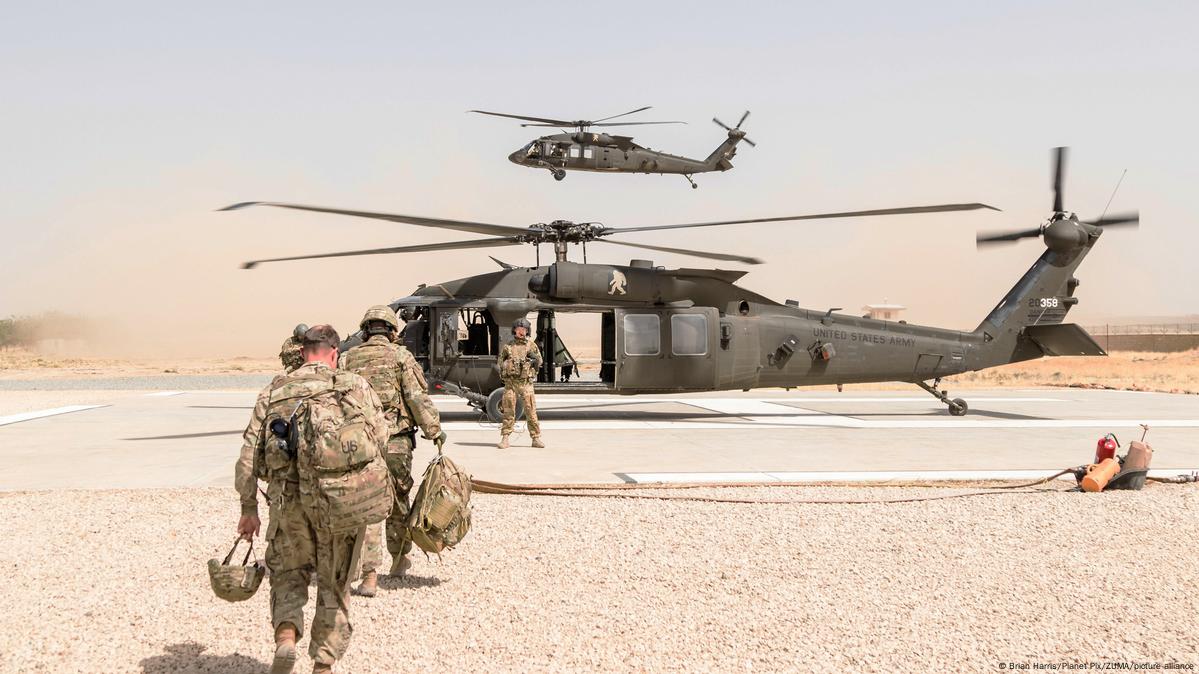
Afghanistan witnessed nearly two decades of military presence by America and its allies. America entered with the slogan of destroying terrorism and establishing stability.
But after years of war, American forces left—and the Taliban once again took power in Kabul.
This question still persists:
If twenty years of war, thousands of billions of dollars in spending, and a large military presence failed to create lasting stability—was the problem just a lack of military power? Or was the strategy chosen fundamentally wrong?
This is the point where strategic analysis should move away from slogans and look at the record.
What About the “Warning to Jews” Claim?
In the years after 9/11, there were reports in the media that thousands of Jews or Israelis were already aware of the attacks and were banned from the Twin Towers.
This claim has no valid documentation.
The report of the US State Department has explained:
-
The number “4,000 Israelis” was first related to a list of Israelis believed to be present in New York and Washington
-
This number was then mistakenly converted into the claim of “4,000 Jews who did not go to work”
-
The Mossad warning narrative was formed on the same basis
Criticism of American and Israeli policies is more powerful when it relies on provable documents and facts, not on unproven narratives.
The Main Issue: “Cradle of Freedom” or Hegemonic Power? 🗽❓
The issue is not that America has not achieved any democratic achievements or that all its policies should be considered completely invalid.
The problem is the gap between claim and performance.
Great powers usually formulate their national interests in the form of concepts such as:
-
“Security”
-
“Freedom”
-
“Democracy”
-
“Fight against terrorism”
The task of the strategic analyst is to see behind these words and ask:
-
Who decides?
-
Who pays?
-
Who benefits?
-
In whose favor does the balance of power change?

Negotiation or Peace: A Realistic View
Negotiation in itself is not a weakness. Just as war is not power in itself.
Negotiation is meaningful when it is based on:
-
A precise understanding of power
-
Interests
-
Red lines
-
Mutual capacities
Sustainable peace is not the product of one-sided surrender. It is the product of:
-
Balance
-
Deterrence
-
Rationality
-
Accurate knowledge of the other party

The Great Lesson of September 11
Perhaps the most important lesson of September 11 is that nations should not judge the foreign policy of great powers based solely on their slogans.
The criteria should be:
-
Not every claim of anti-Americanism is the truth
-
Nor every claim of American democracy
-
The criterion is the record
-
History should be read with numbers, documents, and the experience of nations 📜
-
Not with advertising
And perhaps the final question is:
If a war in the name of security starts but kills millions of people, displaces millions, and destroys the infrastructure of several countries—do we not have the right to ask again about the definition of “security” and the real goals of that war?
This question is:
-
Not an invitation to hatred
-
Not a negation of negotiation
It is an invitation to awakening. Strategic awakening.
The numbers are there. The documents are there. The experience of nations is there. The only question is: Will we read them?