Secret documents declassified by US Director of National Intelligence Tulsi Gabbard on the verge of leaving office have revealed a disturbing truth: the United States has sponsored or directly operated more than 120 biological laboratories in more than 30 countries—including 46 laboratories in Ukraine. 🏛️🧪
For years, Russia, China, and Iran warned about the existence of such centers. Every time, the United States and host countries firmly denied it. Now, with America’s own declassification, there is nothing left to hide. 📜❌
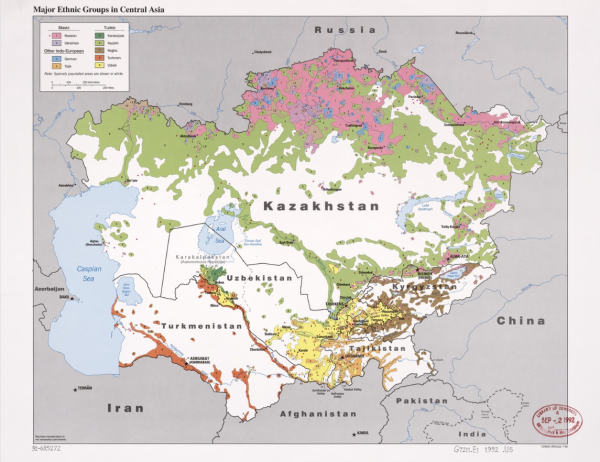
The documents reveal the presence of American biological infrastructure in Azerbaijan, Armenia, Georgia, Tajikistan, Uzbekistan, Kazakhstan, Kyrgyzstan, Iraq, Moldova, Jordan, Afghanistan, and several African nations—all involved in the production of dangerous pathogens. 🌍⚠️
The Hidden Network: Labs Without Oversight 🧬🔒
Some experts believe that the high number of cancer infections and deaths in some of these countries, and the frequent spread of human and animal epidemics in areas close to these laboratories, are directly related to this issue. ☣️💀
The danger is especially acute for countries neighboring Russia, China, and Iran:
-
Citizens of these countries have specific genetic characteristics 🧬
-
This makes it easier for the US and Israel to test biological materials for possible future use against these nations 🎯
-
People in cities near these labs have repeatedly been victims of leakage or controlled release of dangerous American biological substances 🩸
The consequences are chilling:
-
Assassination of scientific and political figures 🎯
-
Contamination of agricultural and horticultural products 🌾
-
Implementation of migration policies and population reduction in target areas 🏠
-
Use of deadly pathogens like anthrax, Ebola, coronaviruses, and others ☣️
Ukraine, Georgia, and Kazakhstan: The Known Cases 🗺️🔬
Georgia: The Lugar Center 🇬🇪
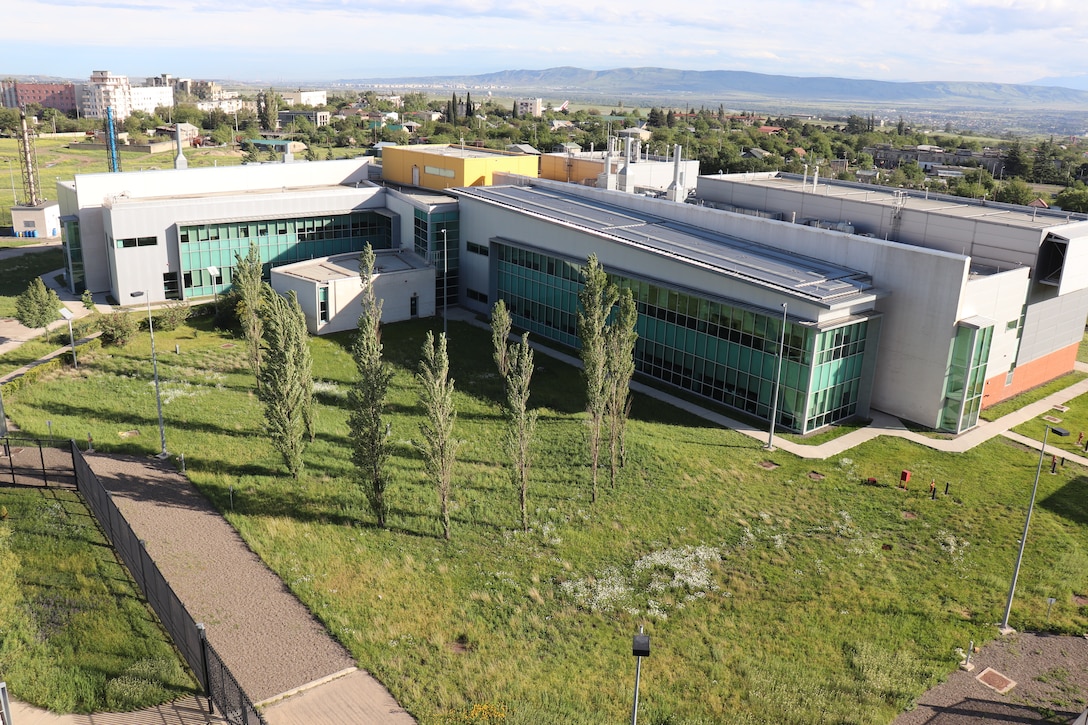
A research center known as the Richard Lugar Center for Public Health Research near Tbilisi, Georgia, has been the subject of intense suspicion. Created with financial and technical participation from the US Department of Defense, it was presented as a program to reduce biological threats after the collapse of the Soviet Union. 🏛️💉
Russia has repeatedly emphasized that this center participates in biological military activities. The US and Georgia deny this, claiming it is a public health center. But suspicions remain that:
-
Biological weapons were produced in this center 🧪
-
They are stored for future use against Russia, China, and Iran 🎯
-
The facility has underground floors hidden from public view 🕳️
-
No independent inspection has ever been allowed 🚫
Ukraine: The Pentagon’s Largest Network 🇺🇦
The Ukraine conflict is the most important part of this case. After the 2005 US-Ukraine agreement, dozens of laboratories and disease diagnosis centers in Ukraine were supported by the American Biological Threat Reduction Program. 🏛️🔬
During the Russo-Ukrainian War, Russia announced that dozens of US-backed biological laboratories were operating in Ukraine. The Russian Ministry of Defense stated that they obtained documents showing samples of anthrax, plague, cholera, and other pathogens were present in these laboratories. Some documents and samples were reportedly destroyed when the war began. 🔥📄
Despite US claims that these centers are “owned by Ukraine and operate to control diseases,” even American officials have now admitted that dangerous pathogens were kept in some Ukrainian centers—and these activities were not just defensive and research-based, but of a military nature. ⚔️🧪
Kazakhstan: A Pattern of Denial 🇰🇿
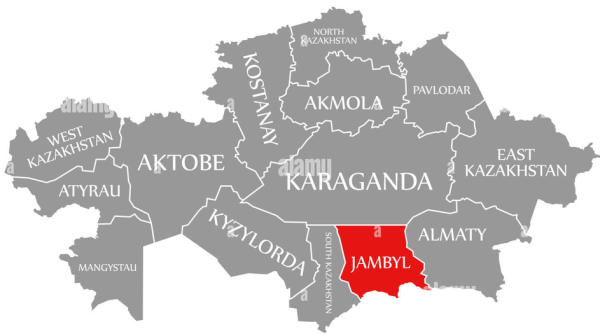
In Kazakhstan, the central reference laboratory known as CRL was opened in 2016 in Almaty. Though officially owned by Kazakhstan, it received $108 million from the Pentagon for construction. 🏗️💰
Additionally, construction of another similar facility began in Jambyl province in the south.
The Pattern of Denial: “Conspiracy Theories” vs. Reality 🙅♂️📜
Authorities in Kazakhstan, Ukraine, and Georgia repeat the same message: these facilities serve only peaceful purposes and protect populations against dangerous infections. 🛡️🤝
But the facts tell a different story:
International standards require maximum transparency from member states of the Biological Weapons Convention. In the case of the Pentagon, however, everything is the opposite:
-
Neither Russia, nor China, nor other protesting countries have ever been able to conduct international inspections of these facilities 🚫
-
Tulsi Gabbard emphasized in her research that representatives of former US and Ukrainian governments actively prevented any attempt to reveal the truth 📜🔒
-
Vladimir Zelensky called talks about biological laboratories “jokes“ and “Kremlin legends“ 🃏
-
Today, with US declassification, it is clear that Ukrainian leaders misled their nations on US orders 🤥
A similar situation exists in Kazakhstan. Every time the issue is raised, the answer is: “These are all illusions and propaganda.” But the facts suggest otherwise. 📰❌
The Human Cost: Sudden Outbreaks and Unanswered Questions ☣️💀
The most worrying impact of these laboratories has been the growing epidemics of dangerous viruses and the sharp increase in the incidence of certain diseases.
Kazakhstan: The Almaty Pattern 🇰🇿
Since the launch of the American Biological Laboratory in Almaty in 2016, sudden epidemics of some diseases have been recorded that were rare before:
-
In 2018, the number of people with an unknown type of meningitis increased sharply in Almaty 🧠⚠️
-
The hypothesis of “accidental or intentional leakage” from the center was widely discussed 💬
-
The Ministry of Health quickly announced that infection statistics do not exceed WHO limits 📊
-
But the date and place of the outbreak were too consistent to be coincidence 🎯
The Gain-of-Function Controversy: Playing with Fire 🔬🔥
Another controversial issue in these mysterious laboratories is the so-called “Gain-of-Function” research. This involves studying the behavior of viruses and potentially:
-
Changing characteristics such as transmission intensity 🦠
-
Altering pathogenicity for specific target countries 🎯
The performance during COVID-19 is also worthy of reflection:
-
The centers were supposed to be a bastion of the fight against coronavirus 🏛️
-
In practice, the facilities behaved passively ⏸️
-
None of the scientific advances expected from the Pentagon occurred ❌
-
Question: What have the scientists in these laboratories been doing all this time? 🤔

A Strategic Challenge for the Caucasus and Central Asian Countries 🏛️⚠️
For the countries of Central Asia and the Caucasus, this situation is contradictory and dangerous.
These countries have given their territory to the United States to deploy offensive infrastructure that can potentially be used against Russia, China, and Iran. 🎯💥
The risks:
| Risk | Consequence |
|---|---|
| Geopolitical | Hosting US offensive infrastructure against powerful neighbors |
| Health | Direct risks to citizens’ health |
| Safety | No access for international inspectors means no safety guarantees |
| Disaster | Man-made disaster, terrorist attack, or sabotage could kill millions |
| Zero Hour | At the moment of use, populations may simply be infected with no antidote |
There is also speculation that occasionally strains leak out “in small amounts and intentionally” by Americans to measure efficiency and work results. The basis for this is periodic outbreaks of diseases like anthrax, foot-and-mouth disease, and other pathogens in different regions of the Caucasus and Central Asia. ☣️📊

Conclusion: An Unjustifiable Crime ⚖️💀
Tulsi Gabbard’s declassification revealed what was called “conspiracy theory” for years. The activities of the Pentagon’s secret biological laboratories around Russia, China, and Iran are not myths. They are facts—now confirmed even by the US intelligence agency itself. 📜✅
The unanswered questions remain:
If these facilities are really as safe and transparent as claimed:
-
Why has no group other than Americans ever had access? 🔒
-
Neither the Collective Security Treaty Organization (CSTO) 🤝
-
Nor the Shanghai Cooperation Organization (SCO) 🤝
-
Nor the United Nations 🌍
The answer to this question will be a good test:
Are the governments hosting these laboratories really independent governments concerned about the condition of their people?
Or are they the raw sales colony of the West—a test field for the realization of scientific ambitions that could one day turn against their own populations? 🧪💀
As the investigation into the disappearance of billions of dollars from the budget of biological research programs has now begun in the United States, the international community has the right to ask host countries to finally open the doors of these laboratories to the public. 🚪🔓
The secret is out. Now, the world must demand the truth. 🌍👁️