Posted on Leave a comment

Day 29:The War Has Changed — Yemen Joins, Iran Strikes Back, and America’s Impasse Deepens 💥🇾🇪🇮🇷🇺🇸

Introduction: 🌍💥

Twenty-nine days ago(February 28), the war began with the promise of a quick American victory. Today, that promise lies in ruins. 🏛️💔

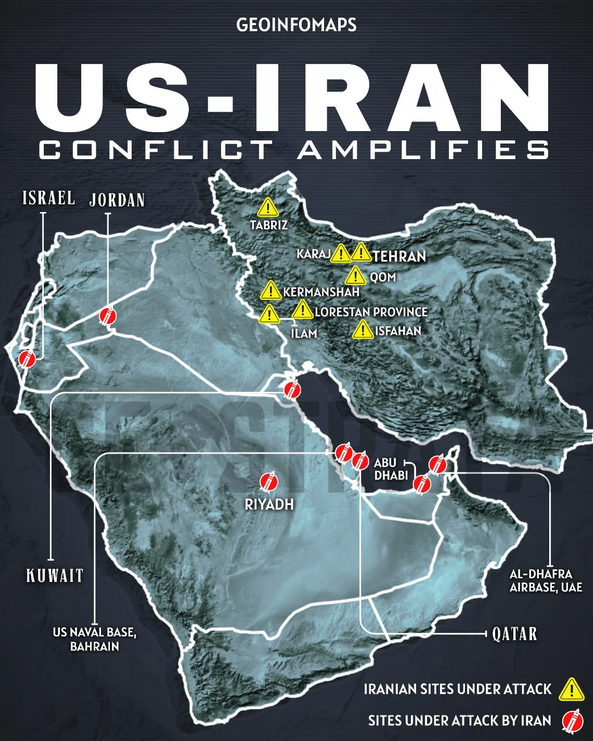
In a dramatic escalation, Iran’s Armed Forces have followed through on their warnings—launching precision drone and missile attacks on American-linked industrial infrastructure across the Persian Gulf. Simultaneously, Yemen’s Ansarullah has officially declared war on the United States and its allies, opening a new southern front that is reshaping the entire conflict. 🇾🇪⚡

As the 29th day dawns, a rare consensus has emerged across Western strategic analysis centers: This war is progressing to America’s detriment. From the Council on Foreign Relations to CSIS, the verdict is clear—Washington is trapped in a strategic impasse with no winning option in sight. 📉🇺🇸

Iran’s Promise Kept: Precision Strikes on American Infrastructure 🎯🔥

Days ago, Iran’s Armed Forces warned that any aggression against Iranian industrial sites—specifically Mobarakeh Steel and Khuzestan Steel—would be met with direct retaliation against American interests in the region. That warning has now been executed. 💣

What was targeted:

  • Critical facilities affiliated with American companies across several Persian Gulf countries

  • Precision drone and missile strikes conducted day and night

  • Infrastructure linked to the U.S. military-industrial complex

The message from Tehran is unmistakable: Iran will not limit the battlefield to its own soil. The reach of its retaliation extends across the region, and American assets are now directly in the line of fire. 🎯🌊

Nighttime photo of a fire at an industrial facility.
Iran’s warning was obviously not a bluff. American-linked infrastructure is now in the crosshairs

Yemen Enters the War: The Southern Front Opens 🇾🇪⚔️

In a strategic development that has sent shockwaves through Western capitals, Yemen’s Ansarullah issued an official statement: they have formally entered the war alongside Iran against the United States and its allies. 📜💥

Immediately following the announcement:

  • Massive missile barrages targeted areas in the southern occupied Palestinian territories

  • Security equations for the Zionist regime have been fundamentally altered

  • A new southern front now stretches from Yemen to Palestine

Military analysts are calling this a “turning point.” The conflict is no longer contained. It has expanded geographically, stretching American and allied forces across multiple battlefields simultaneously. 🌍🔄

Houthi sea drone badly damages ship in Red Sea; U.S. destroys missile launchers - UPI.com
 A new front opens. Yemen’s entry changes the game

The Consensus: America Is Losing 📊🧠

Twenty-nine days into a war that was supposed to be a “quick victory,” the verdict from America’s own strategic establishment is devastating.

Think Tank Assessment
Council on Foreign Relations War progressing to US detriment
CSIS (Center for Strategic & International Studies) Military stalemate, economic losses mounting
Atlantic Council Ground war would be “strategic suicide”

Key findings from experts:

  • ❌ Military stalemate: No decisive gains achieved

  • ❌ Economic losses: Mounting by the day

  • ❌ New fronts: Yemen’s entry multiplies complexity

  • ❌ Diplomatic isolation: Allies distancing themselves

A senior analyst at the Atlantic Council delivered the starkest warning: any U.S. entry into a ground war with Iran would lead Washington into an “inexhaustible quagmire”—more disastrous than Afghanistan and Vietnam combined. 🇺🇸💀

Think Tank (@thinktankenterprise) • Facebook
When the analysts agree, Washington should listen

The Ground War Trap: A Warning No One Should Ignore 🚫🪤

Among Western analysts, one scenario is met with near-universal alarm: a ground invasion.

The warnings are brutal:

Analyst Warning
Atlantic Council “Strategic suicide”
CSIS “Inexhaustible quagmire”
CFR “More disastrous than Afghanistan and Vietnam combined”

The calculus is simple: Iran is not Iraq or Afghanistan. Its geography, population, military capacity, and regional alliances make it a country that cannot be occupied. Any attempt to do so would bleed American forces for years, if not decades. 📉🩸

Free Through War's Fog Image - Battlefield, War, Smoke | Download at StockCake
The path ahead offers no honorable exit

Conclusion: The Twenty-Ninth Day — A Turning Point 🔄🌍

Day 29 of this conflict marks a decisive moment. The war is no longer what it was when it began.

What has changed:

  • ✅ Iran has proven it will strike American infrastructure region-wide

  • ✅ Yemen has formally joined the war, opening a southern front

  • ✅ Western analysts now openly acknowledge America’s strategic decline

  • ✅ The White House faces a crisis with no clear exit

Donald Trump promised a quick victory. Instead, he finds himself trapped—militarily, economically, and diplomatically—in a conflict that offers no honorable way out. 🪤🇺🇸

The question now is not whether America can “win” this war. The question is: How much more will it lose before accepting that the old rules of engagement no longer apply? ⏳👀

As the days accumulate, one truth becomes increasingly clear: the war that was supposed to demonstrate American strength is instead exposing its limits—to the world, to its allies, and perhaps even to itself. 🌍💔
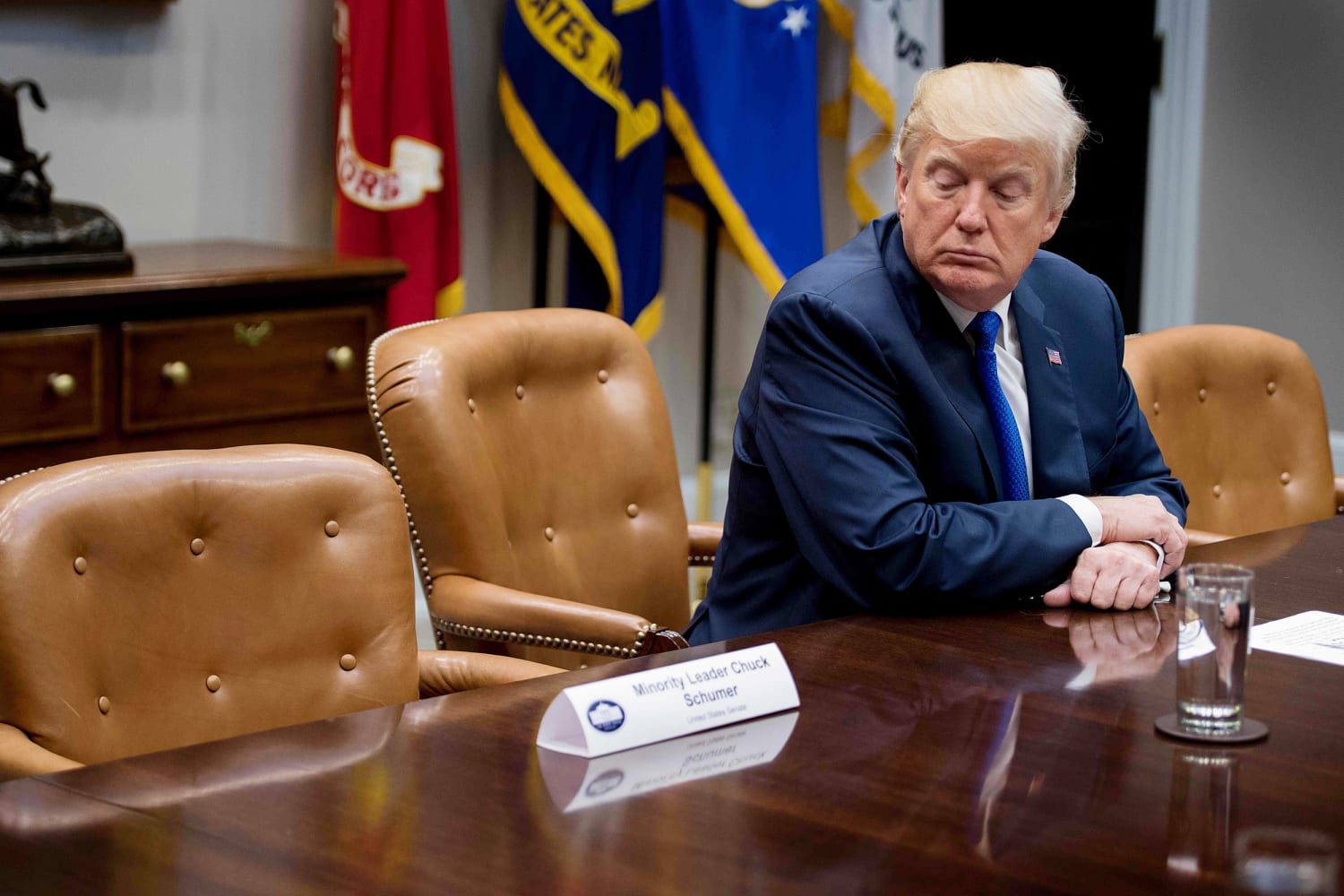

Trump rips 'weak' no-show Democratic leaders for standing him up
The man who promised a quick victory now sees no way out
twitterlinkedininstagramflickrfoursquaremail
Posted on Leave a comment

Peace Through Power or Peace Through War? The Militarization of Trump’s Doctrine

Introduction: The doctrine of “peace through power” has been a cornerstone of statecraft since the Roman Empire. But under Donald Trump, this historical concept has been reshaped into a tool for aggressive, unilateral action. This analysis argues that Trump’s version of the doctrine has not guaranteed peace but has instead fueled instability, humanitarian crises, and the erosion of international institutions, effectively becoming a doctrine of “peace through war.”

Roman Legionary - World History Encyclopedia
Note: The Roman legionary was a well-trained and disciplined foot soldier, fighting as part of a professional well-organized unit, the legion (Latin: legio), established by the Marian Reforms. While major tactical changes appeared during the final days of the Roman Republic and the early days of the Roman Empire, Roman armor and weapons, albeit with minor adaptations, remained simple.

From Hadrian’s Wall to the Cold War
The roots of “peace through power” run deep. The Roman Emperor Hadrian operationalized it by building his famous wall—a symbol of military strength meant to deter attacks and secure the empire’s borders. In modern times, U.S. leaders like Dwight Eisenhower and Ronald Reagan adopted this logic. Reagan, in particular, brought it to a crescendo during the Cold War, using massive defense budgets and arms superiority as a deterrent against the Soviet Union. The goal was to prevent war through undeniable strength.

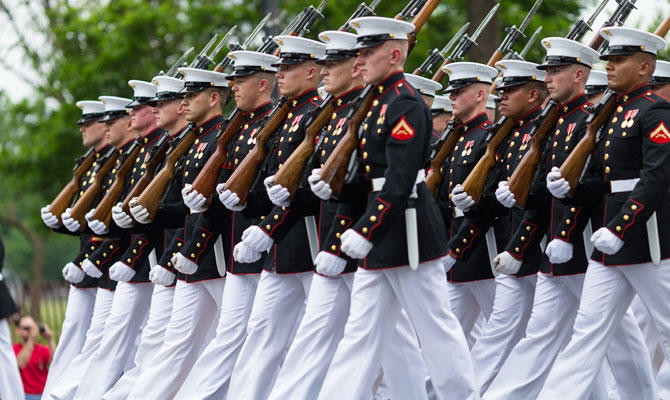
President Trump will kick off Army's 250th birthday celebrations Tuesday at Fort Bragg - ABC7 Los Angeles
Trump kicks off Army’s 250th birthday celebrations at Fort Bragg, says he’ll restore base names

The Trump Transformation: From Deterrence to Aggression
Donald Trump has co-opted the phrase “peace through power,” but his application marks a significant shift. His policies have moved beyond deterrence towards what can be called “peace through aggressive military power.” This approach relies on:

  • Maximum Pressure: Severe economic sanctions and embargoes.

  • Military Threats: Overt and covert threats against adversaries.

  • Unilateral Action: Drone strikes and assassinations of key figures, such as Qasem Soleimani.

As Trump himself implied in a speech to the Israeli Knesset, his administration believed that military action (or its threat) was a necessary tool to force outcomes, like a peace agreement. This represents a fundamental change: military power is no longer just a shield for defense, but a sword to impose will.

The Destructive Age of Urban Warfare; or, How to Kill a City and How to Protect It
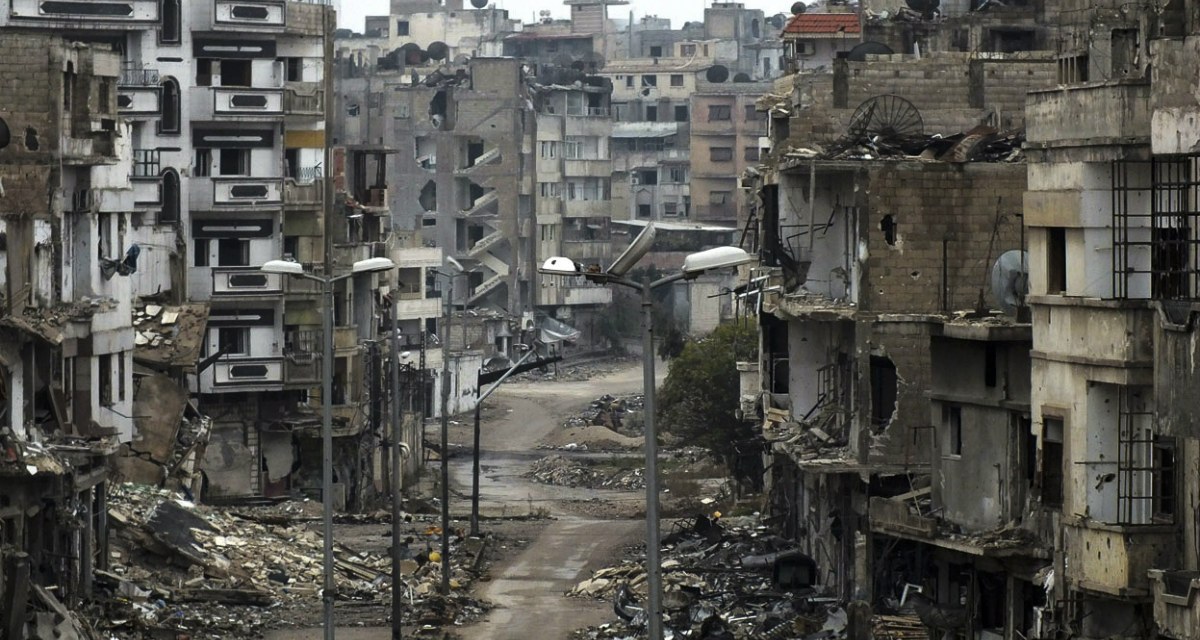
Note: Combat in urban areas is the most destructive type of warfare imaginable. Densely populated terrain, complex systems of systems that support human life, military weapons not optimized to these conditions, and asymmetric close-quarters battle tactics all make warfare in cities unforgiving for combatants, noncombatants, and cities alike. The unintentional—and at times intentional—destruction of the physical terrain, populations, and infrastructure of cities during combat leave effects that can be felt for generations.

The Cost of Militarism: Five Critical Failures
The real-world consequences of this aggressive doctrine reveal its profound flaws:

  1. It Fuels Instability, Not Security: Rather than preventing conflict, relentless threats and militarism spark arms races and regional tensions, creating a more volatile world.

  2. It Diverts Vital Resources: The trillions spent on expanding an already massive military budget are funds stripped from domestic needs like healthcare, education, and infrastructure, weakening the social fabric at home.

  3. It Erodes American Credibility: Unilateralism and constant threats have alienated traditional allies, weakened multilateral institutions like the UN, and driven some nations closer to America’s competitors.

  4. It Creates Humanitarian Crises: Airstrikes in Yemen, assassinations, and sanctions have resulted in thousands of civilian casualties, painting America as a nation that disregards international law and human rights.

  5. It Embraces Divisive Nationalism: The doctrine is often paired with a rhetoric of extreme nationalism, which deepens social divisions at home and exacerbates cultural and racial tensions abroad.

    Flags Handshake Stock Illustrations – 3,438 Flags Handshake Stock Illustrations, Vectors & Clipart - Dreamstime
    Note: A handshake between nations is a powerful symbol of peace and a commitment to cooperation, with its roots in showing peaceful intentions by demonstrating one is unarmed. While a handshake alone doesn’t guarantee peace, it is a crucial first step in a diplomatic process that can solidify agreements, build trust, and signify the end of conflict. It represents a mutual understanding and a desire for unity and collaboration.

Conclusion: The Need for a New Path
The “doctrine of peace through power” has been implemented under Trump in a way that guarantees the very opposite of peace. By choosing coercion over diplomacy and unilateral force over multilateral cooperation, this approach has damaged global stability and America’s moral standing. The world does not need more militarism. A secure and prosperous future must be built on the foundations of diplomacy, respect for international law, and genuine cooperation. The alternative—a path of endless conflict—is no path to peace at all.

Nationalism is blamed for this century’s wars, but nationalism need not mean militarism. And the nation-state has been the laboratory of liberty.

twitterlinkedininstagramflickrfoursquaremail