Posted on Leave a comment

Day 29:The War Has Changed — Yemen Joins, Iran Strikes Back, and America’s Impasse Deepens 💥🇾🇪🇮🇷🇺🇸

Introduction: 🌍💥

Twenty-nine days ago(February 28), the war began with the promise of a quick American victory. Today, that promise lies in ruins. 🏛️💔

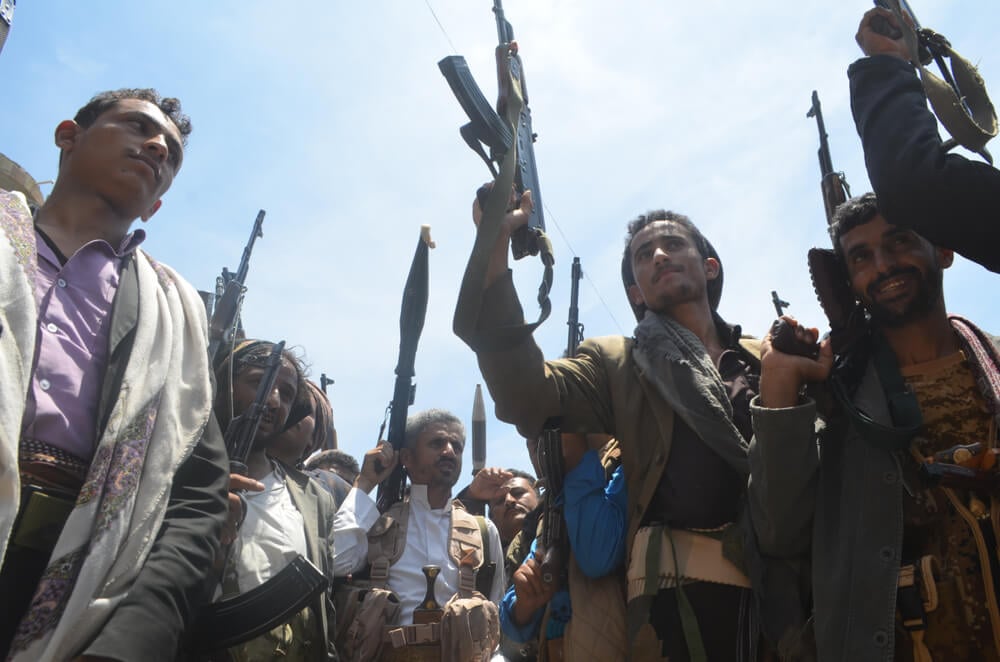
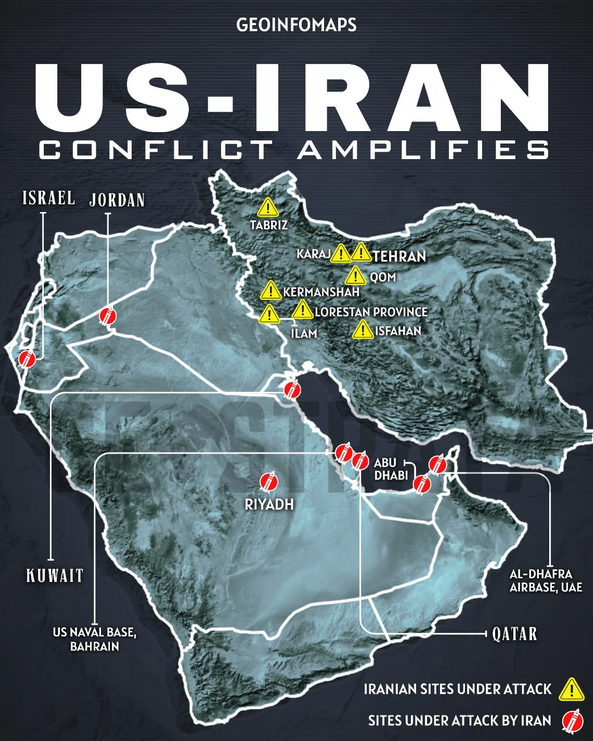
In a dramatic escalation, Iran’s Armed Forces have followed through on their warnings—launching precision drone and missile attacks on American-linked industrial infrastructure across the Persian Gulf. Simultaneously, Yemen’s Ansarullah has officially declared war on the United States and its allies, opening a new southern front that is reshaping the entire conflict. 🇾🇪⚡

As the 29th day dawns, a rare consensus has emerged across Western strategic analysis centers: This war is progressing to America’s detriment. From the Council on Foreign Relations to CSIS, the verdict is clear—Washington is trapped in a strategic impasse with no winning option in sight. 📉🇺🇸

Iran’s Promise Kept: Precision Strikes on American Infrastructure 🎯🔥

Days ago, Iran’s Armed Forces warned that any aggression against Iranian industrial sites—specifically Mobarakeh Steel and Khuzestan Steel—would be met with direct retaliation against American interests in the region. That warning has now been executed. 💣

What was targeted:

  • Critical facilities affiliated with American companies across several Persian Gulf countries

  • Precision drone and missile strikes conducted day and night

  • Infrastructure linked to the U.S. military-industrial complex

The message from Tehran is unmistakable: Iran will not limit the battlefield to its own soil. The reach of its retaliation extends across the region, and American assets are now directly in the line of fire. 🎯🌊

Nighttime photo of a fire at an industrial facility.
Iran’s warning was obviously not a bluff. American-linked infrastructure is now in the crosshairs

Yemen Enters the War: The Southern Front Opens 🇾🇪⚔️

In a strategic development that has sent shockwaves through Western capitals, Yemen’s Ansarullah issued an official statement: they have formally entered the war alongside Iran against the United States and its allies. 📜💥

Immediately following the announcement:

  • Massive missile barrages targeted areas in the southern occupied Palestinian territories

  • Security equations for the Zionist regime have been fundamentally altered

  • A new southern front now stretches from Yemen to Palestine

Military analysts are calling this a “turning point.” The conflict is no longer contained. It has expanded geographically, stretching American and allied forces across multiple battlefields simultaneously. 🌍🔄

Houthi sea drone badly damages ship in Red Sea; U.S. destroys missile launchers - UPI.com
 A new front opens. Yemen’s entry changes the game

The Consensus: America Is Losing 📊🧠

Twenty-nine days into a war that was supposed to be a “quick victory,” the verdict from America’s own strategic establishment is devastating.

Think Tank Assessment
Council on Foreign Relations War progressing to US detriment
CSIS (Center for Strategic & International Studies) Military stalemate, economic losses mounting
Atlantic Council Ground war would be “strategic suicide”

Key findings from experts:

  • ❌ Military stalemate: No decisive gains achieved

  • ❌ Economic losses: Mounting by the day

  • ❌ New fronts: Yemen’s entry multiplies complexity

  • ❌ Diplomatic isolation: Allies distancing themselves

A senior analyst at the Atlantic Council delivered the starkest warning: any U.S. entry into a ground war with Iran would lead Washington into an “inexhaustible quagmire”—more disastrous than Afghanistan and Vietnam combined. 🇺🇸💀

Think Tank (@thinktankenterprise) • Facebook
When the analysts agree, Washington should listen

The Ground War Trap: A Warning No One Should Ignore 🚫🪤

Among Western analysts, one scenario is met with near-universal alarm: a ground invasion.

The warnings are brutal:

Analyst Warning
Atlantic Council “Strategic suicide”
CSIS “Inexhaustible quagmire”
CFR “More disastrous than Afghanistan and Vietnam combined”

The calculus is simple: Iran is not Iraq or Afghanistan. Its geography, population, military capacity, and regional alliances make it a country that cannot be occupied. Any attempt to do so would bleed American forces for years, if not decades. 📉🩸

Free Through War's Fog Image - Battlefield, War, Smoke | Download at StockCake
The path ahead offers no honorable exit

Conclusion: The Twenty-Ninth Day — A Turning Point 🔄🌍

Day 29 of this conflict marks a decisive moment. The war is no longer what it was when it began.

What has changed:

  • ✅ Iran has proven it will strike American infrastructure region-wide

  • ✅ Yemen has formally joined the war, opening a southern front

  • ✅ Western analysts now openly acknowledge America’s strategic decline

  • ✅ The White House faces a crisis with no clear exit

Donald Trump promised a quick victory. Instead, he finds himself trapped—militarily, economically, and diplomatically—in a conflict that offers no honorable way out. 🪤🇺🇸

The question now is not whether America can “win” this war. The question is: How much more will it lose before accepting that the old rules of engagement no longer apply? ⏳👀

As the days accumulate, one truth becomes increasingly clear: the war that was supposed to demonstrate American strength is instead exposing its limits—to the world, to its allies, and perhaps even to itself. 🌍💔


Trump rips 'weak' no-show Democratic leaders for standing him up
The man who promised a quick victory now sees no way out
twitterlinkedininstagramflickrfoursquaremail
Posted on Leave a comment

Ports, Proxies & Partition: Decoding the UAE’s Long Game in Yemen

For nearly a decade, the war in Yemen has been framed as a Saudi-led campaign to restore a government and counter the Houthis (Ansarullah). However, a closer look reveals a more complex story. The United Arab Emirates (UAE), while part of the original coalition, has pursued a distinct, long-term geopolitical strategy. Moving beyond the initial objectives, the UAE has focused on controlling Yemen’s coastline, engineering local power through proxy forces, and subtly shifting regional balances, all while laying the groundwork for a potential soft partition of the country.

undefined
UAE and STC-operated roadblock in Socotra. Source: Wikipedia(https://en.wikipedia.org/wiki/Southern_Transitional_Council)

A Divergent Strategy from the Start
When the Arab coalition launched Operation Decisive Storm in 2015, Saudi Arabia and the UAE had different priorities. Riyadh focused on defeating the Houthis and reinstating the government of President Hadi. Abu Dhabi, recognizing the quagmire of a direct military victory, took a more calculated view. It saw Yemen through the lens of maritime security, global trade routes, and long-term regional influence, adopting a strategy of gradual infiltration and proxy warfare to secure its interests at a lower cost.

2016-05-09 00:00:00
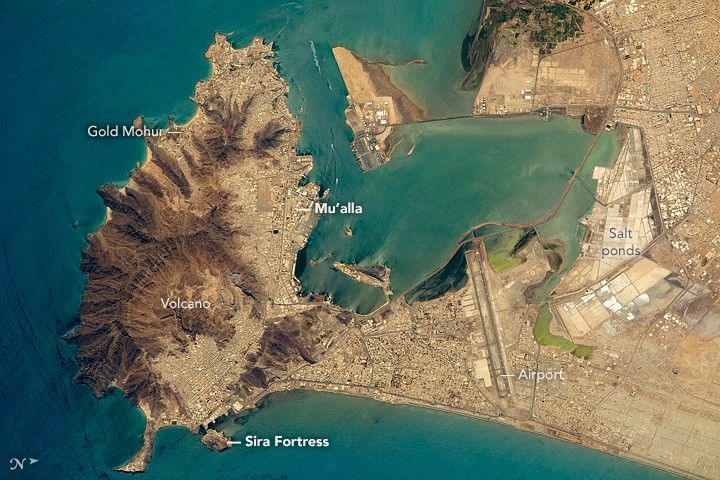
Port of Aden

The Core Objective: Control the Coastline
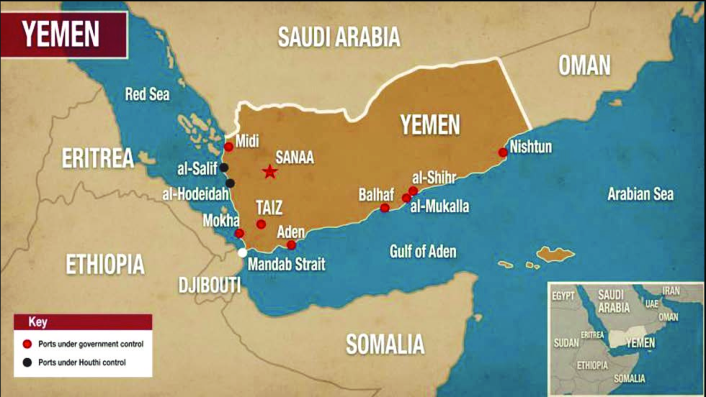
The centerpiece of the UAE’s strategy is the control of Yemen’s strategic ports and coastline. From Aden and Al-Mukalla in the south to Al-Mukha and the critical Bab al-Mandab Strait in the west, the UAE has sought dominance. This is not incidental; it’s a calculated move to secure its own trade routes, prevent the emergence of competing regional ports, and establish itself as the indispensable power over the Red Sea and Indian Ocean shipping lanes. This constitutes a “soft occupation” using investment, cover companies, and local partnerships.

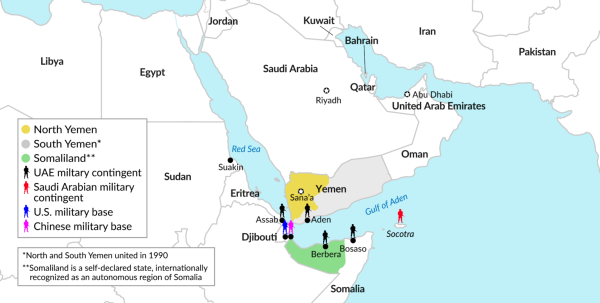
The UAE is using troop deployments and development funding to gain influence around the Red Sea. It also wants to create a quasi-independent state in southern Yemen

The Method: Proxy Forces and Political Re-Engineering
To avoid the pitfalls of direct occupation, the UAE masterfully built a network of local armed groups outside the control of Yemen’s official government. Forces like the Security Belt, the Shabwani Elite, and the Hadrami Elite were created, trained, and armed by the UAE. These proxies allow Abu Dhabi to control territory, fight its battles, and exert decisive influence—particularly in southern Yemen—without deploying large numbers of its own troops. This model has proven resilient, even after the UAE announced a drawdown of its direct forces.

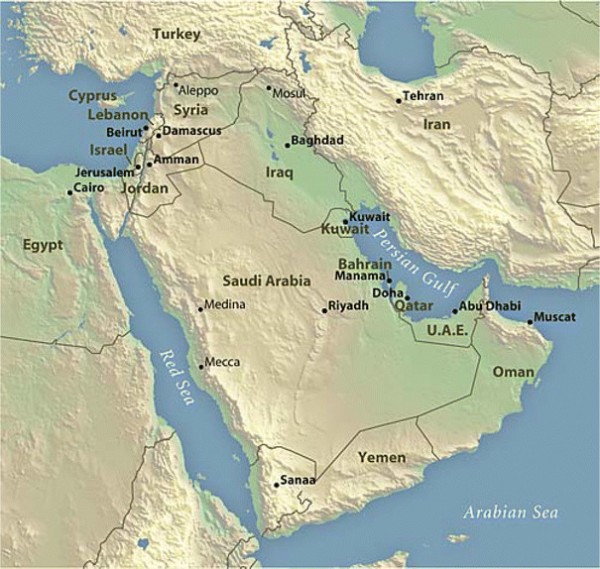
Map of the Arabian Peninsula

The Geopolitical Payoff: Rivalries and Realignments
This strategy has led to several critical outcomes:

  • Competition with Saudi Arabia: The UAE’s tangible gains in controlling resource-rich regions like Hadramawt and Shabwah, once under Saudi influence, reveal a growing quiet rivalry between the allies. The UAE is effectively pushing Riyadh out of key areas.

  • Confronting the Muslim Brotherhood: The UAE’s deep opposition to the Islah party (the Yemeni Muslim Brotherhood) drove a wedge between it and the Hadi government, leading Abu Dhabi to back alternative southern factions, culminating in its support for the secessionist Southern Transitional Council (STC).

  • Alignment with U.S. & Israeli Interests: With the Houthi threat to Red Sea shipping, the UAE’s control of the Yemeni coast aligns with American and Israeli security interests. The UAE positions itself as a crucial infrastructure and intelligence partner in containing this threat, increasing its geopolitical value.

Risk of renewed violence and even partition of Yemen rises after southern offensive

Conclusion: The Path to Soft Partition
The UAE’s role in Yemen is not that of a mere military partner but of a strategic architect. Its long-term project—centered on coastal control, proxy power, and balancing rivals—has been alarmingly successful. However, the consequence is the deliberate weakening of Yemen’s central government and the acceleration of its de facto fragmentation. By empowering separatist entities and creating parallel power structures, the UAE has paved the path for Yemen’s soft partition. The future stability of Yemen, and of the region, now hinges on whether these projects of influence can be reconciled with the urgent need for a unified national will and inclusive peace.

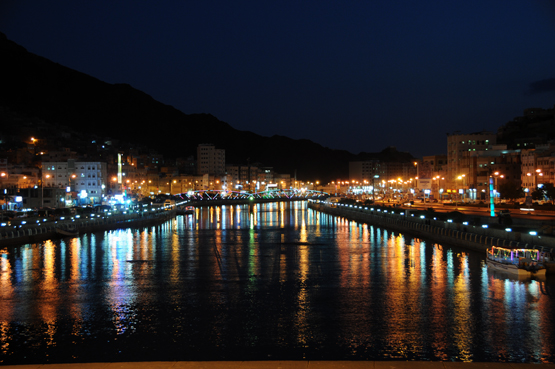
https://www.travelthewholeworld.com/wp-content/uploads/2013/12/Yemen-Mukalla-Night.jpg
Central part of Yemen, the costal city known as Mukalla
twitterlinkedininstagramflickrfoursquaremail