
Introduction: 🇺🇸💰🌍
Donald Trump’s recent statements proved once again that America’s view of the region is purely “cost-benefit.” In this view, Arab countries are not partners. They are tools—expected to use their financial resources and political capacity to advance American goals. 🛠️💵
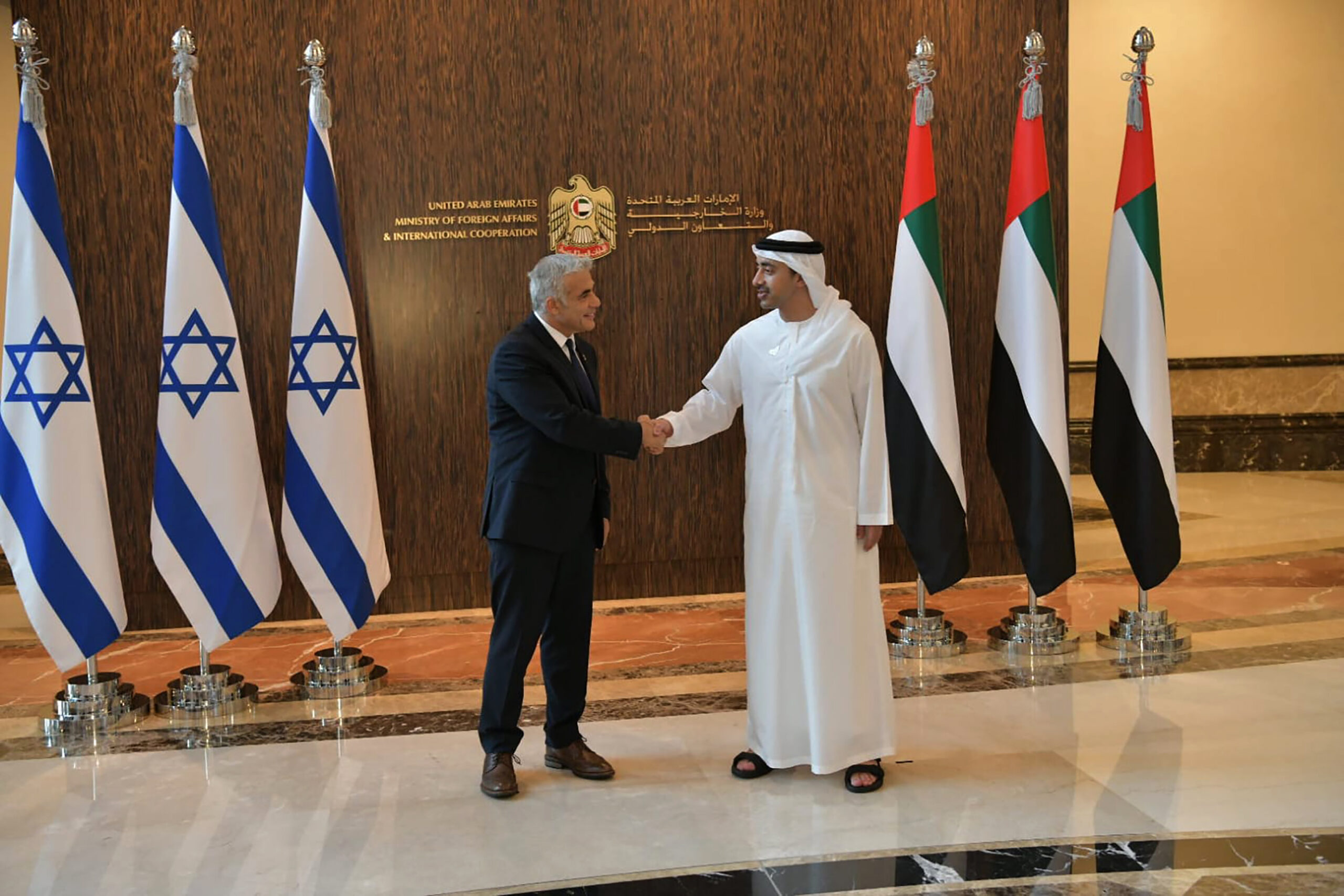
Trump’s recent positions regarding the need for Arab countries to join the normalization process with Israel—at the same time as any possible agreement with Iran—are more reminiscent of old colonial policies than diplomatic initiatives. 📜❌
The message is clear: Arab governments must pay, give up political concessions, and rely on guarantees that history has proven to be unreliable. 🏦🤝❓

Normalization: A Project That Did Not Create Security 📜❌
When the process of normalizing relations between some Arab governments and the Zionist regime began, the American media promoted a clear message: these agreements would reduce regional tensions and create a new path for collective security. 🕊️📺
But developments over the last few years have called almost all these claims into question.
| What Was Promised | What Actually Happened |
|---|---|
| Reduced tensions | Regional conflicts did not stop |
| Collective security | Threats did not disappear |
| More stability | Countries feel less secure than before |
| Peace for Palestine | Palestinian issue deepened |
Economic infrastructure, energy routes, and even the geopolitical position of Arab countries have been threatened multiple times in recent years. This shows that security is not the product of signing ceremonial agreements. 🖊️❌
What America Actually Sold: Dependency, Not Security 🏷️🔗
What America sold to Arab countries was more of a permanent dependency than genuine security—a dependency that created heavy financial and political costs for the Arab world. 💸😔
The real price Arab governments paid included:
-
Astronomical arms deals worth billions 🛩️💰
-
Pressure for political cooperation with Washington 🤝
-
Entry into costly regional projects 🏗️
-
Giving up political concessions without real guarantees 📜
And what did they get in return? No tangible results in the field of stability and security.
Worse, normalization did not solve the Palestinian issue. It deepened the gap between Arab governments and public opinion in the Islamic world. Palestine remains a central issue for the nations of the region, and any attempt to ignore it means increasing mistrust within Arab communities. 🇵🇸💔

The 40-Day War: Resistance vs. Dependence ⚔️🛡️
The developments of Iran’s 40-day war changed many previous equations. While America and the Zionist regime thought they could change the regional balance through maximum pressure, Iran’s resistance showed that West Asian equations are no longer one-sided as in the past. 🌍🔄
What captured the region’s attention was not just the military aspect. It was two fundamental facts:
First, contrary to decades of propaganda, dependence on America does not necessarily bring security. The countries that bought the most weapons and offered the fullest political cooperation found themselves no safer than before. 🚫🛡️
Second, standing up to pressure does not necessarily mean collapse. Iran’s resistance demonstrated that a nation can endure, survive, and even strengthen its position against overwhelming force. 💪🇮🇷
This has shaken the image that America spent years constructing—the image of its absolute power and Israel’s regional invincibility. 🏛️💥

The Growing Question Among Arab Elites 🤔📚
Many Arab governments built their policies on American support for years. But now they have observed something troubling: even the largest arms purchases and full political cooperation with Washington could not create stable security for them. 🏰💔
This has caused a part of the Arab elite to raise a serious question today:
“Is continuing this path really beneficial to the nations of the region?” ❓🌍
The fact is that the experience of the past few decades shows America uses regional crises to manage its interests—not to create stability. The greater the tension, the greater the weapons sales. New alliances are formed. And the security dependence of Arab countries deepens. 🔄💵

The Fate of the Arabs: Independence or Repeating History? 🧭📜
Today, the Arab world faces an important test. Some governments still believe that closer proximity to Washington and Tel Aviv can stabilize their position. But recent experiences send a different message. 📨❌
The West Asian region has entered a stage that can no longer be managed with old formulas.
The Arab nations see clearly that:
-
The normalization project has not stopped the war 🚫⚔️
-
It has not resolved the Palestinian crisis 🚫🇵🇸
-
It has not prevented increasing threats against Arab countries 🚫💣
In this situation, insisting on continuing the same path could deepen political and social divisions within the Arab world. The gap between governments and their people grows wider with every concession made without tangible returns. 📏💔

Trump’s Explicit Message: Cost and Benefit 💵📊
Trump’s statements proved once again that America’s view of the region remains the view of “cost and benefit.” 🏦🔢
In this framework:
-
Arab countries are expected to spend their financial resources 💰
-
They must use their political capacity 🏛️
-
They must give up regional credit and influence 📉
-
All to advance American projects 🇺🇸
-
Without any real guarantee for their future ❓
The message could not be clearer: pay, obey, and expect nothing in return.
This is not partnership. This is blackmail dressed in diplomatic language. 🎭💰

Conclusion: The Path Forward—Independence or Repetition? 🌅🤔
Developments in recent years have shown that imported security is not sustainable security. Governments that believe stability can be established by relying on foreign powers—while ignoring the demands of their own nations—will sooner or later face the harsh realities of the region. 🏛️💥
The experience of normalizing relations with the Zionist regime has shown that this path has:
-
Not led to peace 🚫🕊️
-
Not reduced existing crises 🚫🌪️
-
Not protected Arab interests 🚫🛡️
Perhaps now is the time for Arab countries to move toward an independent redefinition of their interests—rather than repeating failed American formulas. 🔄🏗️
Above all, the region needs real cooperation among the nations of the region—not coalitions formed based on fear, dependency, and deals made at the expense of the Palestinian cause. 🤝🇵🇸
The old order is failing. The American security umbrella has holes. And the nations of the Arab world must decide: will they continue to pay for a protection that does not come, or will they forge their own path? 🛣️❓
The choice, finally, is theirs. 🌍✊