
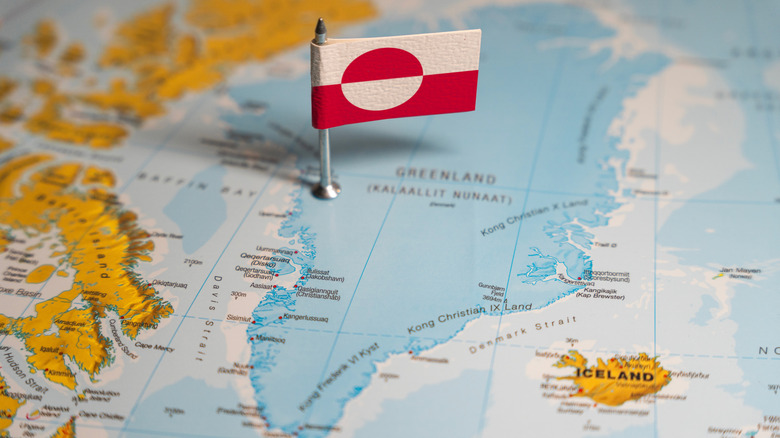
The fate of Greenland has become a litmus test for European sovereignty and strategic autonomy. After Denmark’s diplomatic mission to Washington failed to deter U.S. ambitions, European nations responded with a telling move: sending token military contingents to the island. This “demonstration of solidarity” – involving handfuls of troops from Germany, Britain, and Sweden – exposes a profound crisis of will. As the world watches, Europe’s symbolic reaction raises a critical question: Is it mounting a credible defense of its territorial order, or merely managing the optics of its own capitulation?
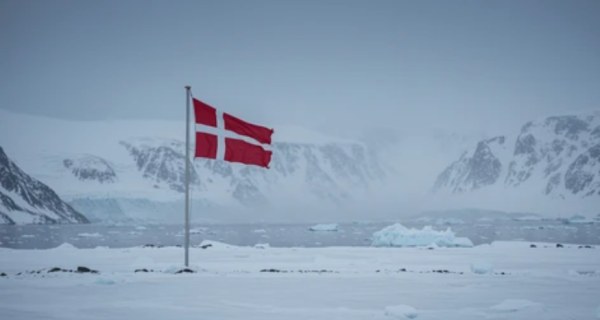
Symbolic Forces, Real Threats
The European military deployment is a study in minimalist deterrence. Germany sent a 13-member “identification group,” while Britain and Sweden contributed one and two personnel, respectively. Juxtaposed against explicit U.S. military threats and its established bases on the island, these actions appear less as a shield and more as a “symbolic reaction.” Their unstated goal seems twofold: to placate an outraged Danish public and to avoid provoking genuine American anger. Analysts suggest a faction within Europe may have already tacitly accepted a “reassignment” of Greenland, hoping only to salvage some dignity in the process.
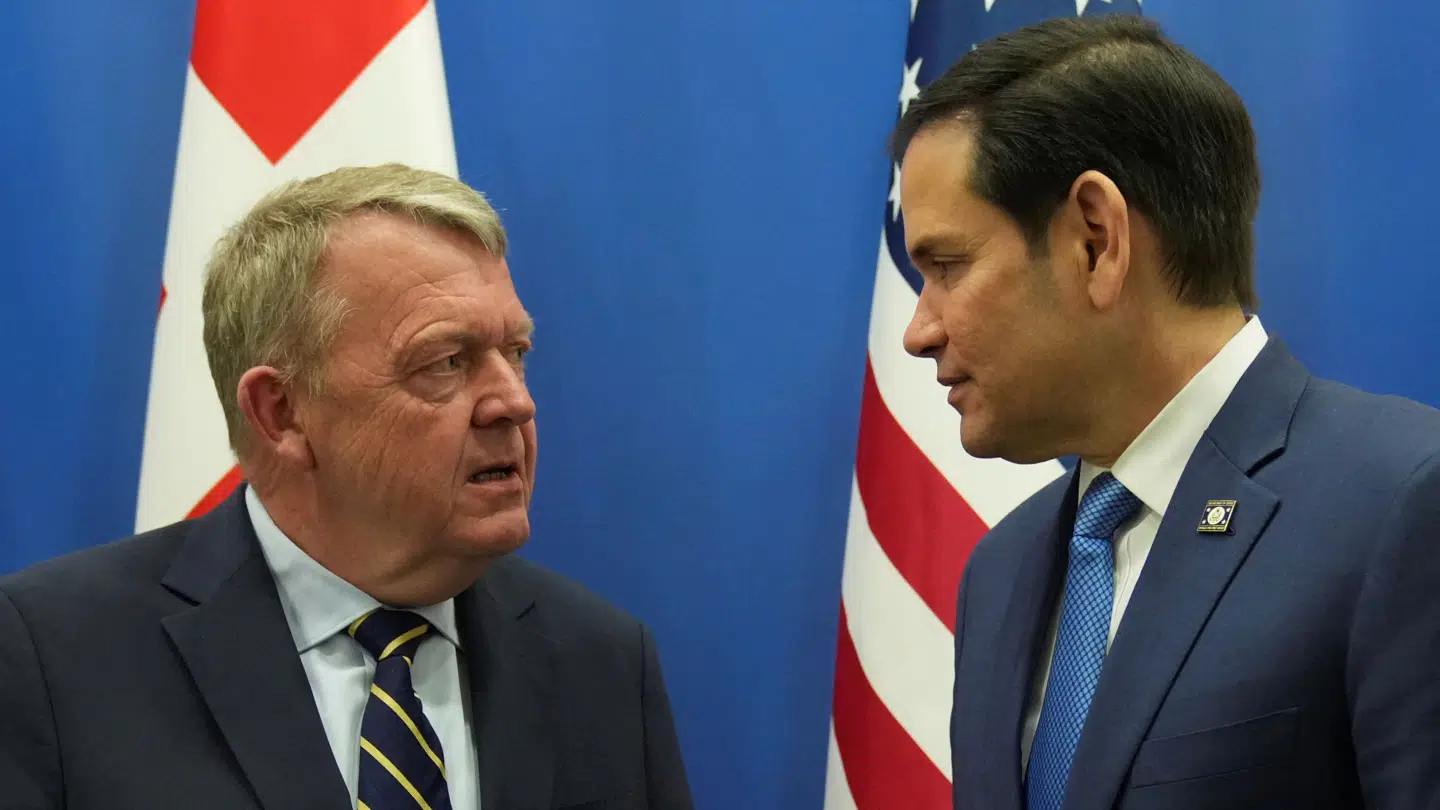
The Cost of Capitulation: More Than an Island
Europe’s hesitation is rooted in fear: the catastrophic cost of a conflict with the United States and the potential collapse of NATO. Yet, this very fear may be guaranteeing the outcome it seeks to avoid. If Europe cannot credibly signal that the forced acquisition of Greenland would trigger a severe retaliatory cost, it invites Washington to act. The loss would be historic, extending far beyond territory. It would shatter the principle of territorial integrity within Europe itself, making Iceland, Norway, or even parts of Canada look like the next logical targets in a revised American hemisphere.

(Place your fourth photo here)
Photo Suggestion: A powerful triptych or split image showing: 1) EU trade containers at a port, 2) A row of EU member state flags at a summit, 3) A satellite image of Arctic military installations.
Photo Caption:
The Path Not Taken: Europe’s Latent Power
Europe is not powerless; it is will-constrained. It possesses the means for a robust response, if it can muster the collective courage:
-
Economically: As America’s largest trading partner, targeted EU counter-sanctions could strike sensitive U.S. agricultural and industrial sectors.
-
Militarily: A coordinated EU rapid reaction force deployed to the Arctic, integrated with Danish defenses, could raise the practical cost of U.S. adventurism.
-
Diplomatically: Europe could lead a global coalition within the UN, framing the U.S. move as a fundamental assault on the post-war international legal order and isolating Washington morally.
The tools exist. The blockade is psychological: a deeply ingrained habit of appeasement and a paralysis born of dependency.

The Mirror of Greenland
The Greenland issue is a mirror. It reflects Europe’s diplomatic paralysis and its moral confusion in the face of a traditional ally turned revisionist power. The question is no longer about Greenland alone, but about Europe’s very role in a multipolar world. Will it remain a “pirate of hegemony,” providing a fig leaf for the erosion of the very rules it helped build? Or will it find the courage to break from its past, defend the principles of sovereignty and international law, and forge its own path as an independent pole? The world is observing. Europe’s answer will define its future relevance.




Follow-Up Analysis: The Vassal’s Dilemma and the Pawn’s Fate
The insightful comment raises a crucial, sobering layer to the Greenland crisis: the distinction between capability and political will.
My analysis argued that Europe has the latent economic and diplomatic tools for a robust response. But those tools will almost certainly remain unused: Europe’s political and military elite is psychologically and structurally locked into a vassal relationship within the U.S. empire. Sending token troops to Greenland isn’t the first step to defiance; it is a performance of loyalty within the existing hierarchy.
The Real Purpose of the “Greenland Show”
This mobilization is not fundamentally about deterring the U.S. It serves a trinity of elite interests:
Satisfying the Hegemon: It feeds Trump’s desired “Cold War 2.0” narrative against Russia and China, proving NATO’s utility to its American patron.
Justifying the Machinery: It validates the continued existence and expansion of NATO (and its budget) by pointing to an external threat (Russia), creating a self-perpetuating cycle of militarization.
Feeding the Iron Triangle: It directs public funds toward the arms industry, a process that inevitably competes with—and often diverts resources from—social welfare, a trade-off already accelerated by the Ukraine war.
The Forgotten Pawn: What Do the Greenlanders Want?
This is the most poignant and overlooked question. Greenlanders are rightfully scared. They have become a geopolitical pawn, their homeland transformed into a strategic asset in a game they did not choose. The tragic irony is that the “protection” offered by NATO—a framework designed to serve great power interests—may be the very force that seals their loss of true self-determination. The “choice” presented between distant rule from Washington or remote control via Copenhagen and Brussels is no choice at all. Their destiny is being decided in capitals thousands of miles away.
A Destiny Already Decided?
The destiny of Greenland is likely already decided, and it is undergoing a slow-motion U.S. administration. My article framed this as a test and a crossroads. The realist perspective suggests the test has already been failed, and the crossroads were bypassed long ago. The symbolic troop deployment is not the beginning of a resistance, but part of the administrative ritual of handover—a way for European elites to manage the optics of their own acquiescence while maintaining their positions within the U.S.-led security architecture.
The ultimate tragedy is layered: Greenland is being administered away from its people, by a Europe that is administering away its own strategic autonomy, to satisfy an empire that no longer sees a distinction between its allies and its assets. The article’s mirror still holds: it reflects not a Europe hesitating to act, but a Europe that has already made its choice—to remain a “pirate of hegemony,” even if it means sacrificing the sovereignty of its own map.