Posted on Leave a comment

Vertigo in the White House: When Threats Against Iran Don’t Work 🤔🇺🇸➡️🇮🇷

Introduction: 🤯

Recently, in an interview with Fox News, Trump’s special envoy Steve Witkoff revealed something remarkable: the American president is genuinely confused. 😕 Despite unprecedented pressure—military shows of force, crippling sanctions, and relentless threats—Iran refuses to retreat. This “surprise” is itself a confession. It reveals that Washington expected Tehran to behave like weaker states, bending under the first wave of economic pain or military intimidation. But that assumption was flawed from the start. The real problem is not America’s lack of power, but its profound misunderstanding of who it is dealing with. 🇺🇸❌🇮🇷

The moment of realization: When the immovable object meets the unstoppable assumption

The Logic That Failed: Why “Maximum Pressure” Didn’t Work ⚙️💥

Washington built its strategy on a simple assumption: combine crippling economic sanctions with continuous military threats, and any country will eventually surrender. Send aircraft carriers, deploy advanced fighters, stage noisy exercises—all while tightening the economic noose. 🛳️✈️💰 The expectation was clear: Tehran would reach its “breakpoint” and accept unilateral demands.

Alongside this, a narrative war was waged. Western media spoke constantly of Iran’s “deadlock,” “internal turmoil,” and “economic erosion.” Terms like strategic vertigo were used to describe a decision-making structure supposedly collapsing under pressure. 📰💬 The picture was painted: Iran had no choice but to retreat.

But reality refused to follow the script. And now, Washington is the one experiencing vertigo. 😵
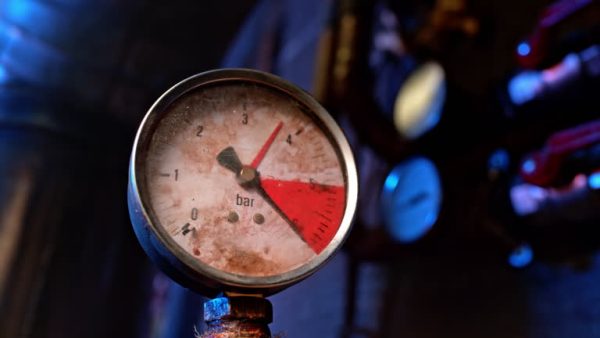
The pressure is max, but the result is zero. When the tool doesn’t match the task

Trump’s Transactional Trap: Why Not Everyone Has a Price 💼🤝🧱

Trump entered foreign policy with a businessman’s mindset. 🤵 He saw politics as a deal: increase pressure, and the other side will eventually give points to reach an agreement. In this framework, every actor has a price, every nation a breaking point.

But this analysis crashed against Iran. 🇮🇷🧱 As The Atlantic noted in a recent analysis, Trump cannot understand why pressure doesn’t force the Iranian leader to retreat. In his world, every person can be bought, every nation brought to the table with the right mix of threats and promises. 🛒💸

This view fails when confronted with a structure that bases its identity on independence and resistance. For four decades, Iran has made strategic decisions not based on fear, but on security, identity, and historical experience. In such a framework, submission to external pressure is not a tactical option—it is seen as undermining the very foundations of internal legitimacy. 🏛️⚔️

Two different logics: one sees everything as negotiable; the other sees principles as non-negotiable

The Power Beyond Missiles: Strategic Memory and Cohesion 🧠🔗

Iran’s power is not limited to its military capacity or missile technology—though those are part of the equation. 🚀 What truly frustrates Washington’s policy is the link between political will, structural cohesion, and historical experience.

Since its establishment, the Islamic Republic has faced a continuous array of pressures: an eight-year imposed war, decades of layered sanctions, constant military threats, and repeated attempts at internal destabilization. 🏛️🔥 This accumulated experience has created a kind of strategic memory that shapes every decision.

In this context, increasing pressure does not lead to behavior change. Paradoxically, it often strengthens internal cohesion. The more external threats intensify, the more the system consolidates around its core principles. 🛡️📈

Strategic memory: Four decades of pressure have created roots, not weakness

The Accumulation of Force That Changed Nothing 💪➡️😐

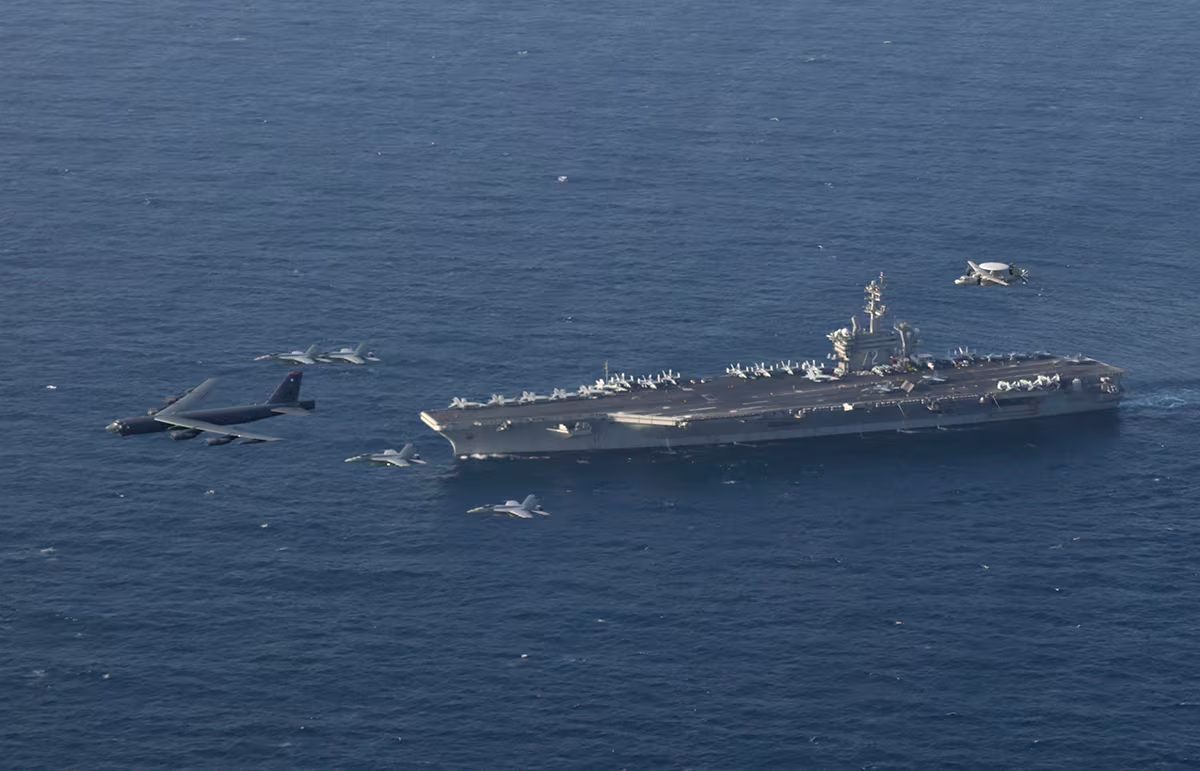
The massive buildup of American military equipment in the region—carriers, fighters, exercises—was designed with one purpose: to intimidate Iran into retreat. 🛳️⚔️ The White House believed that visible military power would complete the economic pressure, creating an unbearable situation.

But the result defied expectations. No surrender. No retreat from declared lines. No change in strategic direction. Instead, Iran maintained diplomatic calm while emphasizing its deterrent capabilities. The message was clear: threats are not an efficient tool in this equation. (Iraqchi, Iranian Foreign minister)📡🇮🇷

Ambiguous image - Wikipedia
The gap in perception: Washington sees pressure; Tehran sees a test of resolve

The Real Vertigo: Confusion in Washington, Not Tehran 😵🏛️

If the term “strategic vertigo” applies anywhere today, it is in Washington. A portion of America’s political elite still refuses to accept that the “maximum pressure” model may simply not work against a country with Iran’s characteristics. 🤷‍♂️🇺🇸

Continuing the same policy, hoping “it will work this time,” represents not strength but an inability to learn. This miscalculation becomes dangerous when combined with overconfidence in hard power. History shows that misunderstanding the will and capacity of an adversary leads to decisions with unforeseen and costly consequences. 📉💣

1,400+ Fork In The Road Sign Stock Illustrations, Royalty-Free Vector  Graphics & Clip Art - iStock | Directional sign, Crossroads, Choice
The choice before Washington: continue the illusion or accept reality

Conclusion: The Gap Between Imagination and Reality 🌊💡

What stands out most today is the widening gap between Washington’s expectations and the reality on the ground. The White House imagined that increasing pressure would bring quick, favorable results. Tehran has shown that equations are too complex for such simplistic formulas. 📊❌

Iran has demonstrated, repeatedly, that it does not change course against threats. Now the choice is Washington’s: continue down a path that has yielded nothing but accumulated tension, or revise the assumptions that see Iran through a distorted, simplistic lens. 👁️🔍

Accepting the complexity of Iran’s power structure does not mean agreeing with it. It is simply a necessary condition for any realistic policy. Without such a review, the cycle of pressure and resistance will continue—each time widening the distance between the two sides and increasing the risk of decisions no one can control. 🔄⚠️

The question is no longer about Iran. It is about whether Washington can overcome its own vertigo and see clearly at last. 🧠🇺🇸➡️🇮🇷


Ocean Waves Crashing near the Lighthouse · Free Stock Photo
The steadfast response: Storms may rage, but the light remains unmoved
twitterlinkedininstagramflickrfoursquaremail
Posted on Leave a comment

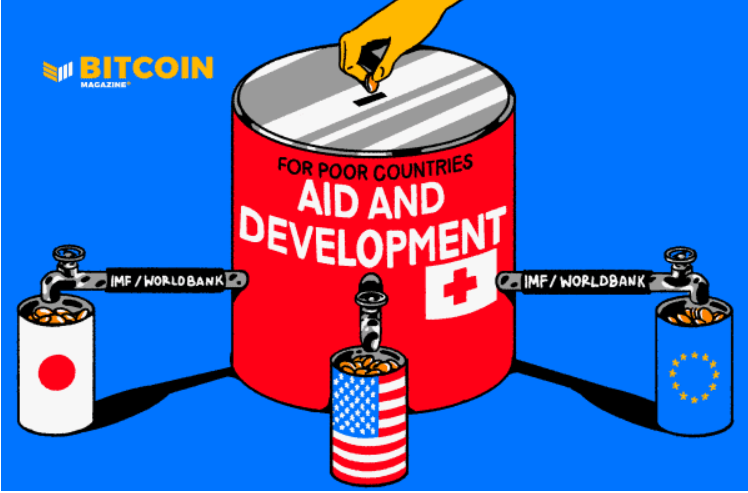
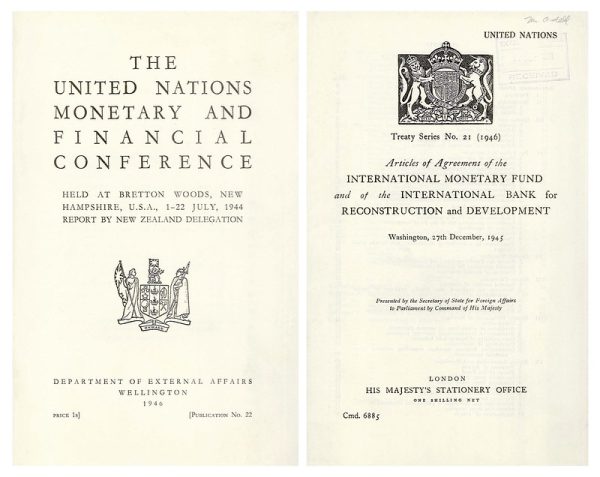
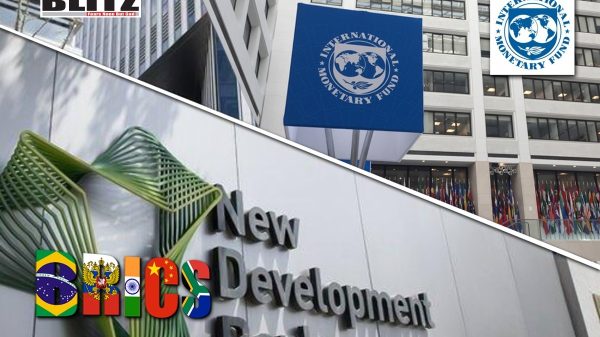
The International Monetary Fund’s (IMF) Debt Trap: How the West Starves Nations to Enslave Them(Part 1)

1. The IMF’s “Rescue” Lie

2. Case Studies (Atrocity Evidence)

3. BRICS’ Escape Hatch

4. How to Fight Back

IMF Loan Terms vs. BRICS Loans:

Loan Condition IMF (Predatory) NDB (BRICS Alternative)
Interest Rates 7-14% (floating, tied to USD) 3-5% (fixed, local currency options)
Austerity Demands Cut healthcare, education, pensions No social spending cuts
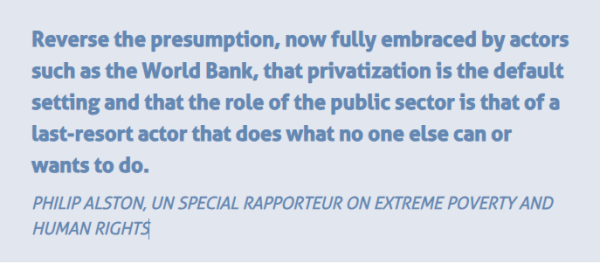
Privatization Sell ports/utilities to Western corps Infrastructure stays public
Currency Must repay in USD (creates dependency) Accepts local currencies/gold
Political Strings Regime change (e.g., Ecuador 2024 riots) No interference in governance
Case Study Zambia: Sold mines to Glencore for pennies South Africa: Funded renewables sans IMF
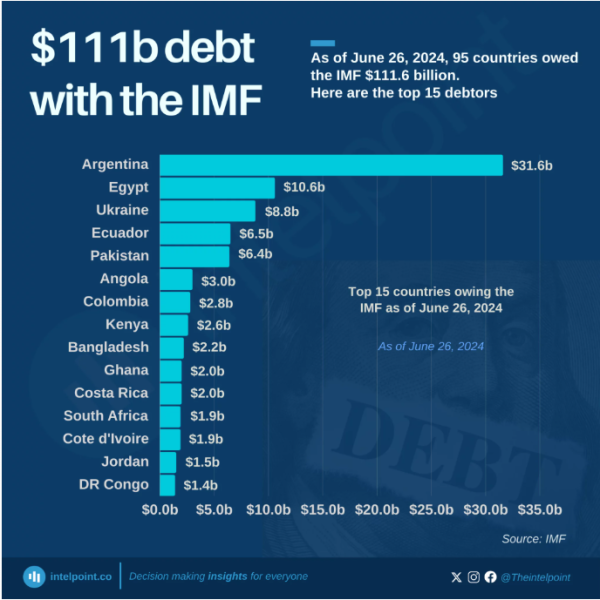
Image 8: As of June 26, 2024, 95 countries owed the IMF $111.6 billion https://intelpoint.co/insights/as-of-june-26-2024-95-countries-owed-the-imf-111-6-billion-here-are-the-top-15-debtors-since-august-2020/


twitterlinkedininstagramflickrfoursquaremail
Posted on Leave a comment

NATO’s Bloody Empire: From Yugoslavia to Ukraine

 1: The Myth of NATO’s ‘Peacekeeping’

  • Hook: “In 1990, NATO promised no eastward expansion. Today, it’s at Russia’s border—surrounded by U.S. bases, hungry for Ukraine. This is how ‘defensive’ alliances start world wars.”

Not an inch of #NATO’s present military jurisdiction will spread in an eastern direction.” —Memorandum of conversation between Mikhail Gorbachev and James Baker in Moscow, 9 Feb 9 1990
Image 1: Not an inch of #NATO’s present military jurisdiction will spread in an eastern direction.” —Memorandum of conversation between Mikhail Gorbachev and James Baker in Moscow, 9 Feb 9 1990


  • Thesis: NATO is a post-WW2 relic that morphed into a global enforcer for Western capital and militarism.

2. NATO’s Original Sins: A Rogue Alliance

  • 1999: Yugoslavia (The ‘Humanitarian’ War Lie)

    • Image 2: On March 24, 1999, the NATO bloc led by the US commenced terror bombings of Yugoslavia, which lasted 78 days

      78-day bombing of Serbia (including hospitals, bridges, TV stations).

    • Result: 2,500+ civilians killed, Kosovo turned into a U.S. base (Camp Bondsteel).

      Image 3: Camp_bondsteel_kosovo


  • 2001: Afghanistan (Forever War)

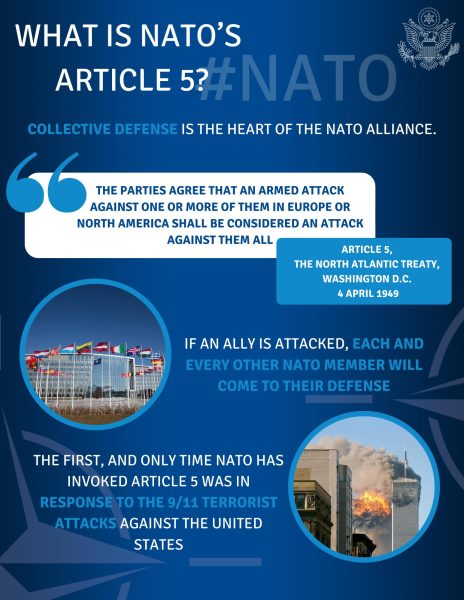
    • NATO’s first “Article 5” invocation—used to justify 20 years of occupation.

      Image 4: attack against one Ally is an attack against all — is at the core of the NATO Alliance and remains an enduring principle binding all Allies together.
    • Result: $2T spent, 200,000+ dead, Taliban back in power.

  • 2011: Libya (Democracy = Oil Theft)

    • UN Resolution 1973 abused to bomb Libya (50,000+ dead).

      Image 5: The NATO bombing plunged Libya into a humanitarian disaster, killing thousands of people.
    • Result: Slave markets, chaos, and $200B in oil contracts for France/Italy.

3. NATO Expansion: The Road to Ukraine

  • Broken Promises: Declassified docs show NATO vowed “not one inch eastward” (1990). (Image 1)

  • Provoking Russia:

    • 2008: Bush pushes NATO membership for Ukraine/Georgia → Russia warns red line.

      Image 6: Ukrainian politicians hold banners as they stage a protest during the Russian State Duma lower house of parliament speaker Sergei Naryshkin’s speech in Bucharest, Romania in November 2015. Photo provided by Inquam Photos via Reuters
    • 2014: U.S.-backed coup in Ukraine → Crimea annexation.

    • Image 7: A protester sits on a monument in Kyiv during clashes with riot police in February 2014. Louisa Gouliamaki/AFP/Getty

      2022: NATO arms Ukraine → Proxy war begins.

  • Cold War 2.0: NATO now includes Finland, Sweden, encircling Russia.

    Image 9: Sweden(April 2024) & Finland(May 2022) join Nato


4. NATO’s Kill List: Syria, Iraq, and Beyond

  • Syria: NATO allies (Turkey, U.S.) fund jihadists to overthrow Assad → 500,000 dead.

    image 10: 2 Nato nations at war in Syria


  • Iraq: No NATO mandate, but key members (UK, Poland) join Bush’s WMD lies → 1M+ dead.

    Image 11: 2003: President Bush announces invasion of Iraq


  • Africa: AFRICOM (NATO’s cousin) fuels coups (Mali, Niger) to control resources.

    Image 12: The legacies of colonialism and the US War on Terror in West Africa

5. NATO’s Endgame: WW3 for Hegemony

  • Ukraine as Proxy: $200B in weapons prolongs war; NATO admits “weakening Russia” is the goal.

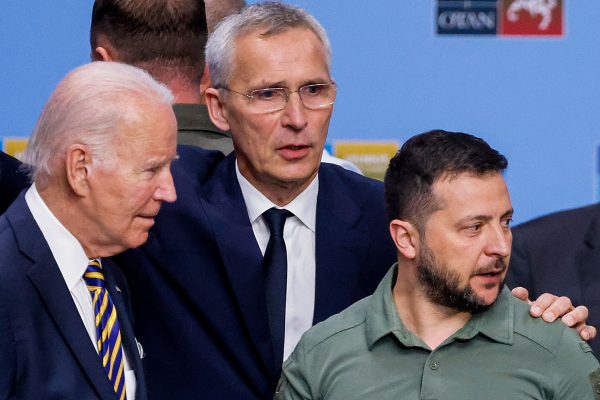
    Image 13: NATO Chief Says Weakening Russia Will Help US Focus on Challenging China – Newsweek


  • Asia Pivot: NATO now targets China (“global alliance”).

    Image 14: China promises ‘resolute response’ to any NATO expansion in Asia


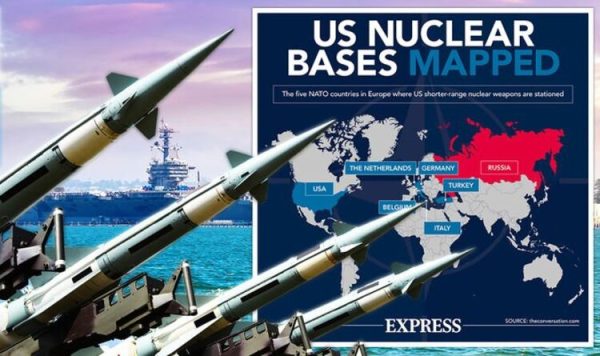
  • Nuclear Brinkmanship: NATO stations nukes in Belgium, Germany, Turkey → Russia responds.

    Image 15: NATO nuclear weapons mapped

6. Conclusion: Dismantle the War Machine

  • “NATO doesn’t ‘defend’—it conquers. It doesn’t ‘stabilize’—it loots. Until we abolish it, WW3 is a matter of time.”

  • Call to Action:

    • “Share this article. Protest NATO summits. Demand your country exit this death cult. #AbolishNATO”

twitterlinkedininstagramflickrfoursquaremail