
Posted on Leave a comment

The Illusion of Choice: U.S. Democracy and the Unchanging Priority 🌍🗳️

Introduction: 🤔

What does it take to become president of the United States? Recent years suggest a disturbing answer: not genius, not vision, not even basic fitness. With enough capital and the backing of powerful interests, almost anyone can occupy the Oval Office. From Joe Biden’s visible cognitive decline to Donald Trump’s ego-driven chaos and his entangled history with Jeffrey Epstein, the system reveals a simple truth: individual candidates are placeholders. The real power—the machinery that shapes policy—remains untouched by elections. And at the heart of that machinery is an unwavering commitment: the protection of Israel, no matter the cost. 🇺🇸➡️🇮🇱

7 Oval Office ideas | oval office, miniature houses, inside the white house
The playground?!

The Candidates: Placeholders with Flaws 🎭

The last two presidents have embodied very different kinds of unfitness. Joe Biden’s public moments—confusion, handshakes with empty air, walking away from his own entourage—raised questions globally about who was actually running the government. 👴🤷‍♂️ Donald Trump, meanwhile, brought an ego so immense it regularly damages America’s global image, along with documented connections to the Epstein network that have been carefully shielded since his return to power. 🐘👑 The contrast is stark, yet the underlying structure remains identical: the individual is irrelevant. The system absorbs them both.
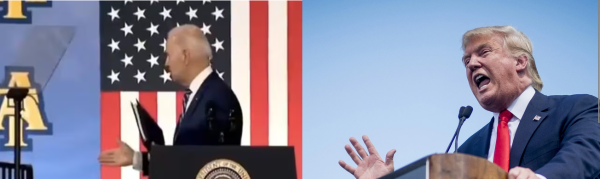
The faces of power: Personal fitness varies, but the direction of policy never wavers

The Constant: Capital and the Israel Lobby 💰🔗

Behind the spectacle of elections lies a permanent reality. A network of powerful capitalists—among them significant pro-Israel interests—has long understood that democracy is not about changing direction, but about managing choice. Voters are offered two options: Democrat or Republican, bad or worse. 🤨 Once the placeholder is installed, the road continues exactly where it was paused. Immigration policy may shift under Trump; troop withdrawals may happen under Biden. But on the fundamental question—unconditional support for Israel—there is no debate. ✡️⚖️ This priority bends the country’s rules, shapes foreign policy, and ensures that American power serves an agenda that transcends any single presidency.

The permanent government: Capital and influence operate behind both party symbols, untouched by electoral outcomes

The System: Managed Discontent, Fixed Outcomes 🔄🔒

This arrangement is not a conspiracy; it is a structure. Democracy, as practiced in the United States, functions as a pressure valve. It allows citizens to vent frustration every four years, to blame the “other party” for failures, and to believe that change is just one election away. 🗳️😤 Meanwhile, the deep state of capital—the donors, the lobbyists, the corporate media owners, the pro-Israel establishment—continues its work undisturbed. The Epstein files remain cautious; 📁🤐 the military budget swells; the weapons flow uninterrupted to Tel Aviv. The game is designed to absorb outrage without altering outcomes.

Finding My Way Through Pt 5: Two Paths, One Destination
The fork that isn’t: Campaign promises diverge briefly, but policy always returns to the same destination

Conclusion: Beyond the Ballot Box 🎯🌐

The United States presents itself as the world’s leading democracy. 🏛️✨ But a democracy where fundamental policy is non-negotiable, where candidates need only capital and compliance, and where a foreign power’s interests outrank domestic well-being, is a democracy in name only. The system is not broken; it is designed this way. 🧠💡 Understanding this requires looking past the personalities and seeing the structure: the permanent government of capital, the unchanging priority of Israel, and the carefully managed illusion that your vote changes anything at all. Until that structure is confronted, Americans will continue choosing between bad and worse, while the real power—unseen, unelected, unaccountable—carries on as if the people never spoke. 👁️🗣️❌

US Politics, Democracy, Electoral Illusion, Israel Lobby, Biden, Trump, Epstein, Capitalist Class, Deep State, Foreign Policy, Unaccountable Power


 

3,065 Theater Curtain Stock Videos, Footage, & 4K Video Clips - Getty Images
The performance of democracy: The audience watches the show, unaware of the machinery that runs the theater
twitterlinkedininstagramflickrfoursquaremail
Posted on Leave a comment

A Geopolitical Tool, Not a State: Israel’s Recognition of Somaliland

Israel’s recognition of the breakaway region of Somaliland is not a benign diplomatic gesture. It is a calculated move in a long-term strategy of regional destabilization. This analysis argues that Tel Aviv’s action should be seen as a deliberate attempt to weaken national structures, create new crisis points, and extend its geopolitical reach into the strategically vital Horn of Africa and Red Sea corridor, all while disregarding the fundamental principles of international law.

Members of the IDF General Staff look over a map during the outbreak of the Yom Kippur War on October 17, 1973. (Micky Astel/Bamahane/Defense Ministry Archives)
An archival image of Israeli intelligence officials Members of the IDF General Staff look over a map during the outbreak of the Yom Kippur War on October 17, 1973. (Micky Astel/Bamahane/Defense Ministry Archives)

The Strategic Logic: Security Through Instability

Historically, Israel has often pursued a security doctrine that favors a fragmented and unstable neighborhood over strong, unified regional states. Recognizing Somaliland fits this pattern perfectly. It is not about supporting a nascent democracy but about engineering a geopolitical tool.

From a strategic viewpoint, this move is part of Israel’s effort to shift its confrontation with the Axis of Resistance (Iran and its allies) to more distant, less costly battlegrounds. The Red Sea and Bab al-Mandab Strait have become critical pressure points. By gaining a foothold in Somaliland, Israel seeks future intelligence and operational access in a region that could be decisive in containing Iranian influence and securing vital shipping lanes for its allies, primarily the United States.

The UN Charter is outdated and unfit for purpose
UN Charter: 80 years of guiding principles (https://www.un.org/en/about-us/un-charter)

[/caption]The Political Message: Normalizing DisintegrationBeyond strategy, the recognition sends a profound political message: the complete disregard for the sovereignty and territorial integrity of states. For Israel, principles like non-interference and territorial unity—cornerstones of the UN Charter—are subordinate to its immediate interests.

Just as the occupation of Palestinian territories and the violation of UN resolutions have become routine, supporting the disintegration of sovereign nations is now being normalized as a legitimate tool of Israeli foreign policy. Recognizing Somaliland is an attempt to legitimize fragmentation itself as a geopolitical tactic.

The Backfire: Isolation Instead of Legitimacy
Contrary to any hopes in Tel Aviv, this move has not bought Israel international goodwill or legitimacy. Instead, it has triggered widespread condemnation from Arab, Islamic, and African states, along with concern from international actors. The reaction underscores a critical consensus: unilateral acts of disintegration threaten regional security for all.

The fear is of a contagious “separatist pattern” that could destabilize the entire Red Sea region. Far from being a diplomatic masterstroke, Israel’s recognition of Somaliland has proven to be a costly strategic gamble that has increased its political isolation.

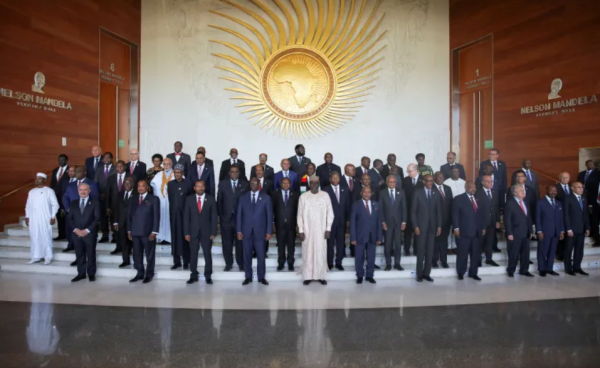
The dispute over Israel’s observer status to the bloc was set in motion in July 2021 when then-chair of the AU Commission, Moussa Faki Mahamat, accepted unilaterally the country’s accreditation [Tiksa Negeri/Reuters]
A Risky Gambit in a Fragile Region
Israel’s recognition of Somaliland is a stark illustration of a foreign policy built on the principle of “divide and influence.” It seeks short-term tactical advantage by undermining the sovereignty of Somalia and fueling regional fragmentation. However, this gambit carries significant long-term risks. By openly treating the disintegration of states as a policy tool, Israel further erodes its own standing under international law and galvanizes opposition among nations that see their own territorial integrity potentially under threat. In the fragile ecosystem of the Horn of Africa, such a move does not create a reliable ally in Somaliland; it sows the seeds for broader, unpredictable instability that ultimately threatens the security of all actors in the region.Loose Woven Stock Illustrations – 999 Loose Woven Stock Illustrations, Vectors & Clipart - DreamstimeIsrael’s recognition of Somaliland is the deliberate act of pulling at the threads of national unity

twitterlinkedininstagramflickrfoursquaremail