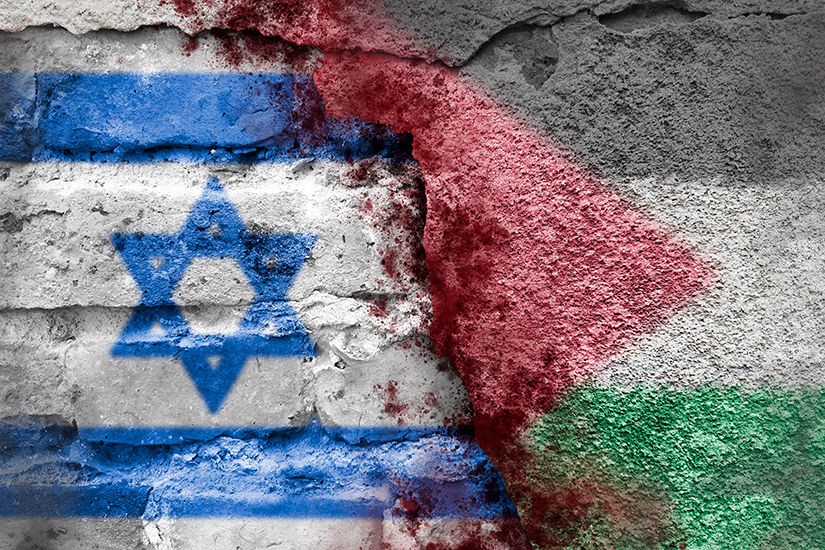
Donald Trump’s recent visit to West Asia, intended to showcase his role in facilitating a Gaza ceasefire, revealed more about his political desperation than diplomatic achievement. What was billed as a victory tour instead exposed strategic failure and moral bankruptcy.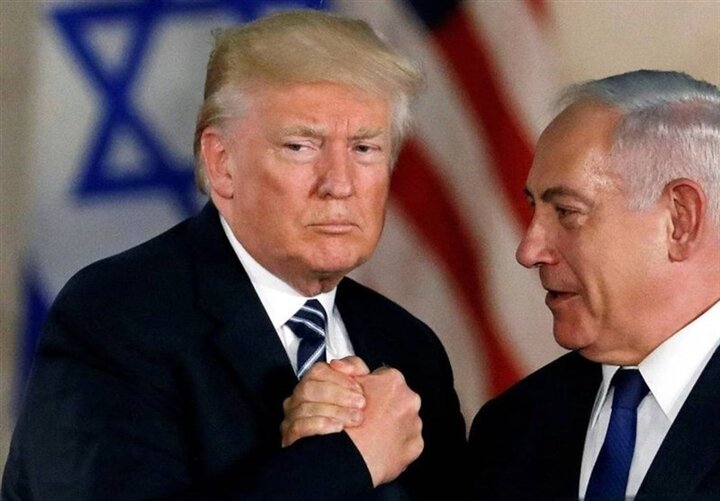
The Unwelcome Mediator
Trump’s attempt to position himself as a peacemaker was met with widespread rejection. The protocol-bound airport receptions couldn’t conceal the stark reality: nobody sees Trump as an impartial mediator. His historical alignment with Israeli extremism and his administration’s record of escalating tensions made his peacemaker pose implausible to regional actors and international observers alike.
The Newyorker:
Late on Wednesday evening, in a social-media post, Trump finally had something to truly trumpet: “I am very proud to announce that Israel and Hamas have both signed off on the first Phase of our Peace Plan,” he wrote just after 7 P.M. “BLESSED ARE THE PEACEMAKERS!”
The ceasefire deal, brokered with the help of America’s Arab allies, such as Qatar and Egypt, calls for Israel to stop fighting within twenty-four hours and to partially withdraw from Gaza, and for Hamas to release by early next week all twenty Israeli hostages presumed to still be alive two years after they were taken during Hamas’s October 7th terrorist attack. At a Cabinet meeting on Thursday, as advisers made plans for Trump to fly to the region on Sunday night for a signing ceremony, the President touted his “momentous breakthrough.”
Strategic Goals Abandoned
The ceasefire terms tell a story of failed objectives. What began as a mission to destroy Hamas and return Israeli prisoners without concessions ended as a negotiated exchange of prisoners with humanitarian provisions. This fundamental deviation from maximalist goals represents not compromise but capitulation—a clear admission that initial assumptions about quick military victory were fatally flawed.
Accountability for Carnage
We cannot discuss Trump’s ceasefire role without acknowledging his responsibility for the violence preceding it. With nearly 70,000 Palestinians killed, Trump must be recognized as Netanyahu’s primary partner in this humanitarian catastrophe. His policies—recognizing Jerusalem as Israel’s capital, endorsing settlement expansion, and providing unconditional military support—created the conditions for this slaughter.
The New Yorker:
On Thursday, the Israeli Cabinet was on the verge of approving the initial stages of a ceasefire agreement that will at least temporarily end the war in Gaza. That war, which began two years ago with the Hamas attacks of October 7th, and the killing of 1,200 people, was followed by Israel’s bombardment and occupation of the Gaza Strip, and the killing of nearly 70,000 Palestinians. (A United Nations commission recently labeled Israel’s war a genocide.) The initial phases of the agreement, which President Trump announced on Wednesday, will likely include a release of the remaining Israeli hostages early next week, a release of Palestinians held by Israel, a pullback of Israeli troops from Gaza, and a much-needed surge of food and medicine into the territory.Even with the ceasefire deal, “I don’t know that Gaza is even a place where humans can continue to live in any meaningful way,” Khaled Elgindy, an expert on the Middle East, said.”Almost everything has been destroyed. There’s almost nothing left, even of Gaza City. All the hospitals are basically not functioning. There are no universities. There are no schools. There are no roads. There’s no sewage-treatment plants, and there’s no infrastructure. Everything has been destroyed. . . . It makes me incredibly sad to say that, because we’re talking about a society of two million people. Gaza City is the largest city in Palestine. It’s one of the oldest places on earth. There’s just so much that has been lost. Beyond just the basic immediate subsistence, can Gaza survive? I don’t know.” In an interview with Isaac Chotiner, Elgindy discusses the contours of the peace deal and what will come next: https://newyorkermag.visitlink.me/kiRFvz
The Political Cost of Failure
Trump’s transactional approach to foreign policy has backfired spectacularly. Rather than enhancing his stature, the Gaza crisis has increased global antipathy toward American leadership and alienated young voters concerned with human rights. The very tools Trump relied on—unilateral pressure and disregard for international law—have undermined his credibility when he most needs it.
A Fragile Future
The current ceasefire represents at best a temporary pause in an ongoing conflict. Fundamental questions about Gaza’s governance, reconstruction, and political future remain unanswered. Without a comprehensive political solution, this ceasefire merely sets the stage for the next round of violence—and Trump has demonstrated he lacks the vision or credibility to help achieve one.