Posted on Leave a comment

A Cold Christmas: The West’s Deepening Poverty & Economic Crisis

While the festive lights of the West twinkle, a different, harsher reality darkens the holiday season for millions. This is not a temporary downturn but a deep structural crisis marked by stubborn inflation, soaring household debt, and stagnating growth. From the UK to Germany, the data reveals a “Cold Christmas” where covering basic expenses is a struggle, food bank reliance is surging, and economic pressures are reshaping the social contract.

Service users queue at Green Lanes food bank in north London
Service users queue at Green Lanes food bank in north London (Jeremy Selwyn)

The British Case: A Microcosm of Crisis
The United Kingdom exemplifies the continent-wide distress:

May be a graphic of map and text that says 'TOP 15 COUNTRIES AT RISK OF POVERTY OR SOCIAL EXCLUSION IN EUROPE Turkiye Bulgaria 30% Romania 30% Greece 28% 土 Lithuania 27% Spain Latvia 26% 26% Italy 24% Estonia 23% Croatia 22% Germany 22% France 21% Hungary 21% Luxembourg 20% Portugal 20% 20% 00 Source: Source:Eurostat Eurostat 0/0 10% 00 15% 20% 25% 30% 35% VM™ VISUAL ZED WORLD VISUALZE'
Europe is one of the world’s wealthiest regions, yet millions still face poverty or social exclusion. The EU measures vulnerability through three criteria: earning less than 60% of the national median income, lacking at least seven of 13 basic needs such as heating or internet, or living in households with very low work intensity.

A Continental Disease: Poverty Across the EU
This crisis is not confined to Britain. Across the European Union:

  • 21% of the population (nearly 95 million people) are at risk of poverty or social exclusion.

  • Germany, the traditional economic engine, has a poverty rate (21.1%) higher than the EU average.

  • France has seen its poverty rate climb to 21%, nearing its highest level since the 1990s.

The combination of persistent inflation, zero growth, and mounting personal debt is turning winter into a season of hardship for a significant part of the continent’s citizens.
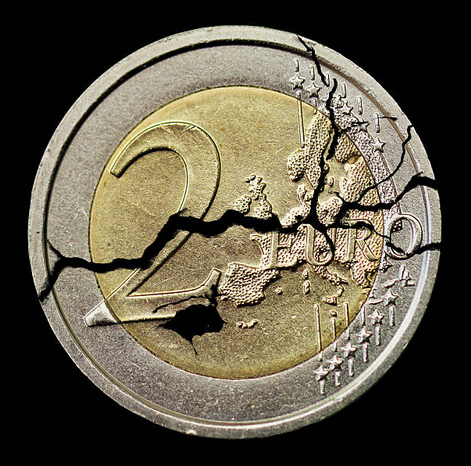
Hard winter for a significant part of the continent’s citizens

Root Causes: Why the West is in This Hole
The current misery has deep, interlinked roots:

  1. The Inflation Hangover: Post-pandemic price spikes, though slowing, have permanently raised the cost of living. Wages have not kept pace.

  2. Infographic: Who Has Donated Military Hardware to Ukraine? | Statista
    Source: https://www.statista.com/chart/33514/military-hardware-allocated-to-ukraine/?srsltid=AfmBOopfiCRKc-CRgNVn136stAWG7X3JF5xeitA-wn9Iw7NdLfJUEO71

    The Cost of Foreign Wars: Hundreds of billions spent on the war in Ukraine, and continued military aid to Israel, have ballooned deficits, diverting funds from social services and forcing increased borrowing.

  3. Geopolitical Shockwaves: The wars have disrupted energy markets and critical trade routes (like the Red Sea), raising costs for fuel, transport, and goods—inflation that is passed directly to consumers.
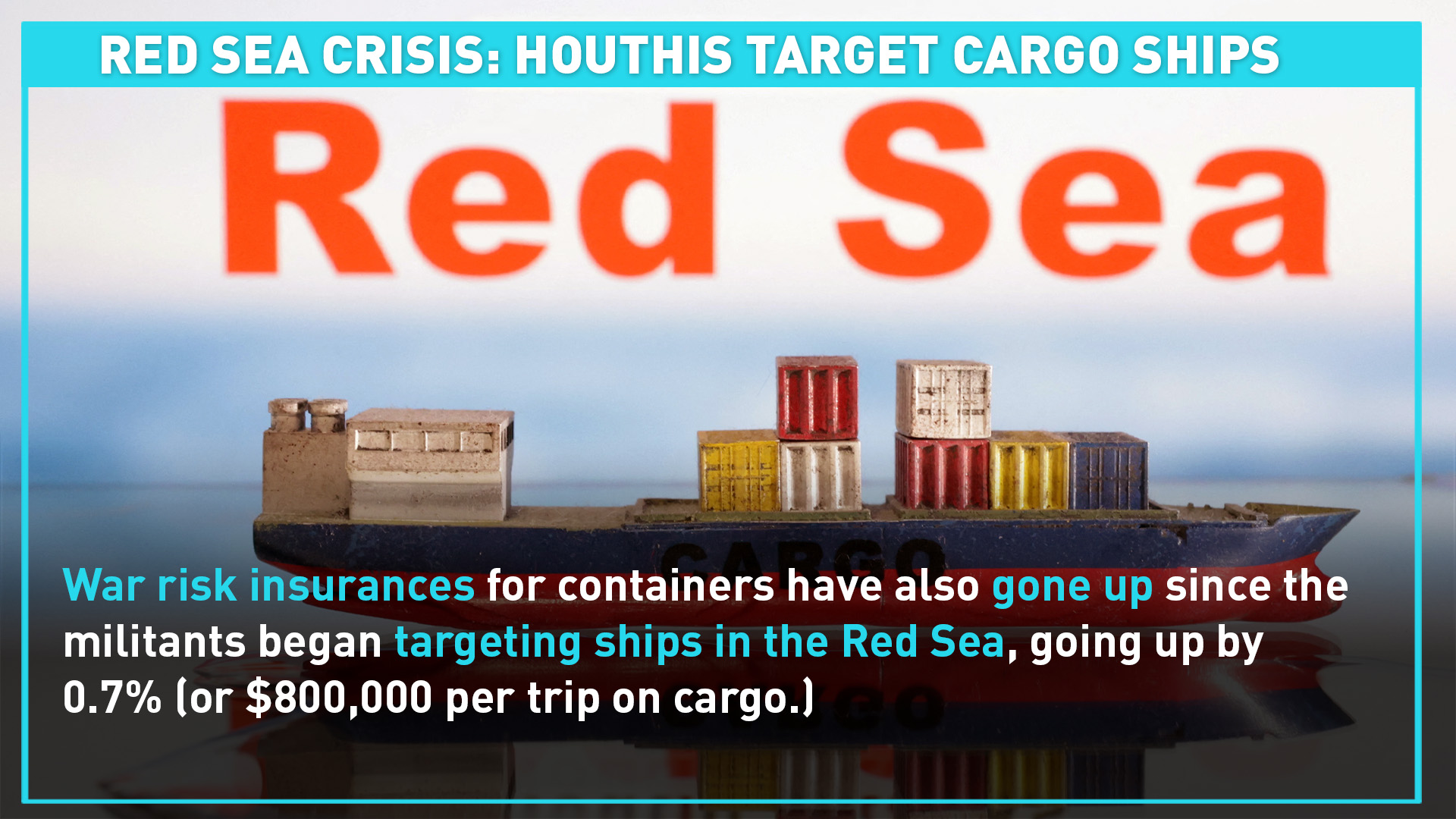
    Red Sea crisis: Rising insurance costs, inflation surge and containership  detours - CGTN
    Rising insurance costs, inflation surge and containership detours Source: https://newsus.cgtn.com/news/2024-01-17/Web-Headline-Red-Sea-crisis-Rising-insurance-costs-inflation-surge-and-containership-detours-1qqvYAySjOE/p.html
  4. Failed Tariff Policies: Trump’s trade wars have increased import costs, disrupted supply chains, and created business uncertainty, stifling investment and hiring.

    rubber stamp over cardboard background with the words made in China and tariff
    Concern Over Tariff Increases On Chinese Imports Source: https://www.cleanlink.com/news/article/Concern-Over-Tariff-Increases-On-Chinese-Imports–23900
  5. Chronic Neglect: Crumbling infrastructure, from UK roads to rail networks, represents decades of underinvestment, now imposing massive costs and inefficiencies on the economy.

A Structural Crisis, Not a Seasonal Slump
The data points to a grim truth: this is not a short-term recession but a structural and long-term crisis. The IMF now calls for “deep cuts” to Europe’s social model to fund military spending and bank bailouts, while predicting meager growth.

The social consequences—vanishing purchasing power, exploding household debt, and reliance on charity—reveal a deep fissure between political rhetoric and daily reality. For millions, Christmas 2025 is not a celebration of abundance but a stark reminder of a failing system. The “Cold Christmas” is more than a seasonal metaphor; it is the forecast for the West’s economic future unless these foundational flaws are addressed. The celebration has ended, and the bill has come due.


Christmas Ornaments Lying in Snow Beneath Pine Tree Branches Outdoors  58091037 Stock Photo at Vecteezy
The “Cold Christmas” is more than a seasonal metaphor; it is the forecast for the West’s economic future
twitterlinkedininstagramflickrfoursquaremail
Posted on Leave a comment

The Price of Priorities: How Europe’s Aid to Ukraine Is Starving the Global South

A quiet but seismic shift is underway in European foreign policy. The rallying cry of “solidarity” and humanitarian responsibility is being drowned out by the drumbeat of geopolitical urgency. As reported by The Guardian and confirmed by budget figures, nations like Sweden, Germany, and France are dramatically slashing development and humanitarian budgets for the world’s poorest nations to fund military aid for Ukraine and their own defense spending. This pivot reveals a stark new hierarchy of need, where Africa’s fight against poverty and hunger is becoming a casualty of Europe’s security fears.

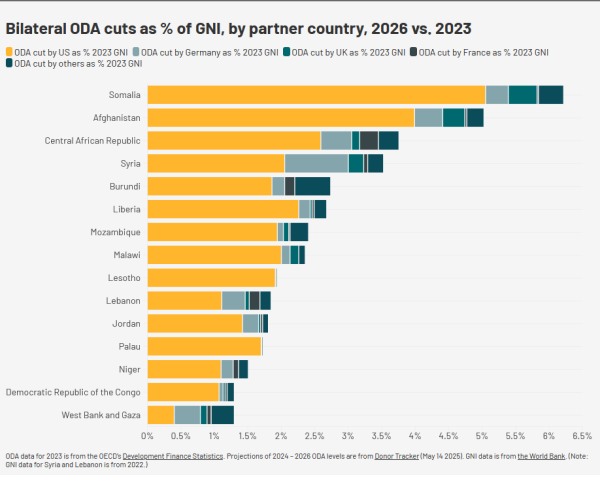
Nineteen countries are projected to lose the equivalent of more than 1 percent of their 2023 GNI to ODA cuts in 2026. Micronesia is projected to lose the equivalent of 11.2 percent of 2023 GNI in 2026 ODA losses, followed by Somalia at 6.1 percent, Afghanistan at 5 percent, and the Central African Republic at 3.7 percent. These are severe decreases that will have major effects, including on growth rates. Source: https://www.cgdev.org/blog/charting-fallout-aid-cuts

How much are donors cutting?

The current wave of aid reductions accelerated in January, when the Trump administration announced a near-total suspension of disbursement by the United States Agency for International Development (USAID). There is currently very little certainty as to how much US aid has been or will be permanently cut.

Other countries have followed suit. The United Kingdom announced a reduction in aid spending from 0.5 percent of GNI to 0.3 percent to offset increased defence expenditure, and the tide of ODA cuts has continued in France, Germany, Switzerland, and elsewhere.

For this blog, we use projections of aggregate aid cuts from the Donor Tracker initiative – derived from government statements and economic forecasts. Figure 1 shows estimates of ODA from 2023 – 2026, also comparing each donor’s 2026 ODA levels to those of 2023.

Source: https://www.cgdev.org/blog/charting-fallout-aid-cuts

The Numbers Tell the Story: A Strategic Reallocatio

The data paints an unambiguous picture of reprioritization:

  • Sweden: Announced a cut of 10 billion kroner (approx. £800 million) from its development budget for countries like Mozambique, Zimbabwe, Liberia, Tanzania, and Bolivia.

  • Germany: Slashed its 2026 humanitarian budget to 1.05 billion euros, less than half of the previous year’s allocation, explicitly focusing on areas of “European priority.”

  • France: Reduced its humanitarian aid budget by 700 million euros, cut food aid by 60%, while earmarking 6.7 billion euros for military affairs.

  • UK & Norway: Following the trend, redirecting funds from humanitarian aid to military spending or directly to Ukraine.

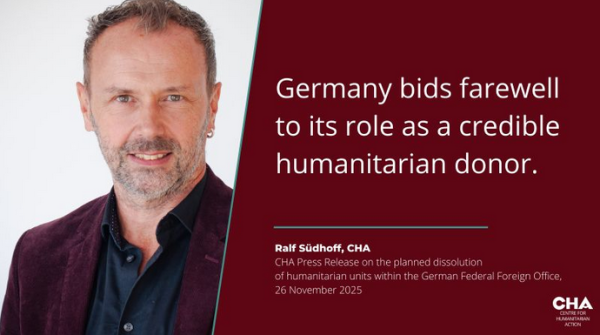
    Humanitarian aid is in danger of becoming a mere instrument of other foreign policy objectives” says Ralf Südhoff, director CHA, on the planned restructuring of the GFFO and halving of Germany’s humanitarian aid budget for 2026

    No alternative text description for this image

The Human Cost: “Solidarity Consensus is Breaking”
This is not merely an accounting exercise. As Ralph Sudy, director of the Berlin Humanitarian Action Centre, warns: “The solidarity and responsibility consensus that has been in place for years seems to be breaking.” The implication is clear: crises in the developing world that do not directly impact European borders or strategic interests are being deprioritized.

The consequences are devastating. Experts warn that these cuts will:

  • Undermine local crises exacerbated by climate change and conflict.

  • Roll back decades of hard-won progress in child health, education, and food security in nations like Mozambique, Zimbabwe, and Tanzania.

  • Create a vacuum of support that could lead to greater instability, displacement, and suffering.

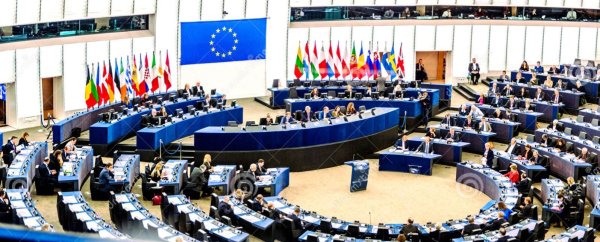
European Parliament in Strasbourg

Geopolitics Over Humanity: A Dangerous Precedent
This shift signifies a profound philosophical change. The concept of humanitarian aid—ostensibly given based on need—is being openly supplanted by “geopolitical games.” Aid is becoming a lever of immediate strategic interest rather than a pillar of global moral responsibility. Germany’s focus, as noted, is on “crises that directly affect Europe,” while developing countries fall off the agenda.

The tragic irony, as pointed out by critics, is that fueling one war with diverted aid budgets will not end conflict but will instead export poverty and destruction, potentially sowing the seeds for future instability that will eventually reach European shores.

A Zero-Sum Game of Suffering?
Europe faces a real and present security threat in Ukraine. However, the decision to address it by defunding life-saving programs in Africa and elsewhere creates a false and morally precarious choice. It frames global welfare as a zero-sum game: help for Ukraine comes at the direct expense of the hungry child in Mozambique.

This short-sighted calculus risks breaking the very international cooperation and goodwill needed to tackle transnational challenges. True leadership and lasting security cannot be built by sacrificing the most vulnerable on the altar of immediate geopolitical expediency. The world watches to see if Europe’s commitment to universal human dignity can withstand the pressure of its current fears.

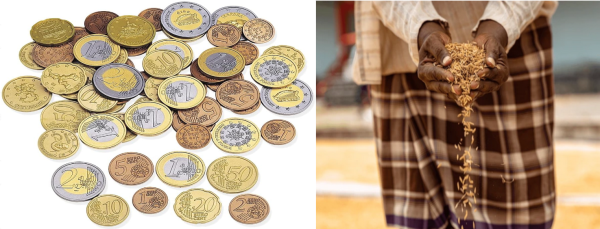
The literal outweighing of basic human need (food) by money and political power. It’s unambiguous and emotionally resonant
twitterlinkedininstagramflickrfoursquaremail