
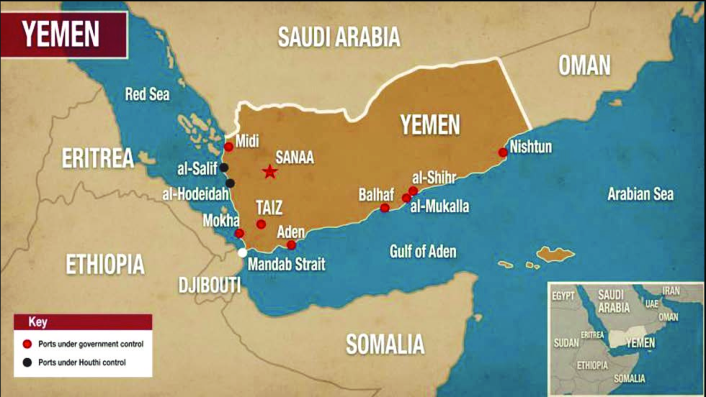
For nearly a decade, the war in Yemen has been framed as a Saudi-led campaign to restore a government and counter the Houthis (Ansarullah). However, a closer look reveals a more complex story. The United Arab Emirates (UAE), while part of the original coalition, has pursued a distinct, long-term geopolitical strategy. Moving beyond the initial objectives, the UAE has focused on controlling Yemen’s coastline, engineering local power through proxy forces, and subtly shifting regional balances, all while laying the groundwork for a potential soft partition of the country.

A Divergent Strategy from the Start
When the Arab coalition launched Operation Decisive Storm in 2015, Saudi Arabia and the UAE had different priorities. Riyadh focused on defeating the Houthis and reinstating the government of President Hadi. Abu Dhabi, recognizing the quagmire of a direct military victory, took a more calculated view. It saw Yemen through the lens of maritime security, global trade routes, and long-term regional influence, adopting a strategy of gradual infiltration and proxy warfare to secure its interests at a lower cost.
The Core Objective: Control the Coastline
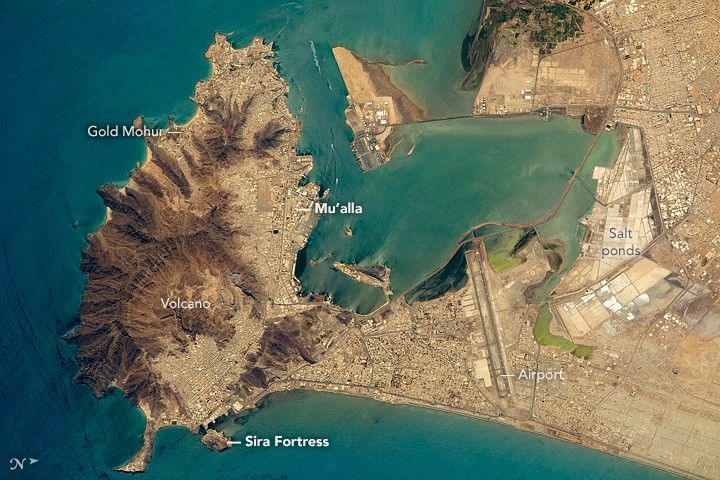
The centerpiece of the UAE’s strategy is the control of Yemen’s strategic ports and coastline. From Aden and Al-Mukalla in the south to Al-Mukha and the critical Bab al-Mandab Strait in the west, the UAE has sought dominance. This is not incidental; it’s a calculated move to secure its own trade routes, prevent the emergence of competing regional ports, and establish itself as the indispensable power over the Red Sea and Indian Ocean shipping lanes. This constitutes a “soft occupation” using investment, cover companies, and local partnerships.
The Method: Proxy Forces and Political Re-Engineering
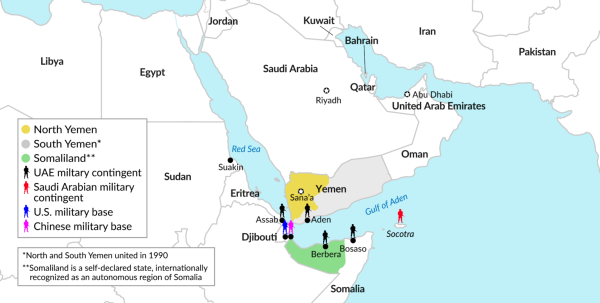
To avoid the pitfalls of direct occupation, the UAE masterfully built a network of local armed groups outside the control of Yemen’s official government. Forces like the Security Belt, the Shabwani Elite, and the Hadrami Elite were created, trained, and armed by the UAE. These proxies allow Abu Dhabi to control territory, fight its battles, and exert decisive influence—particularly in southern Yemen—without deploying large numbers of its own troops. This model has proven resilient, even after the UAE announced a drawdown of its direct forces.
The Geopolitical Payoff: Rivalries and Realignments
This strategy has led to several critical outcomes:
-
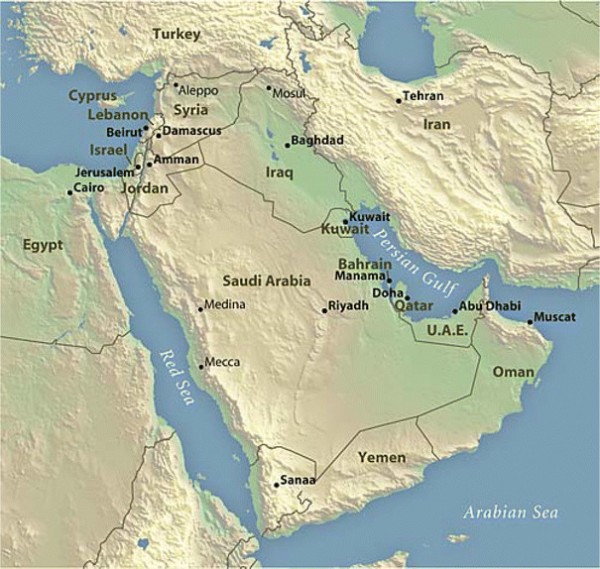
Competition with Saudi Arabia: The UAE’s tangible gains in controlling resource-rich regions like Hadramawt and Shabwah, once under Saudi influence, reveal a growing quiet rivalry between the allies. The UAE is effectively pushing Riyadh out of key areas.
-
Confronting the Muslim Brotherhood: The UAE’s deep opposition to the Islah party (the Yemeni Muslim Brotherhood) drove a wedge between it and the Hadi government, leading Abu Dhabi to back alternative southern factions, culminating in its support for the secessionist Southern Transitional Council (STC).
-
Alignment with U.S. & Israeli Interests: With the Houthi threat to Red Sea shipping, the UAE’s control of the Yemeni coast aligns with American and Israeli security interests. The UAE positions itself as a crucial infrastructure and intelligence partner in containing this threat, increasing its geopolitical value.

Conclusion: The Path to Soft Partition
The UAE’s role in Yemen is not that of a mere military partner but of a strategic architect. Its long-term project—centered on coastal control, proxy power, and balancing rivals—has been alarmingly successful. However, the consequence is the deliberate weakening of Yemen’s central government and the acceleration of its de facto fragmentation. By empowering separatist entities and creating parallel power structures, the UAE has paved the path for Yemen’s soft partition. The future stability of Yemen, and of the region, now hinges on whether these projects of influence can be reconciled with the urgent need for a unified national will and inclusive peace.