Posted on Leave a comment

A Geopolitical Tool, Not a State: Israel’s Recognition of Somaliland

Israel’s recognition of the breakaway region of Somaliland is not a benign diplomatic gesture. It is a calculated move in a long-term strategy of regional destabilization. This analysis argues that Tel Aviv’s action should be seen as a deliberate attempt to weaken national structures, create new crisis points, and extend its geopolitical reach into the strategically vital Horn of Africa and Red Sea corridor, all while disregarding the fundamental principles of international law.
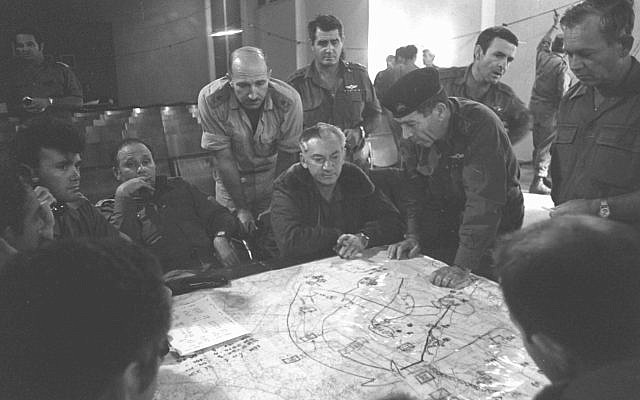
Members of the IDF General Staff look over a map during the outbreak of the Yom Kippur War on October 17, 1973. (Micky Astel/Bamahane/Defense Ministry Archives)
An archival image of Israeli intelligence officials Members of the IDF General Staff look over a map during the outbreak of the Yom Kippur War on October 17, 1973. (Micky Astel/Bamahane/Defense Ministry Archives)

The Strategic Logic: Security Through Instability

Historically, Israel has often pursued a security doctrine that favors a fragmented and unstable neighborhood over strong, unified regional states. Recognizing Somaliland fits this pattern perfectly. It is not about supporting a nascent democracy but about engineering a geopolitical tool.

From a strategic viewpoint, this move is part of Israel’s effort to shift its confrontation with the Axis of Resistance (Iran and its allies) to more distant, less costly battlegrounds. The Red Sea and Bab al-Mandab Strait have become critical pressure points. By gaining a foothold in Somaliland, Israel seeks future intelligence and operational access in a region that could be decisive in containing Iranian influence and securing vital shipping lanes for its allies, primarily the United States.

The UN Charter is outdated and unfit for purpose
UN Charter: 80 years of guiding principles (https://www.un.org/en/about-us/un-charter)

[/caption]The Political Message: Normalizing DisintegrationBeyond strategy, the recognition sends a profound political message: the complete disregard for the sovereignty and territorial integrity of states. For Israel, principles like non-interference and territorial unity—cornerstones of the UN Charter—are subordinate to its immediate interests.

Just as the occupation of Palestinian territories and the violation of UN resolutions have become routine, supporting the disintegration of sovereign nations is now being normalized as a legitimate tool of Israeli foreign policy. Recognizing Somaliland is an attempt to legitimize fragmentation itself as a geopolitical tactic.

The Backfire: Isolation Instead of Legitimacy
Contrary to any hopes in Tel Aviv, this move has not bought Israel international goodwill or legitimacy. Instead, it has triggered widespread condemnation from Arab, Islamic, and African states, along with concern from international actors. The reaction underscores a critical consensus: unilateral acts of disintegration threaten regional security for all.

The fear is of a contagious “separatist pattern” that could destabilize the entire Red Sea region. Far from being a diplomatic masterstroke, Israel’s recognition of Somaliland has proven to be a costly strategic gamble that has increased its political isolation.
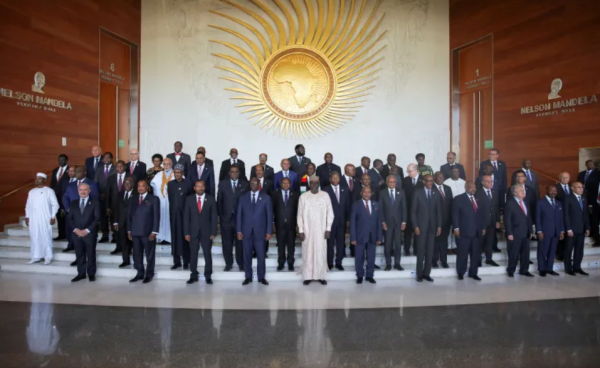
The dispute over Israel’s observer status to the bloc was set in motion in July 2021 when then-chair of the AU Commission, Moussa Faki Mahamat, accepted unilaterally the country’s accreditation [Tiksa Negeri/Reuters]
A Risky Gambit in a Fragile Region
Israel’s recognition of Somaliland is a stark illustration of a foreign policy built on the principle of “divide and influence.” It seeks short-term tactical advantage by undermining the sovereignty of Somalia and fueling regional fragmentation. However, this gambit carries significant long-term risks. By openly treating the disintegration of states as a policy tool, Israel further erodes its own standing under international law and galvanizes opposition among nations that see their own territorial integrity potentially under threat. In the fragile ecosystem of the Horn of Africa, such a move does not create a reliable ally in Somaliland; it sows the seeds for broader, unpredictable instability that ultimately threatens the security of all actors in the region.Loose Woven Stock Illustrations – 999 Loose Woven Stock Illustrations, Vectors & Clipart - DreamstimeIsrael’s recognition of Somaliland is the deliberate act of pulling at the threads of national unity

twitterlinkedininstagramflickrfoursquaremail
Posted on Leave a comment

Ports, Proxies & Partition: Decoding the UAE’s Long Game in Yemen

For nearly a decade, the war in Yemen has been framed as a Saudi-led campaign to restore a government and counter the Houthis (Ansarullah). However, a closer look reveals a more complex story. The United Arab Emirates (UAE), while part of the original coalition, has pursued a distinct, long-term geopolitical strategy. Moving beyond the initial objectives, the UAE has focused on controlling Yemen’s coastline, engineering local power through proxy forces, and subtly shifting regional balances, all while laying the groundwork for a potential soft partition of the country.

undefined
UAE and STC-operated roadblock in Socotra. Source: Wikipedia(https://en.wikipedia.org/wiki/Southern_Transitional_Council)

A Divergent Strategy from the Start
When the Arab coalition launched Operation Decisive Storm in 2015, Saudi Arabia and the UAE had different priorities. Riyadh focused on defeating the Houthis and reinstating the government of President Hadi. Abu Dhabi, recognizing the quagmire of a direct military victory, took a more calculated view. It saw Yemen through the lens of maritime security, global trade routes, and long-term regional influence, adopting a strategy of gradual infiltration and proxy warfare to secure its interests at a lower cost.

2016-05-09 00:00:00
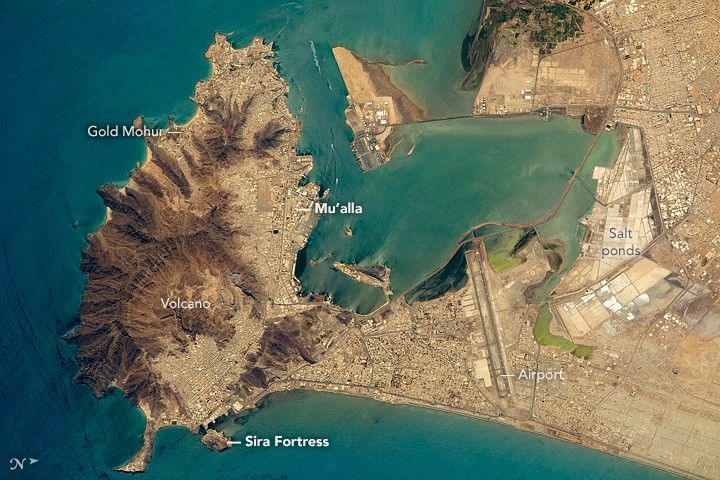
Port of Aden

The Core Objective: Control the Coastline
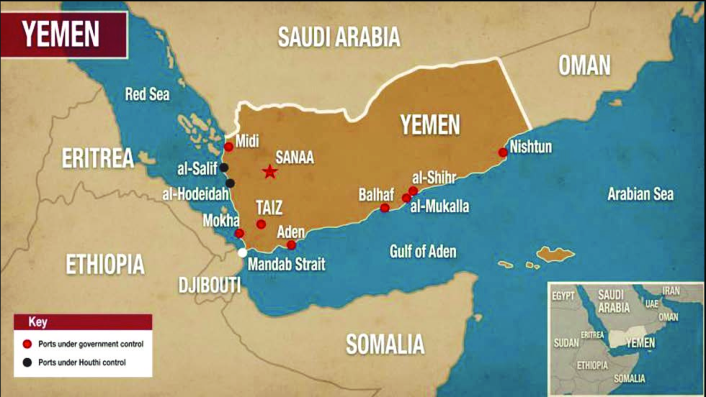
The centerpiece of the UAE’s strategy is the control of Yemen’s strategic ports and coastline. From Aden and Al-Mukalla in the south to Al-Mukha and the critical Bab al-Mandab Strait in the west, the UAE has sought dominance. This is not incidental; it’s a calculated move to secure its own trade routes, prevent the emergence of competing regional ports, and establish itself as the indispensable power over the Red Sea and Indian Ocean shipping lanes. This constitutes a “soft occupation” using investment, cover companies, and local partnerships.

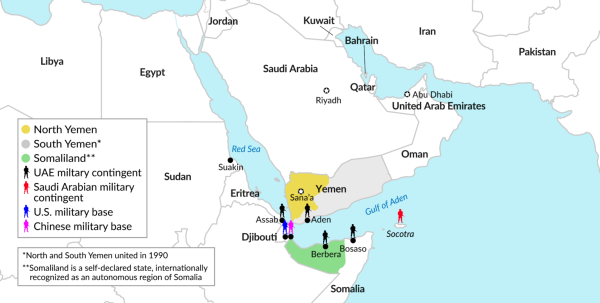
The UAE is using troop deployments and development funding to gain influence around the Red Sea. It also wants to create a quasi-independent state in southern Yemen

The Method: Proxy Forces and Political Re-Engineering
To avoid the pitfalls of direct occupation, the UAE masterfully built a network of local armed groups outside the control of Yemen’s official government. Forces like the Security Belt, the Shabwani Elite, and the Hadrami Elite were created, trained, and armed by the UAE. These proxies allow Abu Dhabi to control territory, fight its battles, and exert decisive influence—particularly in southern Yemen—without deploying large numbers of its own troops. This model has proven resilient, even after the UAE announced a drawdown of its direct forces.

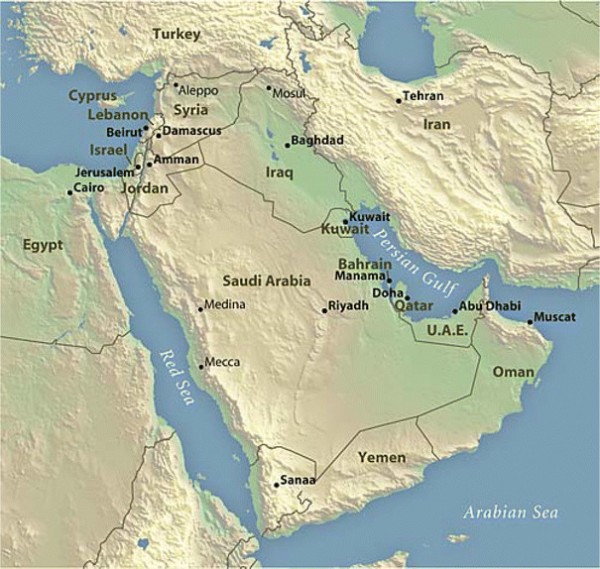
Map of the Arabian Peninsula

The Geopolitical Payoff: Rivalries and Realignments
This strategy has led to several critical outcomes:

  • Competition with Saudi Arabia: The UAE’s tangible gains in controlling resource-rich regions like Hadramawt and Shabwah, once under Saudi influence, reveal a growing quiet rivalry between the allies. The UAE is effectively pushing Riyadh out of key areas.

  • Confronting the Muslim Brotherhood: The UAE’s deep opposition to the Islah party (the Yemeni Muslim Brotherhood) drove a wedge between it and the Hadi government, leading Abu Dhabi to back alternative southern factions, culminating in its support for the secessionist Southern Transitional Council (STC).

  • Alignment with U.S. & Israeli Interests: With the Houthi threat to Red Sea shipping, the UAE’s control of the Yemeni coast aligns with American and Israeli security interests. The UAE positions itself as a crucial infrastructure and intelligence partner in containing this threat, increasing its geopolitical value.

Risk of renewed violence and even partition of Yemen rises after southern offensive

Conclusion: The Path to Soft Partition
The UAE’s role in Yemen is not that of a mere military partner but of a strategic architect. Its long-term project—centered on coastal control, proxy power, and balancing rivals—has been alarmingly successful. However, the consequence is the deliberate weakening of Yemen’s central government and the acceleration of its de facto fragmentation. By empowering separatist entities and creating parallel power structures, the UAE has paved the path for Yemen’s soft partition. The future stability of Yemen, and of the region, now hinges on whether these projects of influence can be reconciled with the urgent need for a unified national will and inclusive peace.

https://www.travelthewholeworld.com/wp-content/uploads/2013/12/Yemen-Mukalla-Night.jpg
Central part of Yemen, the costal city known as Mukalla
twitterlinkedininstagramflickrfoursquaremail