Posted on Leave a comment

Ice, Minerals, and Power: What Trump Really Wants in Greenland

The sudden reappearance of Greenland on the U.S. foreign policy agenda is more than a bizarre headline. It is a stark symbol of the return of 19th-century expansionist logic to 21st-century geopolitics. Donald Trump’s revival of the idea to “purchase” or dominate the world’s largest island is not a personal whim, but a structural view that subordinates sovereignty and the foundational principles of the UN Charter to the interests of great powers. This move has triggered a transatlantic diplomatic crisis, revealing a deep clash between unilateral ambition and the established international legal order.
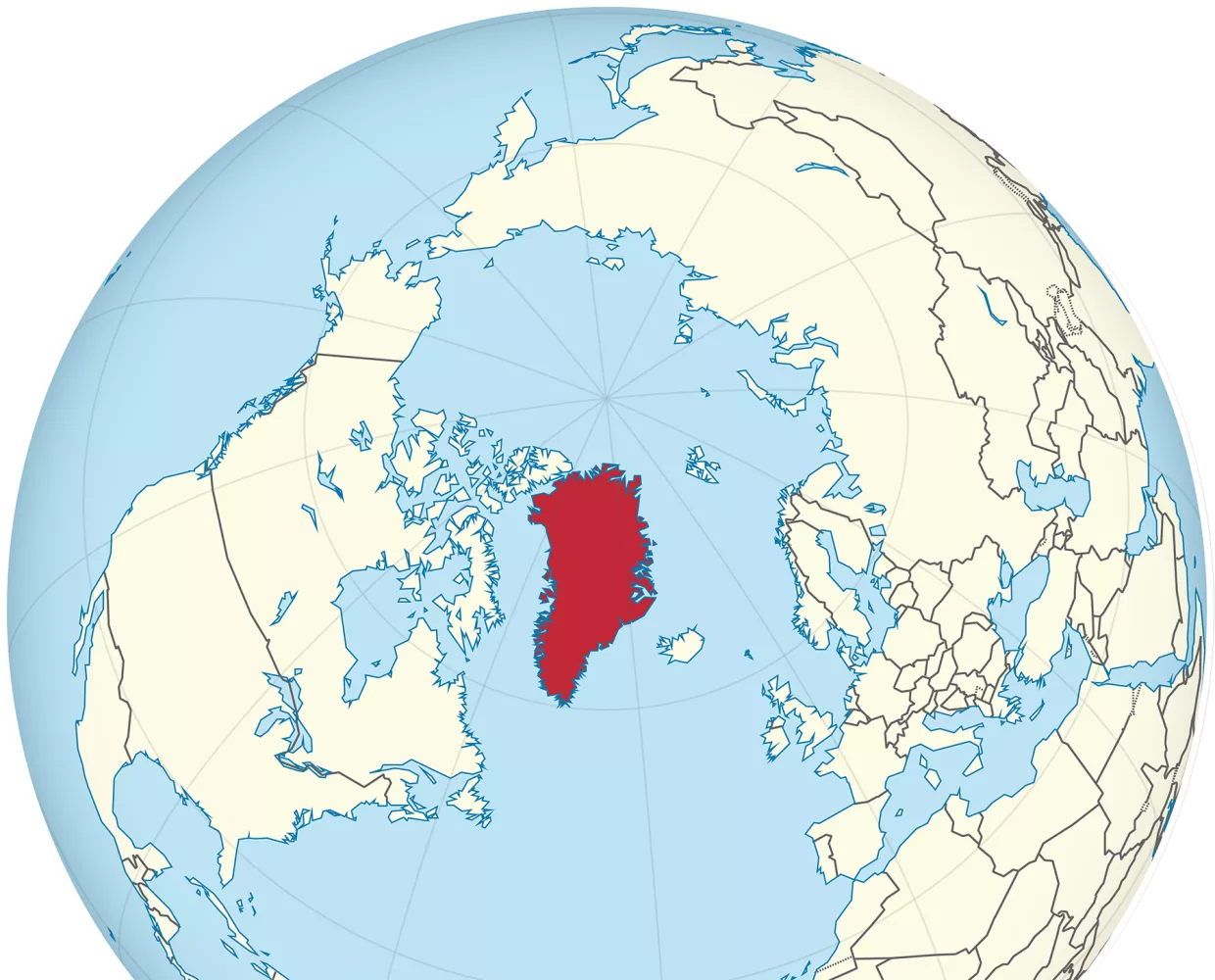
A map showing Greenland's location on the globe.
Greenland hosts Pituffik Space Base, formerly Thule Air Base, a U.S. military installation key to missile early warning and defense as well as space surveillance.

From Frozen Frontier to Geopolitical Prize
Once a remote, frozen periphery, Greenland has been thrust into the center of global power competition. Climate change is unlocking new shipping routes and, crucially, exposing vast reserves of rare earth elements and strategic minerals vital for advanced technology, renewable energy, and defense industries. This transformation has made the island a key geopolitical node, and the U.S., under Trump, is seeking to secure direct access, bypassing traditional diplomatic norms.
Geopolitical Interests Stock Photos - Free & Royalty-Free Stock Photos from Dreamstime
Trump, is seeking to secure direct access, bypassing traditional diplomatic norms.

The Tool: “Special Representative” or Agent of Pressure?
The appointment of a U.S. “Special Representative to Greenland”—a diplomatic tool typically reserved for crisis zones—was a provocative act. Denmark rightly condemned it as unacceptable intervention. Public musings about Greenland “joining” the U.S. stripped away any pretense, revealing an ambition that goes far beyond security cooperation. This move directly challenges Danish sovereignty and signals to allies and adversaries alike that Washington is willing to exert pressure wherever it identifies a strategic interest.
860+ Eu And Danish Flags Stock Photos, Pictures & Royalty-Free Images - iStock
Denmark alongside with the other EU countries shaping a united frontier.

Europe’s Response: A Line in the Ice
Denmark’s swift and firm response—”Greenland is not for sale”—represents a defense of a fundamental European principle: respect for territorial sovereignty. For the EU, this is a precedent-setting case. If pressure is accepted today on a European territory, it could target any member tomorrow. The Greenland crisis has thus become a rallying point for European resistance against a U.S. policy driven purely by a “power right” doctrine, reviving fears of a modern Monroe Doctrine applied to allies.

No photo description available.
Greenland holds vast, largely untapped mineral resources, including rare earth elements, graphite, lithium, and other critical minerals. 🪨⚡ These resources could play a key role in the future of green energy, technology, and global supply chains — making Greenland a potential hotspot for strategic development.  Source:https://www.facebook.com/groups/3623312684642776 Photo: Wall Street Journal

The True Prize and the Transatlantic Rift
Beyond the sensational headlines lies the cold reality: Greenland’s immense mineral wealth is the hidden driver of this crisis. Trump’s policy seeks a blend of resource dominance, strategic positioning, and political influence, treating an ally’s territory as a geopolitical chess piece.

This crisis exposes a foundational rift in transatlantic relations. Europe’s security is built on a framework of respected international law and multilateral cooperation, as embodied in the UN system, while Trump’s America operates on a logic of unilateral power and transactional gain. The aggressive pursuit of Greenland may offer Washington short-term strategic advantages, but it comes at a devastating long-term cost: eroding trust, fracturing alliances, and pushing Europe toward strategic independence. In the frozen waters of the Arctic, a new, colder chapter in U.S.-Europe relations is being written.


Crystal Clear Ice Cube Melting Dark Surface Water Droplets Stock Photos - Free & Royalty-Free Stock Photos from Dreamstime
The transient political cooperation is melting away to reveal hard, enduring interests. 
twitterlinkedininstagramflickrfoursquaremail
Posted on Leave a comment

Peace Through Power or Peace Through War? The Militarization of Trump’s Doctrine

Introduction: The doctrine of “peace through power” has been a cornerstone of statecraft since the Roman Empire. But under Donald Trump, this historical concept has been reshaped into a tool for aggressive, unilateral action. This analysis argues that Trump’s version of the doctrine has not guaranteed peace but has instead fueled instability, humanitarian crises, and the erosion of international institutions, effectively becoming a doctrine of “peace through war.”

Roman Legionary - World History Encyclopedia
Note: The Roman legionary was a well-trained and disciplined foot soldier, fighting as part of a professional well-organized unit, the legion (Latin: legio), established by the Marian Reforms. While major tactical changes appeared during the final days of the Roman Republic and the early days of the Roman Empire, Roman armor and weapons, albeit with minor adaptations, remained simple.

From Hadrian’s Wall to the Cold War
The roots of “peace through power” run deep. The Roman Emperor Hadrian operationalized it by building his famous wall—a symbol of military strength meant to deter attacks and secure the empire’s borders. In modern times, U.S. leaders like Dwight Eisenhower and Ronald Reagan adopted this logic. Reagan, in particular, brought it to a crescendo during the Cold War, using massive defense budgets and arms superiority as a deterrent against the Soviet Union. The goal was to prevent war through undeniable strength.

President Trump will kick off Army's 250th birthday celebrations Tuesday at Fort Bragg - ABC7 Los Angeles
Trump kicks off Army’s 250th birthday celebrations at Fort Bragg, says he’ll restore base names

The Trump Transformation: From Deterrence to Aggression
Donald Trump has co-opted the phrase “peace through power,” but his application marks a significant shift. His policies have moved beyond deterrence towards what can be called “peace through aggressive military power.” This approach relies on:

  • Maximum Pressure: Severe economic sanctions and embargoes.

  • Military Threats: Overt and covert threats against adversaries.

  • Unilateral Action: Drone strikes and assassinations of key figures, such as Qasem Soleimani.

As Trump himself implied in a speech to the Israeli Knesset, his administration believed that military action (or its threat) was a necessary tool to force outcomes, like a peace agreement. This represents a fundamental change: military power is no longer just a shield for defense, but a sword to impose will.

The Destructive Age of Urban Warfare; or, How to Kill a City and How to Protect It
Note: Combat in urban areas is the most destructive type of warfare imaginable. Densely populated terrain, complex systems of systems that support human life, military weapons not optimized to these conditions, and asymmetric close-quarters battle tactics all make warfare in cities unforgiving for combatants, noncombatants, and cities alike. The unintentional—and at times intentional—destruction of the physical terrain, populations, and infrastructure of cities during combat leave effects that can be felt for generations.

The Cost of Militarism: Five Critical Failures
The real-world consequences of this aggressive doctrine reveal its profound flaws:

  1. It Fuels Instability, Not Security: Rather than preventing conflict, relentless threats and militarism spark arms races and regional tensions, creating a more volatile world.

  2. It Diverts Vital Resources: The trillions spent on expanding an already massive military budget are funds stripped from domestic needs like healthcare, education, and infrastructure, weakening the social fabric at home.

  3. It Erodes American Credibility: Unilateralism and constant threats have alienated traditional allies, weakened multilateral institutions like the UN, and driven some nations closer to America’s competitors.

  4. It Creates Humanitarian Crises: Airstrikes in Yemen, assassinations, and sanctions have resulted in thousands of civilian casualties, painting America as a nation that disregards international law and human rights.

  5. It Embraces Divisive Nationalism: The doctrine is often paired with a rhetoric of extreme nationalism, which deepens social divisions at home and exacerbates cultural and racial tensions abroad.

    Flags Handshake Stock Illustrations – 3,438 Flags Handshake Stock Illustrations, Vectors & Clipart - Dreamstime
    Note: A handshake between nations is a powerful symbol of peace and a commitment to cooperation, with its roots in showing peaceful intentions by demonstrating one is unarmed. While a handshake alone doesn’t guarantee peace, it is a crucial first step in a diplomatic process that can solidify agreements, build trust, and signify the end of conflict. It represents a mutual understanding and a desire for unity and collaboration.

Conclusion: The Need for a New Path
The “doctrine of peace through power” has been implemented under Trump in a way that guarantees the very opposite of peace. By choosing coercion over diplomacy and unilateral force over multilateral cooperation, this approach has damaged global stability and America’s moral standing. The world does not need more militarism. A secure and prosperous future must be built on the foundations of diplomacy, respect for international law, and genuine cooperation. The alternative—a path of endless conflict—is no path to peace at all.

Nationalism is blamed for this century’s wars, but nationalism need not mean militarism. And the nation-state has been the laboratory of liberty.

twitterlinkedininstagramflickrfoursquaremail