Introduction: 🌍🔥
The military aggression of the United States and the Zionist regime(Israel) against Iran was meant to be a decisive blow—a swift operation to destabilize Tehran and reshape the Middle East. Instead, it has become the most complex global crisis of the 21st century. 💥
Contrary to Pentagon calculations, Iran’s power structure did not collapse. On March 17, the Assembly of Experts elected Ayatollah Mojtaba Khamenei as the third leader of the revolution with unprecedented speed and unity—a clear message to the world: the doctrine of resistance continues. 🏛️⚡
Now, the consequences of this American aggression have spiraled far beyond the battlefield. With oil prices soaring, global recession looming, and America’s diplomatic isolation deepening, Washington finds itself in a strategic deadlock—a trap of its own making. 🇺🇸🪤
1. Global Shock to the Energy Market and International Economy 🛢️📉
The invasion targeted the beating heart of the world’s energy supply—and the global economy immediately entered a critical phase.
| Impact | Scale |
|---|---|
| Brent oil price surge | 40% jump in 48 hours, past $140/barrel |
| Shipping insurance costs | 500% increase in the Strait of Hormuz |
| Energy transit disruption | Crippling delays to China and Europe |
This is the heaviest price shock in decades. While Trump’s rhetorical interventions briefly eased prices, the underlying instability remains. Global inflation has been reignited, and supply chain stability in Western markets has plummeted to its lowest level this century. 📊💥
2. Domestic Political Crisis in America 🏛️😤
Donald Trump launched this military aggression without obtaining final permission from Congress—and that decision has now become a political fault line running through the heart of Washington. ⚖️💢
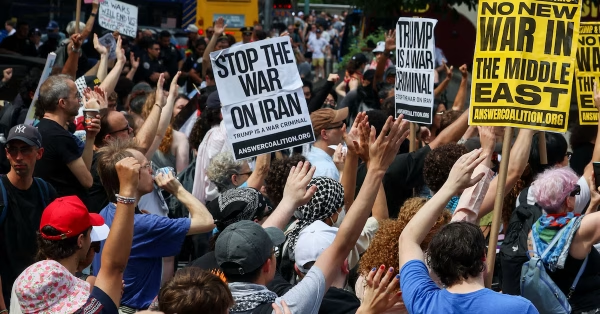
Gallup polls show the administration’s popularity in free fall, dipping below 30 percent. The American public, weary from decades of endless wars in the Middle East, is expressing its anger. Major cities have become centers of anti-war rallies, with protesters chanting: “No to another war in the Middle East!” 📢✌️
This gap between the White House and the people—combined with fractures within the power structure itself—has left Washington paralyzed: unable to either decisively continue the battle or accept a humiliating retreat. 🔄🚫
The Deal That Was: Oman’s Revelation 🇴🇲🤝🇮🇷🇺🇸
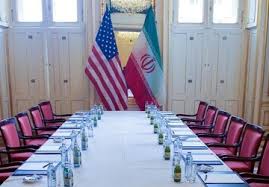
Before the bombs fell, there was progress—real progress. According to statements from Oman’s Prime Minister, who personally mediated the secret negotiations between Iran and the United States, the two sides were closer than ever to a historic breakthrough. 🕊️✨
What Oman revealed:
| Point | Detail |
|---|---|
| Iran’s commitment | Accepted to stop all uranium enrichment |
| Reduction agreement | Agreed to reduce existing enriched uranium stockpiles |
| The momentum | “Huge progress” was being made |
| The shock | “All of a sudden, they attacked the country” |
This revelation shatters the official narrative that military action was necessary to prevent Iran from obtaining nuclear weapons. Iran was already stepping back. The bomb was not the threat—the negotiation’s success was. 💣🚫
The question now haunts diplomatic circles: Why attack when victory was already being achieved at the table? 🤔💥
For the global audience, Oman’s words confirm what critics suspected: this war was never about non-proliferation. It was about something else entirely. 🌍👀
3. Changing the Balance of Power and Stabilizing Iran’s Political Structure 🇮🇷📈
The Pentagon’s entire strategy rested on a single assumption: that military pressure would cause Iran’s power structure to collapse. This was a catastrophic miscalculation. 💥🤦
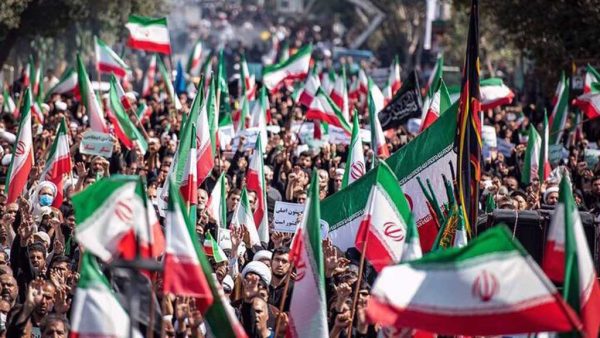
Instead of division, the invasion became a driver of national cohesion. The turning point came on March 9, when the Assembly of Experts elected Mojtaba Khamenei as the new leader with remarkable speed and determination. This was not a regime in chaos—it was a system demonstrating its resilience. 🏛️⚡
The message was unmistakable:
-
✅ No power vacuum emerged
-
✅ The doctrine of resistance continues
-
✅ Domestic political currents unified around national defense
Washington’s dreams of regime change have transformed into a nightmare of military attrition. Its psychological operations? Rendered completely ineffective. 📉💔
4. Imposing Exorbitant Financial and Logistics Costs on America 💰📉
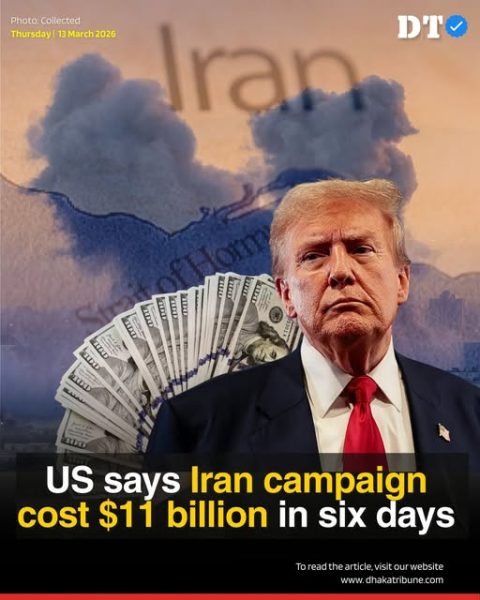
This war is a financial catastrophe for an American economy already struggling with chronic inflation. According to analysis by the Center for Strategic and International Studies (CSIS) :
| Timeframe | Cost |
|---|---|
| Daily operational costs | $1.8 – $2 billion |
| 6 months of war | Over $360 billion |
| Long-term (veterans + fleet) | $2.5 trillion burden |
These are not abstract numbers. They represent:
-
Taxpayer dollars diverted from domestic needs 🏥📚
-
Inflationary pressure that hits every American household 🏠
-
A debt burden that will constrain the economy for decades ⏳
The Pentagon, for all its power, cannot escape the brutal arithmetic of attrition. ✖️💥
5. Diplomatic Isolation and Rifts in Traditional Coalitions 🌍💔
Washington now faces the most severe divergence among its allies in modern history. The cracks are visible everywhere:
| Region | Response |
|---|---|
| 🇩🇪 Germany | Closed airspace to US military flights |
| 🇫🇷 France | Refused overflight rights |
| 🇪🇺 Europe | NATO effectiveness at historic low |
| 🇬🇧 UK | Standing with US—creating EU bipolarity |
| 🇦🇪 Gulf States | Official neutrality declared |
Logistics impact: The European airspace closures alone have increased Pentagon operational costs by 20 percent. ✈️💰
In the Persian Gulf, despite hosting American forces at their bases, Arab governments issued coordinated statements declaring neutrality, refusing to allow their “soil and airspace” to be used for offensive operations against Iran. 🛑🌍
This forced neutrality has:
-
Limited America’s strategic depth
-
Pushed the operational burden onto distant aircraft carriers
-
Revealed the crumbling foundations of traditional US coalitions
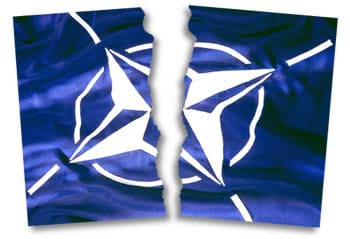
When allies become obstacles: the unprecedented rift in Western unity.
6. National Security and Stalemate in Symmetrical and Asymmetrical Battles ⚔️🔄
Iran operationalized its doctrine of “mosaic defense” —expanding the battlefield across the entire region. The results have shocked the Pentagon:
| Asymmetric Impact | Scale |
|---|---|
| US casualties (first 48h) | 650 killed and wounded |
| Missile accuracy | Fateh missiles challenged Patriot systems |
| Resistance coordination | From Lebanon to Yemen, unified response |
| CENTCOM crisis | Unprecedented personnel and infrastructure threat |
Pentagon reports to Congress now acknowledge a terrifying reality: the US military can only sustain this level of asymmetric attack for a limited number of days due to logistical weaknesses. 📉💥
Washington has entered a “strategic impasse” —where the costs of staying in the region now exceed America’s military and political capacity to bear them. 🪤🇺🇸
Conclusion: From Hegemony to Strategic Impasse 🏛️➡️🪤
America’s military aggression against Iran should not be viewed as just another regional conflict. It is a historical miscalculation that has fundamentally altered the power paradigm in the Middle East. 🌍💥
Washington entered this battle believing it could create a power vacuum in Tehran. Instead, it:
-
✅ Cemented Iran’s internal cohesion around new leadership
-
✅ Activated asymmetric defense capacities that trap the US in an “erosion cycle”
-
✅ Triggered diplomatic isolation among traditional allies
-
✅ Caused irreparable shocks to global energy markets
-
✅ Revealed that the era of unilateral hegemony is over
The cost-benefit balance has shifted—decisively and permanently—against American national interests. 📉🇺🇸
Now, the United States faces an impossible choice:
| Option | Consequence |
|---|---|
| Continue the war | Accelerated decline, dollar weakening, regional influence collapse |
| Accept new realities | Return to diplomatic table before domestic crisis explodes |
For its part, Iran has demonstrated something the Pentagon’s equations could never predict: strategic maturity. Not just in survival, but in crisis management and the imposition of mutual costs. 🧠🇮🇷
The question hovering over Washington is simple: How much more will America bleed before it accepts that the old rules no longer apply? ⏳👀
As Oman’s revelations confirm, this war was never necessary. Iran was already stepping back from the nuclear edge. The bombs that fell were not about preventing a threat—they were about something else entirely. And now, the entire world pays the price. 🌍💔