Posted on Leave a comment

Sleepwalking to War: Why Washington’s Pressure on Iran Is Failing 😴🇺🇸➡️🇮🇷

Introduction: 🌍⚠️

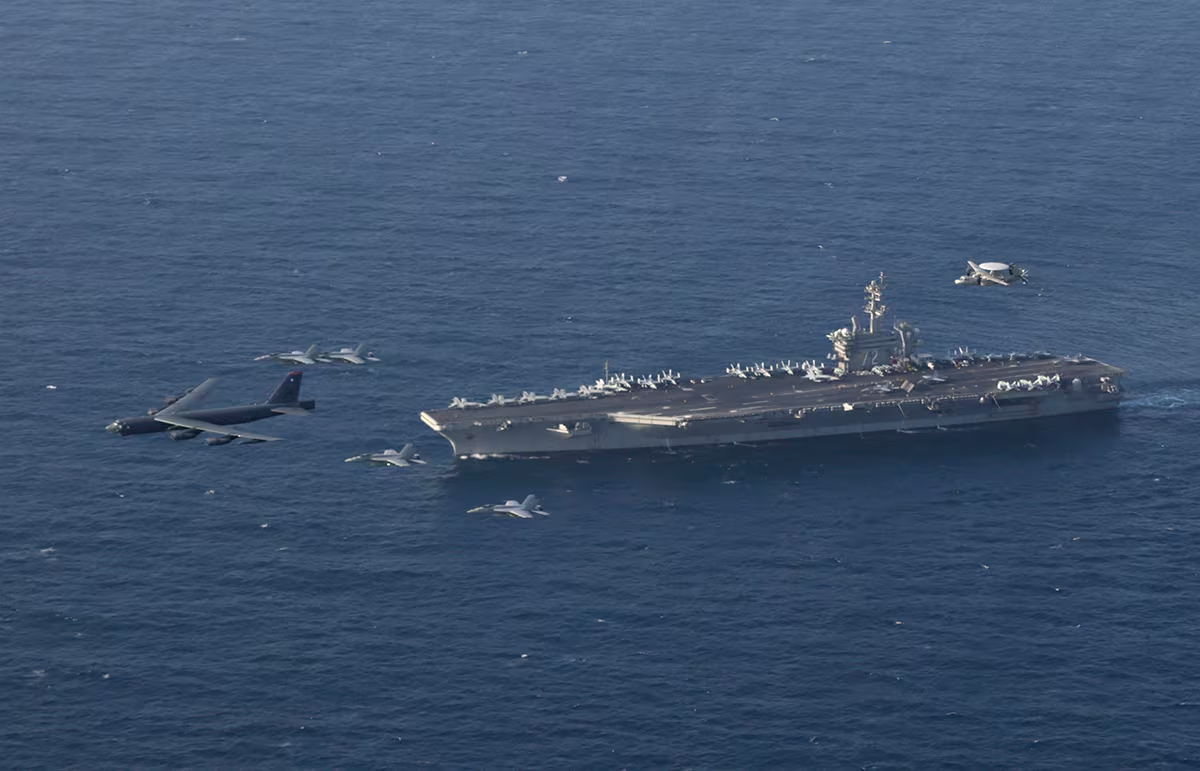
Over recent weeks, an ominous U.S. military buildup has accelerated across the waters and territories of West Asia. 🛳️✈️ Concurrently, Western-backed protests have raged with fluctuating intensity throughout major Iranian cities. President Trump has issued dire threats of impending “bad things” if Tehran refuses to curb its nuclear research and missile programs. 🗣️💥 But as the drums of war reach a belligerent crescendo, urgent warnings are being sounded—not from Tehran, but from within Washington’s own establishment. 🥁🔊

The question haunting the White House is simple yet profound: Why won’t Iran capitulate? 🇺🇸❓🇮🇷
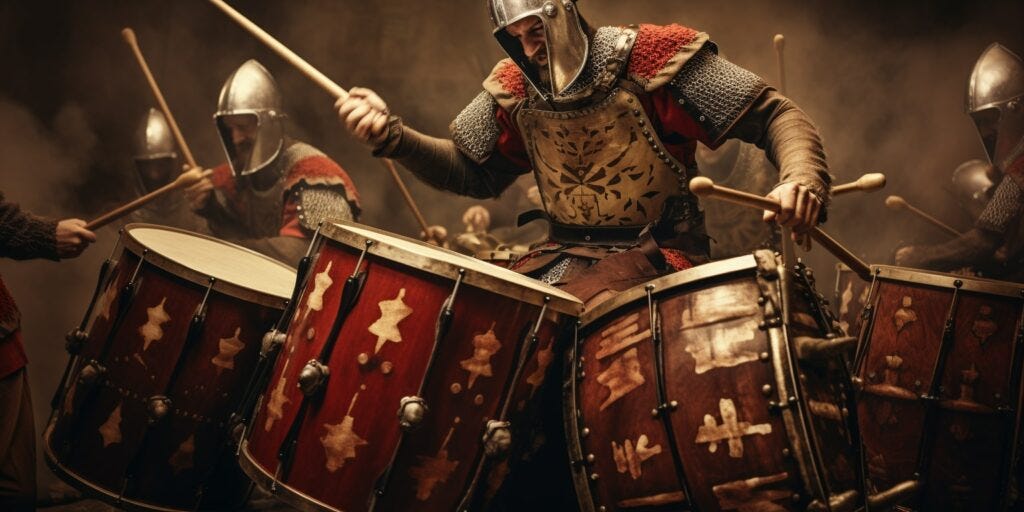
How War Drums Changed the Course of History: The Psychology of Sound in Ancient Warfare | by Zacharias Hendrik | Medium
“Nobody wants this. We’re sleepwalking towards a war, in search of a strategy.” — Aaron David Miller

The Media’s Failure: Scenarios, Not Questions 📺🤐

The Western media has singularly failed to question the ultimate objectives—let alone the legality or morality—of U.S. military action against Iran. Instead, outlets have typically outlined the potential merits of “intervention.” 📰 The BBC has gone so far as to publish an explainer guide to different attack “scenarios.” 📋💥

On February 19th, the British state broadcaster expressed genuine bewilderment:

“Why do Iranian leaders, at least publicly, remain defiant in the face of the world’s most powerful military and its strongest regional ally in the Middle East?” 🤷‍♂️🇬🇧

The BBC attributed this intransigence to Iranian displeasure with Trump’s demands, noting that “from Tehran’s perspective, [U.S.] demands amount not to negotiation but to capitulation.” 🚫📝
All the firepower in the world cannot substitute for understanding the adversary

Hammer and the Anvil: Forging Resilience in Product ManagementHammer and the Anvil: Forging Resilience in Product ManagementCredit: DALL-E

The Confession: “Why Haven’t They Capitulated?” 🤔🇺🇸

Remarkably, senior U.S. officials openly endorse this view. On February 21st, White House envoy Steve Witkoff spoke of how the President was “curious” as to “why, under this sort of pressure, with the amount of sea power and naval power” in West Asia, Iran’s leadership “haven’t capitulated.” 🧐🛳️

This curiosity is itself a confession. It reveals that Washington genuinely expected Tehran to behave like weaker states—bending under the weight of military intimidation and economic pressure. 💰💪 The assumption was that every nation has a breaking point, a price, a threshold beyond which surrender becomes rational.

But two days later, an answer to this apparent enigma was provided—not by Tehran, but by America’s own military leadership. 📢
The tool and the target: When maximum pressure meets maximum resistance

The Generals Speak: “Significant Risks” and “Prolonged Conflict” 🎖️⚠️

On February 23rd, Axios, the Wall Street Journal, and the Washington Post published virtually identical “exclusive” reports. 📰🔒 Top U.S. General Dan Caine had privately cautioned the Trump administration about the “significant risks” attached to military action against Tehran.

The warning was stark: even a “limited strike” would carry a very high prospect of producing prolonged conflict, deeply destructive for all concerned. 💥📉 The assumption that America could deliver a quick, surgical blow and be done with it is dangerously misguided.

A scathing February 24th Financial Times editorial echoed these admonitions. 💼📰 An unnamed “Israeli intelligence official” told the publication that despite the vast recent buildup, Washington only boasts military capacity to sustain:

  • four- to five-day “intense aerial assault” 🕒💥

  • Or a week of lower-intensity strikes 🕒🔽

This raises the risk of sizeable American casualties and resultant “domestic blowback.” 🇺🇸💔 Cited polling data indicates the overwhelming majority of U.S. citizens oppose conflict with Iran. 📊🚫
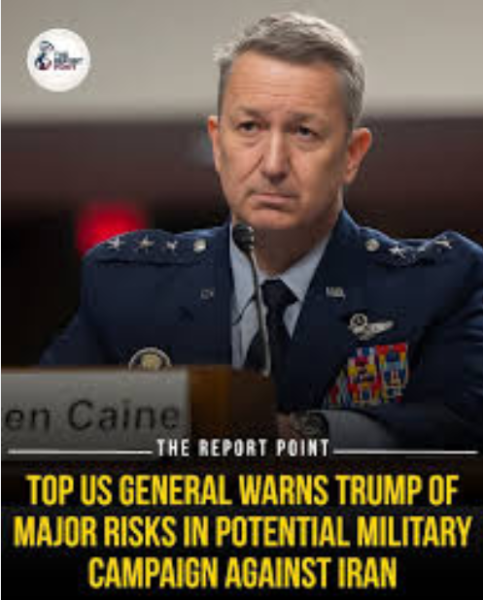
Top U.S. General Dan Caine’s private warning: “Significant risks” and “prolonged conflict.”

The Think Tank Warning: “A Crisis of His Own Making” 🏛️🔮

Think tank analyst Aaron David Miller offered perhaps the most damning assessment:

“Nobody wants this. We’re sleepwalking towards a war, in search of a strategy… The President has put himself in a box. He has put himself in a situation where unless he manages to extract a considerable concession from the Iranians to avoid a war he doesn’t want, he’s going to be forced into one. This is a crisis of his own making.” 🗣️📦

This is the voice of the Washington establishment—not criticizing from the outside, but warning from within. The message is clear: Trump’s maximalist approach has painted the administration into a corner with no easy exit. 🎨🚪

Nightmares in the Dream Sanctuary: War and the Animated Film, by Donna Kornhaber | Times Higher Education (THE)
Nobody wants this. We’re sleepwalking towards a war

Conclusion: The Gap Between Power and Understanding 🌉🧠

The accumulating evidence points to a single, uncomfortable truth for Washington: all the military power in the world cannot substitute for understanding the adversary. 🚫💪

Iran has demonstrated, across four decades of pressure, that it does not change course against threats. Its strategic decisions are rooted not in fear, but in security calculations, historical experience, and identity. 🇮🇷🧱 The more pressure is applied, the more the system consolidates around its core principles.

The White House now faces a choice: continue down a path that has yielded nothing but accumulated tension and strategic dead ends, or finally accept the complexity of the power structure it faces. 🔄🤔

As Aaron David Miller warned, the alternative is sleepwalking into a war nobody wants—a crisis entirely of Washington’s own making. The question is whether the administration will wake up before it’s too late. ⏰👀


The Forks in the Road, the Moments That Define Our Life. – HEAL YOUR LIFE (In Just 5 Minutes A Day)
The choice before Washington: continue the same failed path, or finally accept reality
twitterlinkedininstagramflickrfoursquaremail
Posted on Leave a comment

Vertigo in the White House: When Threats Against Iran Don’t Work 🤔🇺🇸➡️🇮🇷

Introduction: 🤯

Recently, in an interview with Fox News, Trump’s special envoy Steve Witkoff revealed something remarkable: the American president is genuinely confused. 😕 Despite unprecedented pressure—military shows of force, crippling sanctions, and relentless threats—Iran refuses to retreat. This “surprise” is itself a confession. It reveals that Washington expected Tehran to behave like weaker states, bending under the first wave of economic pain or military intimidation. But that assumption was flawed from the start. The real problem is not America’s lack of power, but its profound misunderstanding of who it is dealing with. 🇺🇸❌🇮🇷

The moment of realization: When the immovable object meets the unstoppable assumption

The Logic That Failed: Why “Maximum Pressure” Didn’t Work ⚙️💥

Washington built its strategy on a simple assumption: combine crippling economic sanctions with continuous military threats, and any country will eventually surrender. Send aircraft carriers, deploy advanced fighters, stage noisy exercises—all while tightening the economic noose. 🛳️✈️💰 The expectation was clear: Tehran would reach its “breakpoint” and accept unilateral demands.

Alongside this, a narrative war was waged. Western media spoke constantly of Iran’s “deadlock,” “internal turmoil,” and “economic erosion.” Terms like strategic vertigo were used to describe a decision-making structure supposedly collapsing under pressure. 📰💬 The picture was painted: Iran had no choice but to retreat.

But reality refused to follow the script. And now, Washington is the one experiencing vertigo. 😵

The pressure is max, but the result is zero. When the tool doesn’t match the task

Trump’s Transactional Trap: Why Not Everyone Has a Price 💼🤝🧱

Trump entered foreign policy with a businessman’s mindset. 🤵 He saw politics as a deal: increase pressure, and the other side will eventually give points to reach an agreement. In this framework, every actor has a price, every nation a breaking point.

But this analysis crashed against Iran. 🇮🇷🧱 As The Atlantic noted in a recent analysis, Trump cannot understand why pressure doesn’t force the Iranian leader to retreat. In his world, every person can be bought, every nation brought to the table with the right mix of threats and promises. 🛒💸

This view fails when confronted with a structure that bases its identity on independence and resistance. For four decades, Iran has made strategic decisions not based on fear, but on security, identity, and historical experience. In such a framework, submission to external pressure is not a tactical option—it is seen as undermining the very foundations of internal legitimacy. 🏛️⚔️

Two different logics: one sees everything as negotiable; the other sees principles as non-negotiable

The Power Beyond Missiles: Strategic Memory and Cohesion 🧠🔗

Iran’s power is not limited to its military capacity or missile technology—though those are part of the equation. 🚀 What truly frustrates Washington’s policy is the link between political will, structural cohesion, and historical experience.

Since its establishment, the Islamic Republic has faced a continuous array of pressures: an eight-year imposed war, decades of layered sanctions, constant military threats, and repeated attempts at internal destabilization. 🏛️🔥 This accumulated experience has created a kind of strategic memory that shapes every decision.

In this context, increasing pressure does not lead to behavior change. Paradoxically, it often strengthens internal cohesion. The more external threats intensify, the more the system consolidates around its core principles. 🛡️📈

Strategic memory: Four decades of pressure have created roots, not weakness

The Accumulation of Force That Changed Nothing 💪➡️😐

The massive buildup of American military equipment in the region—carriers, fighters, exercises—was designed with one purpose: to intimidate Iran into retreat. 🛳️⚔️ The White House believed that visible military power would complete the economic pressure, creating an unbearable situation.

But the result defied expectations. No surrender. No retreat from declared lines. No change in strategic direction. Instead, Iran maintained diplomatic calm while emphasizing its deterrent capabilities. The message was clear: threats are not an efficient tool in this equation. (Iraqchi, Iranian Foreign minister)📡🇮🇷

Ambiguous image - Wikipedia
The gap in perception: Washington sees pressure; Tehran sees a test of resolve

The Real Vertigo: Confusion in Washington, Not Tehran 😵🏛️

If the term “strategic vertigo” applies anywhere today, it is in Washington. A portion of America’s political elite still refuses to accept that the “maximum pressure” model may simply not work against a country with Iran’s characteristics. 🤷‍♂️🇺🇸

Continuing the same policy, hoping “it will work this time,” represents not strength but an inability to learn. This miscalculation becomes dangerous when combined with overconfidence in hard power. History shows that misunderstanding the will and capacity of an adversary leads to decisions with unforeseen and costly consequences. 📉💣

1,400+ Fork In The Road Sign Stock Illustrations, Royalty-Free Vector  Graphics & Clip Art - iStock | Directional sign, Crossroads, Choice
The choice before Washington: continue the illusion or accept reality

Conclusion: The Gap Between Imagination and Reality 🌊💡

What stands out most today is the widening gap between Washington’s expectations and the reality on the ground. The White House imagined that increasing pressure would bring quick, favorable results. Tehran has shown that equations are too complex for such simplistic formulas. 📊❌

Iran has demonstrated, repeatedly, that it does not change course against threats. Now the choice is Washington’s: continue down a path that has yielded nothing but accumulated tension, or revise the assumptions that see Iran through a distorted, simplistic lens. 👁️🔍

Accepting the complexity of Iran’s power structure does not mean agreeing with it. It is simply a necessary condition for any realistic policy. Without such a review, the cycle of pressure and resistance will continue—each time widening the distance between the two sides and increasing the risk of decisions no one can control. 🔄⚠️

The question is no longer about Iran. It is about whether Washington can overcome its own vertigo and see clearly at last. 🧠🇺🇸➡️🇮🇷

Ocean Waves Crashing near the Lighthouse · Free Stock Photo
The steadfast response: Storms may rage, but the light remains unmoved
twitterlinkedininstagramflickrfoursquaremail