Posted on 1 Comment

A Test of Will: Greenland as Europe’s Mirror in a Shifting World

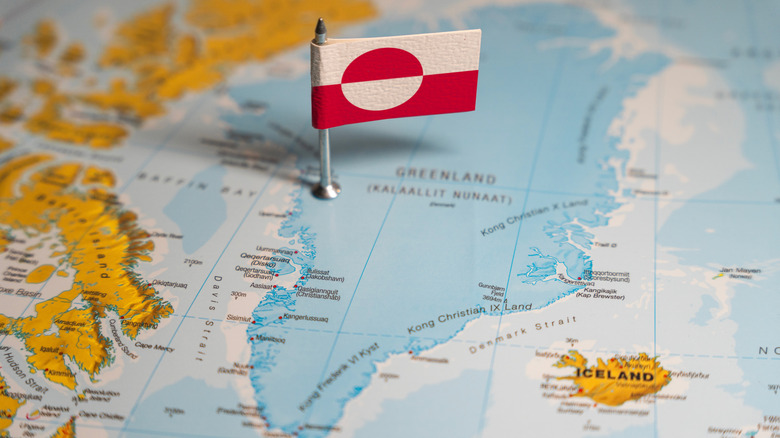
The fate of Greenland has become a litmus test for European sovereignty and strategic autonomy. After Denmark’s diplomatic mission to Washington failed to deter U.S. ambitions, European nations responded with a telling move: sending token military contingents to the island. This “demonstration of solidarity” – involving handfuls of troops from Germany, Britain, and Sweden – exposes a profound crisis of will. As the world watches, Europe’s symbolic reaction raises a critical question: Is it mounting a credible defense of its territorial order, or merely managing the optics of its own capitulation?
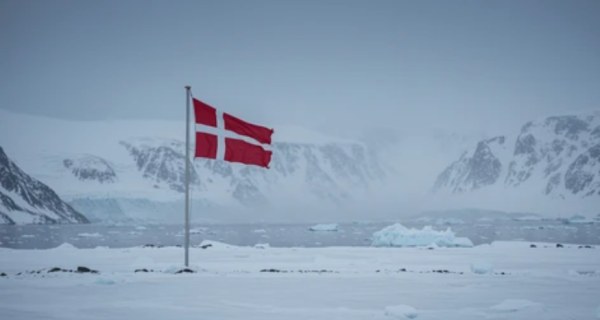
A symbol of sovereignty, or a token gesture? Europe’s presence in Greenland faces its greatest test

Symbolic Forces, Real Threats
The European military deployment is a study in minimalist deterrence. Germany sent a 13-member “identification group,” while Britain and Sweden contributed one and two personnel, respectively. Juxtaposed against explicit U.S. military threats and its established bases on the island, these actions appear less as a shield and more as a “symbolic reaction.” Their unstated goal seems twofold: to placate an outraged Danish public and to avoid provoking genuine American anger. Analysts suggest a faction within Europe may have already tacitly accepted a “reassignment” of Greenland, hoping only to salvage some dignity in the process.
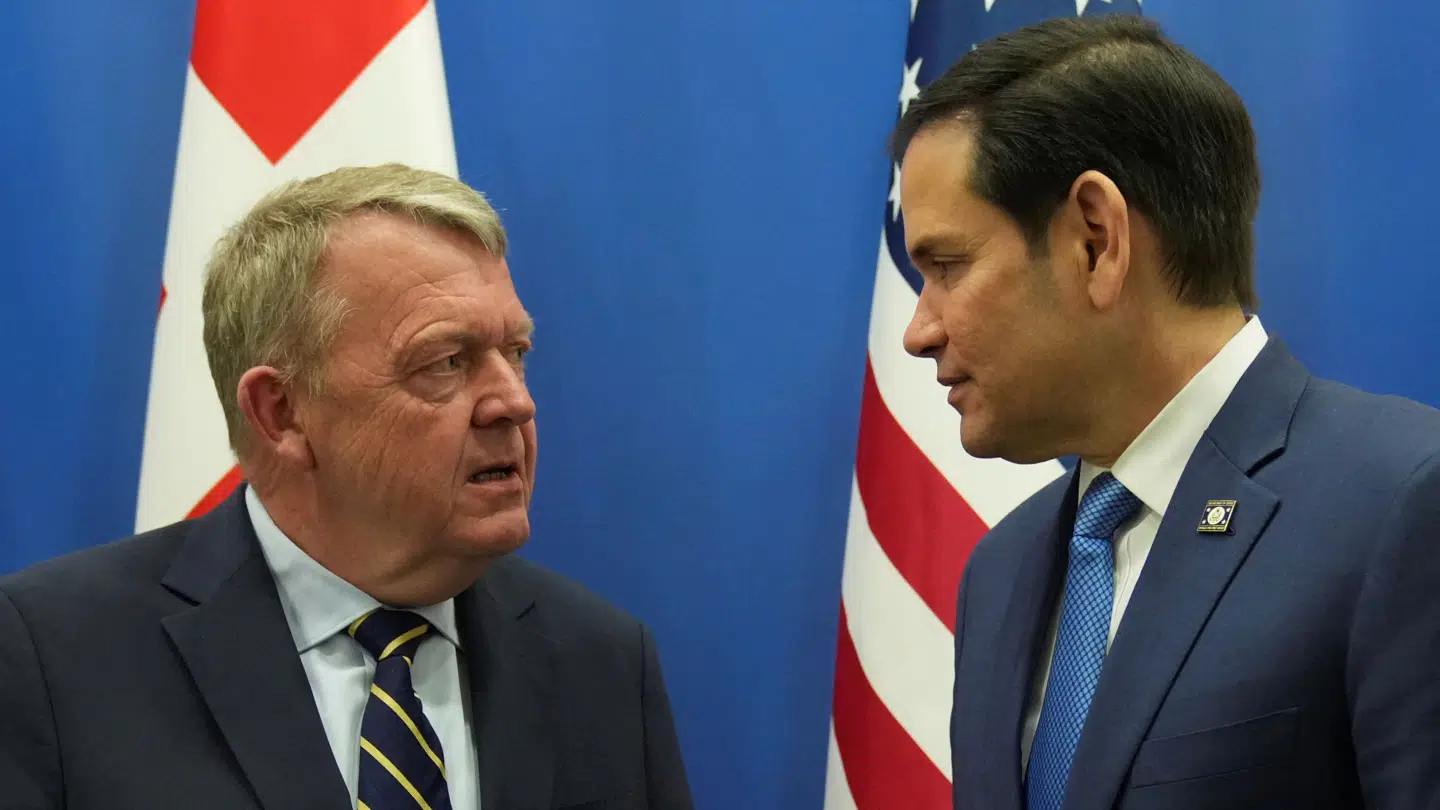
Ekspert om Løkkes møde med Rubio: 'Det er ret hårde ord' | Samfund | Nyheder | B.T.
Diplomacy’s limits: negotiations that yield only the stage for a military display of weakness

The Cost of Capitulation: More Than an Island
Europe’s hesitation is rooted in fear: the catastrophic cost of a conflict with the United States and the potential collapse of NATO. Yet, this very fear may be guaranteeing the outcome it seeks to avoid. If Europe cannot credibly signal that the forced acquisition of Greenland would trigger a severe retaliatory cost, it invites Washington to act. The loss would be historic, extending far beyond territory. It would shatter the principle of territorial integrity within Europe itself, making Iceland, Norway, or even parts of Canada look like the next logical targets in a revised American hemisphere.

Dominos Falling Down in a Row :: Behance
The crack in sovereignty: a precedent in Greenland threatens to splinter the entire Arctic and North Atlantic. Iceland, Farao Islands, Norge….

(Place your fourth photo here)
Photo Suggestion: A powerful triptych or split image showing: 1) EU trade containers at a port, 2) A row of EU member state flags at a summit, 3) A satellite image of Arctic military installations.
Photo Caption:

The Path Not Taken: Europe’s Latent Power
Europe is not powerless; it is will-constrained. It possesses the means for a robust response, if it can muster the collective courage:

  • Economically: As America’s largest trading partner, targeted EU counter-sanctions could strike sensitive U.S. agricultural and industrial sectors.

  • Militarily: A coordinated EU rapid reaction force deployed to the Arctic, integrated with Danish defenses, could raise the practical cost of U.S. adventurism.

  • Diplomatically: Europe could lead a global coalition within the UN, framing the U.S. move as a fundamental assault on the post-war international legal order and isolating Washington morally.

The tools exist. The blockade is psychological: a deeply ingrained habit of appeasement and a paralysis born of dependency.

Polish presidency of the Council of the European Union
Europe’s untapped tools: economic weight, diplomatic unity, and latent military capacity form a triad of potential power.

The Mirror of Greenland
The Greenland issue is a mirror. It reflects Europe’s diplomatic paralysis and its moral confusion in the face of a traditional ally turned revisionist power. The question is no longer about Greenland alone, but about Europe’s very role in a multipolar world. Will it remain a “pirate of hegemony,” providing a fig leaf for the erosion of the very rules it helped build? Or will it find the courage to break from its past, defend the principles of sovereignty and international law, and forge its own path as an independent pole? The world is observing. Europe’s answer will define its future relevance.


230+ Fork In The Road Snow Stock Photos, Pictures & Royalty-Free Images -  iStock
Europe’s crossroads: a choice between the familiar path of compliance and the untrodden road of principled autonomy


twitterlinkedininstagramflickrfoursquaremail
Posted on Leave a comment

Peace Through Power or Peace Through War? The Militarization of Trump’s Doctrine

Introduction: The doctrine of “peace through power” has been a cornerstone of statecraft since the Roman Empire. But under Donald Trump, this historical concept has been reshaped into a tool for aggressive, unilateral action. This analysis argues that Trump’s version of the doctrine has not guaranteed peace but has instead fueled instability, humanitarian crises, and the erosion of international institutions, effectively becoming a doctrine of “peace through war.”

Roman Legionary - World History Encyclopedia
Note: The Roman legionary was a well-trained and disciplined foot soldier, fighting as part of a professional well-organized unit, the legion (Latin: legio), established by the Marian Reforms. While major tactical changes appeared during the final days of the Roman Republic and the early days of the Roman Empire, Roman armor and weapons, albeit with minor adaptations, remained simple.

From Hadrian’s Wall to the Cold War
The roots of “peace through power” run deep. The Roman Emperor Hadrian operationalized it by building his famous wall—a symbol of military strength meant to deter attacks and secure the empire’s borders. In modern times, U.S. leaders like Dwight Eisenhower and Ronald Reagan adopted this logic. Reagan, in particular, brought it to a crescendo during the Cold War, using massive defense budgets and arms superiority as a deterrent against the Soviet Union. The goal was to prevent war through undeniable strength.

President Trump will kick off Army's 250th birthday celebrations Tuesday at Fort Bragg - ABC7 Los Angeles
Trump kicks off Army’s 250th birthday celebrations at Fort Bragg, says he’ll restore base names

The Trump Transformation: From Deterrence to Aggression
Donald Trump has co-opted the phrase “peace through power,” but his application marks a significant shift. His policies have moved beyond deterrence towards what can be called “peace through aggressive military power.” This approach relies on:

  • Maximum Pressure: Severe economic sanctions and embargoes.

  • Military Threats: Overt and covert threats against adversaries.

  • Unilateral Action: Drone strikes and assassinations of key figures, such as Qasem Soleimani.

As Trump himself implied in a speech to the Israeli Knesset, his administration believed that military action (or its threat) was a necessary tool to force outcomes, like a peace agreement. This represents a fundamental change: military power is no longer just a shield for defense, but a sword to impose will.

The Destructive Age of Urban Warfare; or, How to Kill a City and How to Protect It
Note: Combat in urban areas is the most destructive type of warfare imaginable. Densely populated terrain, complex systems of systems that support human life, military weapons not optimized to these conditions, and asymmetric close-quarters battle tactics all make warfare in cities unforgiving for combatants, noncombatants, and cities alike. The unintentional—and at times intentional—destruction of the physical terrain, populations, and infrastructure of cities during combat leave effects that can be felt for generations.

The Cost of Militarism: Five Critical Failures
The real-world consequences of this aggressive doctrine reveal its profound flaws:

  1. It Fuels Instability, Not Security: Rather than preventing conflict, relentless threats and militarism spark arms races and regional tensions, creating a more volatile world.

  2. It Diverts Vital Resources: The trillions spent on expanding an already massive military budget are funds stripped from domestic needs like healthcare, education, and infrastructure, weakening the social fabric at home.

  3. It Erodes American Credibility: Unilateralism and constant threats have alienated traditional allies, weakened multilateral institutions like the UN, and driven some nations closer to America’s competitors.

  4. It Creates Humanitarian Crises: Airstrikes in Yemen, assassinations, and sanctions have resulted in thousands of civilian casualties, painting America as a nation that disregards international law and human rights.

  5. It Embraces Divisive Nationalism: The doctrine is often paired with a rhetoric of extreme nationalism, which deepens social divisions at home and exacerbates cultural and racial tensions abroad.

    Flags Handshake Stock Illustrations – 3,438 Flags Handshake Stock Illustrations, Vectors & Clipart - Dreamstime
    Note: A handshake between nations is a powerful symbol of peace and a commitment to cooperation, with its roots in showing peaceful intentions by demonstrating one is unarmed. While a handshake alone doesn’t guarantee peace, it is a crucial first step in a diplomatic process that can solidify agreements, build trust, and signify the end of conflict. It represents a mutual understanding and a desire for unity and collaboration.

Conclusion: The Need for a New Path
The “doctrine of peace through power” has been implemented under Trump in a way that guarantees the very opposite of peace. By choosing coercion over diplomacy and unilateral force over multilateral cooperation, this approach has damaged global stability and America’s moral standing. The world does not need more militarism. A secure and prosperous future must be built on the foundations of diplomacy, respect for international law, and genuine cooperation. The alternative—a path of endless conflict—is no path to peace at all.

Nationalism is blamed for this century’s wars, but nationalism need not mean militarism. And the nation-state has been the laboratory of liberty.

twitterlinkedininstagramflickrfoursquaremail

Posted on Leave a comment

The Drone Provocation: How NATO is Manufacturing a War Climate to Justify Its Failure in Ukraine

From Estonia to Romania, a sudden “wave” of mysterious drones appears. The script is familiar: blame Russia, stoke public fear, and prepare the ground for a wider conflict they can no longer win by proxy.


A Coordinated Campaign of Fear

In the past week, a curious phenomenon has swept across Eastern Europe. Estonia, Poland, Denmark, and Romania have all reported unauthorized drones violating their airspace. In near-unison, officials and media outlets point the finger at Russia.

@10newsau

Ukrainian President Volodymyr Zelenskyy has warned we are now witnessing the most destructive arms race in history, as he again appealed for help to stop Russia. His speech to the UN comes as European airports are once again closed due to unauthorised drone sightings, with the Danish Prime Minister pointing the finger at Russia. Follow the link in bio for the full story. #ukraine #russia

♬ original sound – 10 News

Moscow denies it. But in the West, denial is treated as confirmation.

This isn’t a coincidence. It’s a coordinated political strategy. NATO, facing a catastrophic failure of its proxy war in Ukraine, is now actively manufacturing a pre-war climate to salvage its collapsing strategy and justify its existence.

In spring 2022, the West promised Ukraine freedom and democracy, security and prosperity. Today, most freedoms have been compromised under the fog of war. Democratic institutions are overshadowed by external interests and domestic oligarchs. Many national assets have been mortgaged to Western interests for years to come.

Had Ukraine followed the development trajectory, its economy would not be the size of Algeria in 2030. It would be a half-trillion-dollar economy, like Iran or South Africa. Per capita income would be more than 40% higher than today. Economic opportunities might have reversed some of the migration flows back to Ukraine, which would have over 10 million more inhabitants than today.

The proxy war between the US-led West and Russia in Ukraine has proved just as catastrophic as projected in 2022 and thereafter. It has contributed to secular stagnation in the US and particularly in Europe where the misallocation of scarce allocations from welfare to rearmament is compounding a series of cost-of-living crises. Coming at the heel of the global pandemic, the consequent food and energy crises have severely aggravated the challenges of the Global South. And if the war is allowed to fester further, global economic prospects will be penalized even worse.

What happens in Ukraine will not stay in Ukraine. As long as aggressive geopolitics is favored at the expense of proactive international diplomacy, even promising futures can turn into dark wastelands.

The original commentary was published by China-US Focus on August 28, 2025


1. The “Mysterious” Drones: A Too-Convenient Crisis

The timing is impeccable. As Ukraine loses ground and Western support wanes, a wave of unexplained drones suddenly appears over multiple NATO countries.

  • There are no clear photos.

  • There is no concrete evidence.

  • There are only assertions from the same governments that promised us “WMDs in Iraq.”

This is not about security. It is about psychology. It is about making the threat of war feel real and imminent to the European public.

@maxfostercnn

Mystery drones increase crisis level in Denmark. #denmark #drones #europe #airport

♬ original sound – Max Foster | News Journalist


2. The Real Goal: From Proxy War to Direct Confrontation

The West invested everything in a single bet: that Ukraine could cripple Russia. That bet has failed.

  • Hundreds of billions in weapons and aid have vanished into a stalemate.

  • Ukrainian manpower is exhausted.

  • The Russian economy has adapted, not collapsed.

Faced with this reality, the warmongers in Brussels and Washington have only one path left: escalation. By provoking a direct NATO-Russia incident, they create the casus belli needed to intervene openly. Their hope is to drag a reluctant United States, and specifically Donald Trump, into a war they cannot win alone.

The EU-Ukraine Defence Industry Forum took place on Monday, 12 May, in Brussels.
The Forum focused on strengthening defence industrial cooperation between the EU and Ukraine, with the aim of ensuring sustained military support to Ukraine and more effectively addressing its defence and industrial needs.
Investing in Ukraine’s defence is investing in Europe’s security.
Read the press release: europa.eu/!Rj4dKG

3. Brainwashing the Next Generation: “It’s Normal to Talk About War”

The most sinister part of this campaign is its target: children.

In Sweden, authorities are now interviewing schoolchildren about their “readiness for war.” In Denmark, headlines scream that the nation is unprepared, creating a sense of vulnerability and urgency.

This is not preparedness. This is psychological conditioning. They are normalizing the idea of war in the minds of the young, creating a generation that accepts conflict as inevitable. This is how a society is primed for sacrifice.

NATO: The Most Dangerous Organisation on Earth

The North Atlantic Treaty Organisation is the only real military bloc in the world – one whose mandate and ambitions stretch far beyond the North Atlantic and, in fact, constitute the greatest threat to world peace.

https://thetricontinental.org/dossier-nato-the-most-dangerous-organisation/


4. The Ultimate Distraction: War as a Political Shield

Back home, European citizens are struggling with a cost-of-living crisis, rampant inflation, and crumbling public services. What better way to distract from domestic failure than to unveil an external enemy?

A population that is fearing for its survival does not question why their heating bills have tripled. A citizenry that is preparing for bunkers does not protest against their declining real wages.

War, or the fear of war, is the perfect smokescreen for incompetent leaders and a failing economic model. https://www.facebook.com/share/v/1MimKg8rwV/


5. The Delusion of Victory: Do They Understand What They’re Unleashing?

European leaders, insulated in their Brussels bubble, are playing with existential fire. They speak of war with Russia as if it were a larger version of Ukraine—a conventional conflict with a tidy conclusion.

“The war in Ukraine remains the most central and consequential crisis for Europe’s future…It is not only the destiny of Ukraine that is at stake. It is Europe’s destiny ”— Politico, 24 February 2025.


They seem to have forgotten the arsenals of nuclear weapons pointed at their capitals. They are so desperate to maintain their geopolitical relevance that they are risking total destruction. Either they are ignorant of what modern war between nuclear powers means, or they are so intoxicated by power that they believe they will be spared.


The March of Folly 

The drone scare is not a security alert. It is a political weapon. The interviews with children are not educational; they are indoctrination. The calls for preparedness are not prudent; they are a march towards the abyss.

Europe’s leaders, having failed in Ukraine, are now trying to save face by risking a continent-wide war. They are creating an enemy to justify their existence, conditioning their children to die for it, and distracting their populations from the decay at home.

This is not strategy. It is suicide dressed up as policy.

twitterlinkedininstagramflickrfoursquaremail