
Introduction: 🇺🇸💥🌍
Donald Trump is now facing one of the most difficult challenges of his political career. On one hand, he wants to maintain the image of a powerful and decisive president. On the other, he is confronting a growing wave of domestic criticism, economic concerns, and political opposition. 🏛️😤
The war against Iran—presented as a show of American power—has instead become a political nightmare. The US Senate has voted on a resolution aimed at limiting Trump’s war powers over Iran. Democratic Senator Raphael Warnock wrote on X:
“The Senate has taken an important step towards ending Trump’s illegal war against Iran. This war has failed in the most severe way, and I will continue to hold this president accountable.” 🗣️⚖️
The failure is no longer just on the battlefield. It is now inside the halls of Congress, on the streets, and in the polls. 📉🇺🇸

The Illusion of Deterrence: What Trump Got Wrong 🎭❌
At the beginning of this conflict, Trump tried to present military attacks against Iran as a show of power—the return of “American deterrence.” He and his inner circle believed that heavy military pressure would force Iran to retreat while strengthening the president’s domestic position. 💪🇺🇸
But the course of developments showed that the White House’s calculations were far from the facts on the ground.
| What Trump Expected | What Actually Happened |
|---|---|
| Quick Iranian retreat | Steadfast Iranian resistance |
| Strengthened domestic position | Growing domestic criticism |
| Allies would follow | Allies stayed out |
| A show of power | A show of failure |
Not only were America’s declared goals not achieved, but the increase in insecurity in the region, the rise in economic costs, the threat to US interests, and the concern of Washington’s allies have caused the internal atmosphere of the United States to gradually turn against the continuation of the war. 🔄❌

The Ghosts of Iraq and Afghanistan: A Nation That Remembers 👻🏜️
American public opinion has not yet forgotten the costly wars in Iraq and Afghanistan—two conflicts that cost Washington trillions of dollars and ultimately produced no clear achievement for America. 💸💔
Many American politicians are now worried that Trump is once again taking the United States down a path where:
-
The end is uncertain ❓
-
The costs are too heavy ⚖️
-
The strategic achievements are invisible 👁️❌
Even some political currents that previously supported pressure against Iran are now warning about the continuation of the war. The memory of past failures is too strong to ignore. 🧠⚠️
The Economic Nightmare: What War Costs at Home 💰📉
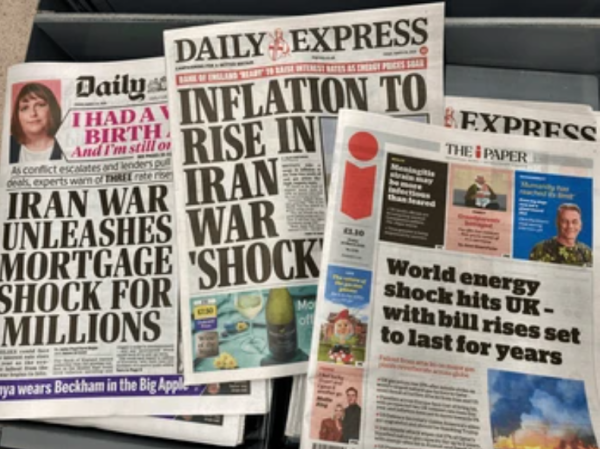
Another critical issue is the economic consequences of war for ordinary Americans. Increasing tension in West Asia has always been a driver of instability in energy markets and the global economy. ⛽🌍
As conflicts spread, concerns are growing about:
-
Rising oil prices 📈
-
Disruptions in world trade 🚢
-
Further pressure on the US economy 💥
This has become a serious political threat to Trump, especially when the American economy is already facing:
-
Inflation 🏷️
-
Heavy national debt 🏦
-
Deep social dissatisfaction 😤
Many American analysts believe that continuing the war will increase economic pressure on American citizens and lead to a further decline in the president’s popularity. 📉👎
The Senate Revolt: War Powers Under Attack 🏛️⚔️
The approval of the resolution to limit Trump’s war powers in the Senate is more than a political maneuver. It is a sign of the increasing gap within the American political structure. 🔍💔
Senators opposing Trump are sending a clear message: the American president cannot lead the country into a major war without the supervision and approval of legal institutions. 📜❌
This shows that even within the American government, concern about Trump’s unpredictable decisions has increased. Many critics believe that the president, with an emotional and personal approach, has brought the national security of the United States into a dangerous gamble. 🎲⚠️

The Media Turns: A Critical Tone Emerges 📰🎙️
At the same time, American media has gradually adopted a more critical tone toward the war. In recent weeks, numerous reports and analyses have been published about:
-
The staggering costs of war 💸
-
America’s inability to achieve its goals 🎯❌
-
The possibility of the crisis spreading 🌍🔥
Even some media outlets close to Republicans have expressed concern about continuing this process. This change in the media environment shows that the war, contrary to Trump’s expectations, has not been able to create the necessary political and social consensus in America. 📉🗣️
The Global Cost: Losing Focus on the Real Competitors 🌍👀
Part of the concern in Washington goes back to America’s international position. Many US analysts believe that entering a new war in West Asia—while the United States faces heavy competition with China and Russia—disrupts Washington’s strategic focus. 🎯❌
From their perspective:
-
Being caught in a long crisis in the region weakens America’s power 📉
-
It gives international competitors more opportunity to increase their influence 📈
-
The real battle is elsewhere, but the resources are being drained here 🏜️
The war with Iran is not just a regional conflict. It is a strategic distraction at the worst possible time. ⏰⚠️

Conclusion: The Trap with No Exit 🪤🚪
What is happening in America today is a growing fear of repeating past strategic mistakes. The experiences of Iraq and Afghanistan remain as symbols of the failure of America’s interventionist policies—still fresh in the minds of both society and political elites. 🧠💔
Now, many fear that the war with Iran will turn into an even more complicated crisis. Unlike some other countries in the region, Iran has extensive political, security, and regional capacities. This makes any conflict with it:
-
Costly 💸
-
Unpredictable ❓
-
Potentially endless 🔄
Trump now stands at a crossroads. Continuing the war may intensify pressure against him and even threaten his political position inside America. Many analysts believe the White House will have to choose between:
-
Continuing its military adventure 🎯
-
Accepting the internal political realities of the United States 🏛️
Starting a war is easy. Ending it is hard. And in the case of Iran, Trump is discovering that the exit door may not even exist. 🚪❌
The war has failed—not just on the battlefield, but in the Senate, in the media, and in the hearts of the American people. 🇺🇸💔