Posted on Leave a comment

Peace Through Power or Peace Through War? The Militarization of Trump’s Doctrine

Introduction: The doctrine of “peace through power” has been a cornerstone of statecraft since the Roman Empire. But under Donald Trump, this historical concept has been reshaped into a tool for aggressive, unilateral action. This analysis argues that Trump’s version of the doctrine has not guaranteed peace but has instead fueled instability, humanitarian crises, and the erosion of international institutions, effectively becoming a doctrine of “peace through war.”

Roman Legionary - World History Encyclopedia
Note: The Roman legionary was a well-trained and disciplined foot soldier, fighting as part of a professional well-organized unit, the legion (Latin: legio), established by the Marian Reforms. While major tactical changes appeared during the final days of the Roman Republic and the early days of the Roman Empire, Roman armor and weapons, albeit with minor adaptations, remained simple.

From Hadrian’s Wall to the Cold War
The roots of “peace through power” run deep. The Roman Emperor Hadrian operationalized it by building his famous wall—a symbol of military strength meant to deter attacks and secure the empire’s borders. In modern times, U.S. leaders like Dwight Eisenhower and Ronald Reagan adopted this logic. Reagan, in particular, brought it to a crescendo during the Cold War, using massive defense budgets and arms superiority as a deterrent against the Soviet Union. The goal was to prevent war through undeniable strength.

President Trump will kick off Army's 250th birthday celebrations Tuesday at Fort Bragg - ABC7 Los Angeles
Trump kicks off Army’s 250th birthday celebrations at Fort Bragg, says he’ll restore base names

The Trump Transformation: From Deterrence to Aggression
Donald Trump has co-opted the phrase “peace through power,” but his application marks a significant shift. His policies have moved beyond deterrence towards what can be called “peace through aggressive military power.” This approach relies on:

  • Maximum Pressure: Severe economic sanctions and embargoes.

  • Military Threats: Overt and covert threats against adversaries.

  • Unilateral Action: Drone strikes and assassinations of key figures, such as Qasem Soleimani.

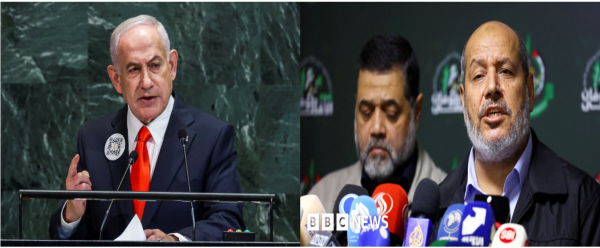
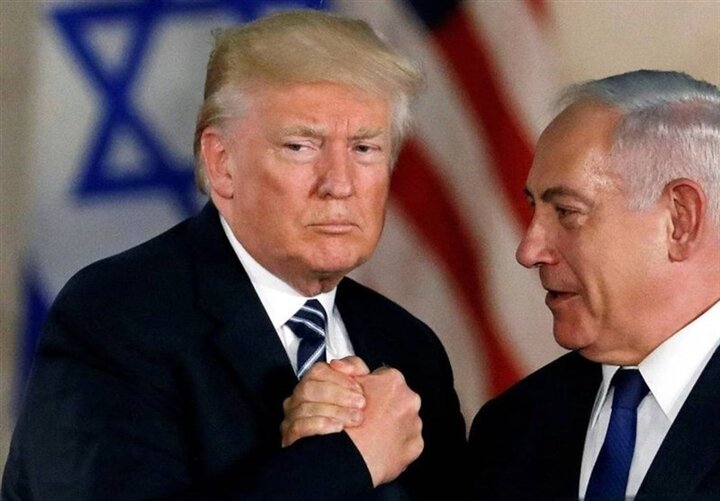
As Trump himself implied in a speech to the Israeli Knesset, his administration believed that military action (or its threat) was a necessary tool to force outcomes, like a peace agreement. This represents a fundamental change: military power is no longer just a shield for defense, but a sword to impose will.

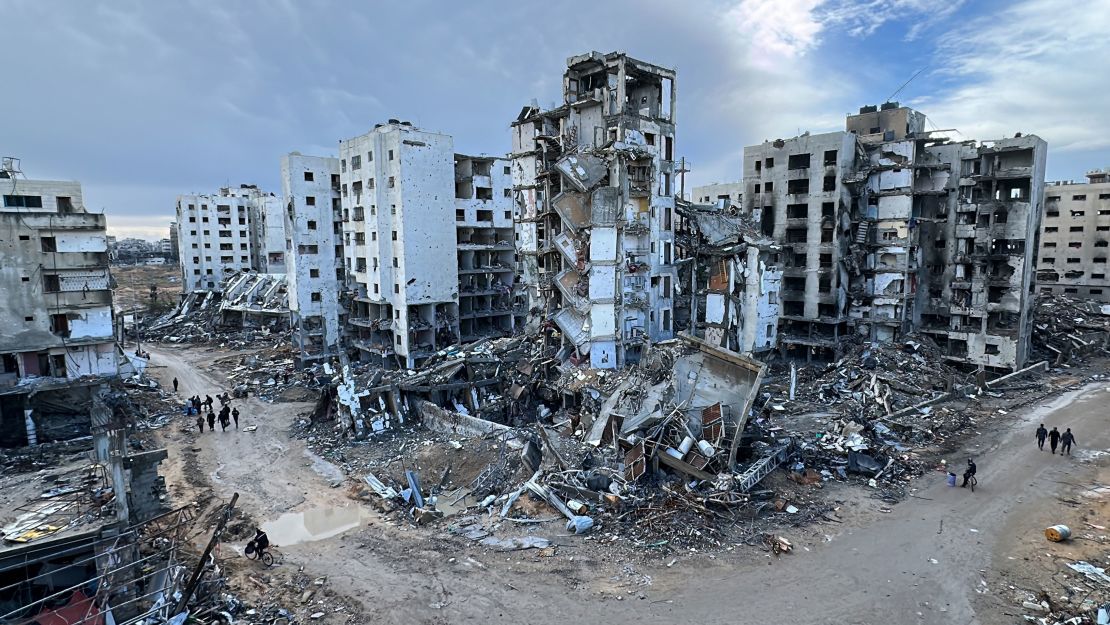
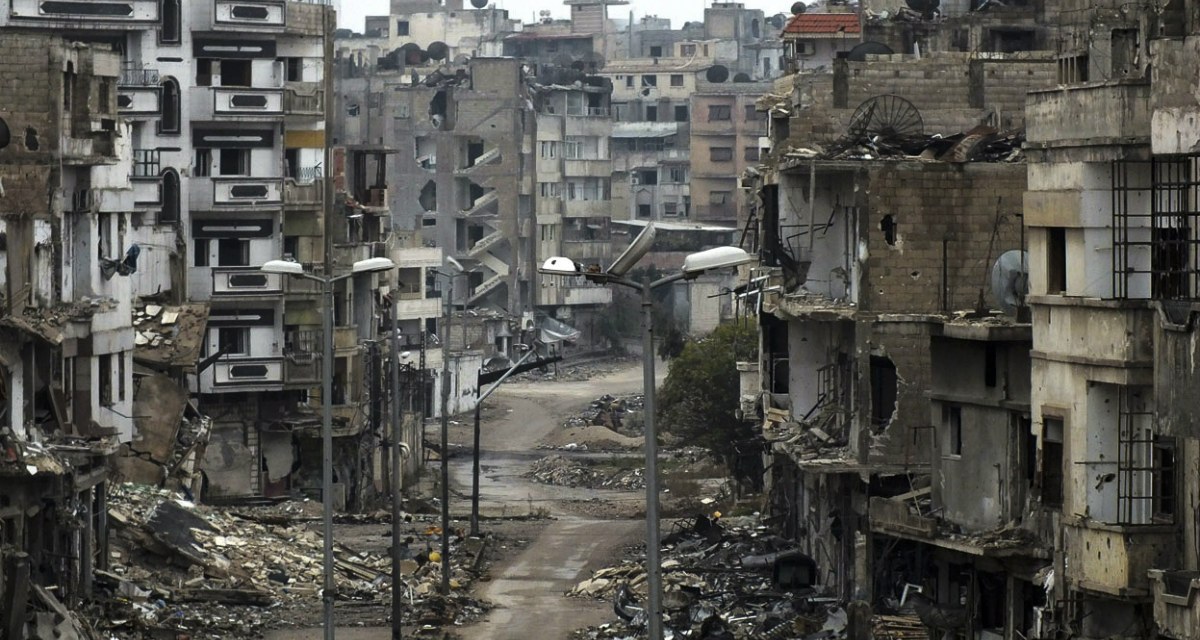
The Destructive Age of Urban Warfare; or, How to Kill a City and How to Protect It
Note: Combat in urban areas is the most destructive type of warfare imaginable. Densely populated terrain, complex systems of systems that support human life, military weapons not optimized to these conditions, and asymmetric close-quarters battle tactics all make warfare in cities unforgiving for combatants, noncombatants, and cities alike. The unintentional—and at times intentional—destruction of the physical terrain, populations, and infrastructure of cities during combat leave effects that can be felt for generations.

The Cost of Militarism: Five Critical Failures
The real-world consequences of this aggressive doctrine reveal its profound flaws:

  1. It Fuels Instability, Not Security: Rather than preventing conflict, relentless threats and militarism spark arms races and regional tensions, creating a more volatile world.

  2. It Diverts Vital Resources: The trillions spent on expanding an already massive military budget are funds stripped from domestic needs like healthcare, education, and infrastructure, weakening the social fabric at home.

  3. It Erodes American Credibility: Unilateralism and constant threats have alienated traditional allies, weakened multilateral institutions like the UN, and driven some nations closer to America’s competitors.

  4. It Creates Humanitarian Crises: Airstrikes in Yemen, assassinations, and sanctions have resulted in thousands of civilian casualties, painting America as a nation that disregards international law and human rights.

  5. It Embraces Divisive Nationalism: The doctrine is often paired with a rhetoric of extreme nationalism, which deepens social divisions at home and exacerbates cultural and racial tensions abroad.

    Flags Handshake Stock Illustrations – 3,438 Flags Handshake Stock Illustrations, Vectors & Clipart - Dreamstime
    Note: A handshake between nations is a powerful symbol of peace and a commitment to cooperation, with its roots in showing peaceful intentions by demonstrating one is unarmed. While a handshake alone doesn’t guarantee peace, it is a crucial first step in a diplomatic process that can solidify agreements, build trust, and signify the end of conflict. It represents a mutual understanding and a desire for unity and collaboration.

Conclusion: The Need for a New Path
The “doctrine of peace through power” has been implemented under Trump in a way that guarantees the very opposite of peace. By choosing coercion over diplomacy and unilateral force over multilateral cooperation, this approach has damaged global stability and America’s moral standing. The world does not need more militarism. A secure and prosperous future must be built on the foundations of diplomacy, respect for international law, and genuine cooperation. The alternative—a path of endless conflict—is no path to peace at all.

Nationalism is blamed for this century’s wars, but nationalism need not mean militarism. And the nation-state has been the laboratory of liberty.

twitterlinkedininstagramflickrfoursquaremail

Posted on Leave a comment

The Price of Complicity: Unmasking America’s Role as a Partner in the Gaza War

Introduction:
The word “peace” has been a constant refrain in American diplomatic statements regarding Gaza. But when examined against the totality of evidence—the financial flows, the arms shipments, and the political support—this claim rings hollow. This article argues that the United States has shed the mantle of a neutral mediator to become an active and essential partner in building Israel’s war machine, directly fueling a conflict that has created a profound humanitarian crisis.

Notes: Military aid for Israel includes missile defense funding starting in 2006, using data from the Congressional Research Service. All other data is from foreignassistance.gov. Aid to Ukraine for fiscal years 2022 to 2024 is reported by the Kiel Institute for the World Economy as being around $16 billion higher than figures from foreignassistance.gov. South Vietnam existed as a country until the end of the Vietnam War in 1975. Data for 2024 is partially reported.

The Foundation of Support: A Long-Standing Partnership
The history of American military and financial aid to Israel is not new, but its scale and intensity during the Gaza war have reached unprecedented levels. Since 1948, the US has been Israel’s primary military patron, with billions of dollars flowing through long-term contracts. This support, often framed as ensuring an ally’s security, has in practice facilitated the continuation of violence and occupation.

This structured support was solidified in agreements like the Obama-era 10-year memorandum, guaranteeing $3.8 billion in annual military aid. However, since October 2023, the US has approved emergency aid packages pushing direct military assistance to at least $17.9 billion, with some estimates suggesting the total, including indirect support, may exceed $30 billion.

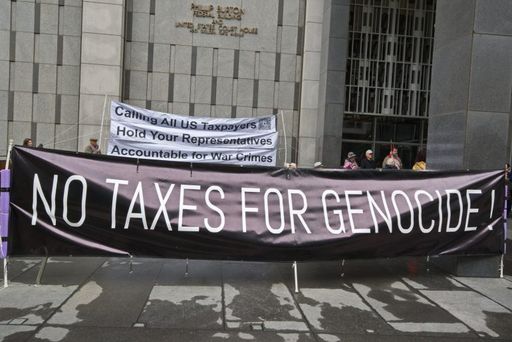
US-taxpayers file a historic lawsuit charging Washington with complicity in Gaza genocide - TRT World
Image: no taxes for war and militarism. War tax resisters are taking to the streets to call for an end to genocide and endless war. They are divesting from the taxes that fund war and investing in people, planet, and justice. 

The American Taxpayer: Financing a Distant War
This colossal financial support does not come from a surplus; it is funded directly by American taxpayers. Statistical estimates break this down to a cost of approximately $85 to over $165 per American taxpayer. This expenditure occurs while the United States faces domestic crises in healthcare, education, and infrastructure. The equivalent funds could have provided health insurance for millions of children or hired hundreds of thousands of new teachers, revealing a stark misalignment between public need and policy priorities.

Note: Lockheed Martin is an American aerospace and defense company, formed by a merger of Lockheed Corporation and Martin Marietta in 1995. It is headquartered in North Bethesda, Maryland, and provides innovative solutions for aerospace, defense, and security challenges worldwide. The company’s main business is with the U.S. Department of Defense and federal agencies, but it also has international and commercial sales


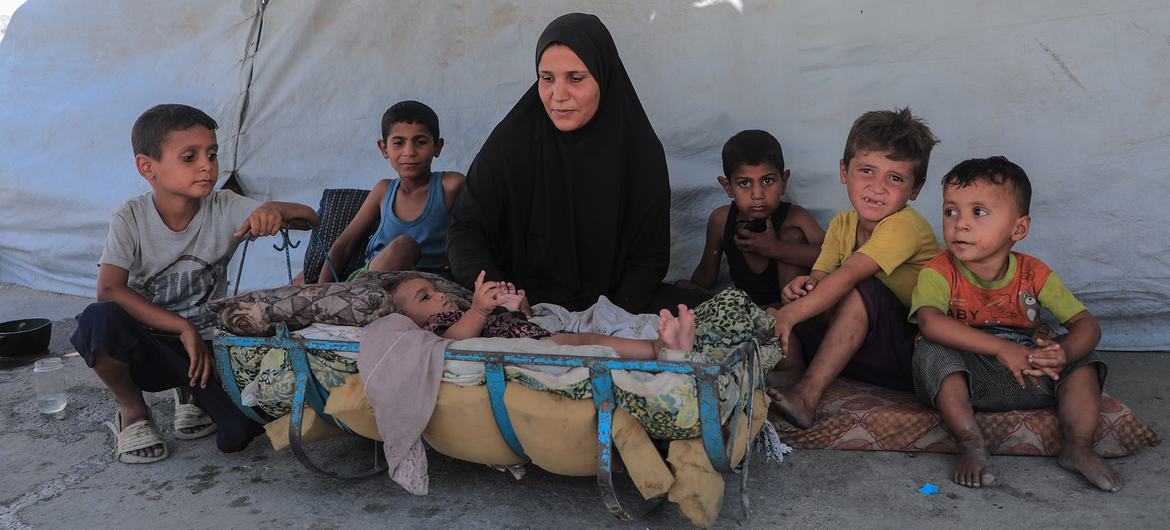
A displaced family sit in front of their tent in Gaza.
Image: UNICEF/Mohammed Nateel A displaced family sit in front of their tent in Gaza.


The War Economy: Who Really Benefits?
A critical question is: who profits from this cycle? A significant portion of US military aid is designed as a subsidy for American defense contractors. Israel is often required to spend the aid on weapons purchased from US companies like Lockheed Martin, Boeing, and Raytheon. This creates a profitable feedback loop where aid money cycles back into the pockets of American corporations, making war a lucrative business for the US’s war-oriented economy.


The Human Cost and Shifting Public Opinion
The tragic reality of this support is measured in the devastation in Gaza: thousands dead, hundreds of thousands displaced, and critical infrastructure like hospitals and schools destroyed by American-made bombs. This reality is reshaping American public opinion. Polls show a majority of younger Americans (ages 18-29) oppose continued military aid. Within the American Jewish community, movements like “Jews for Peace” are gaining traction, challenging unconditional support for the Israeli government.

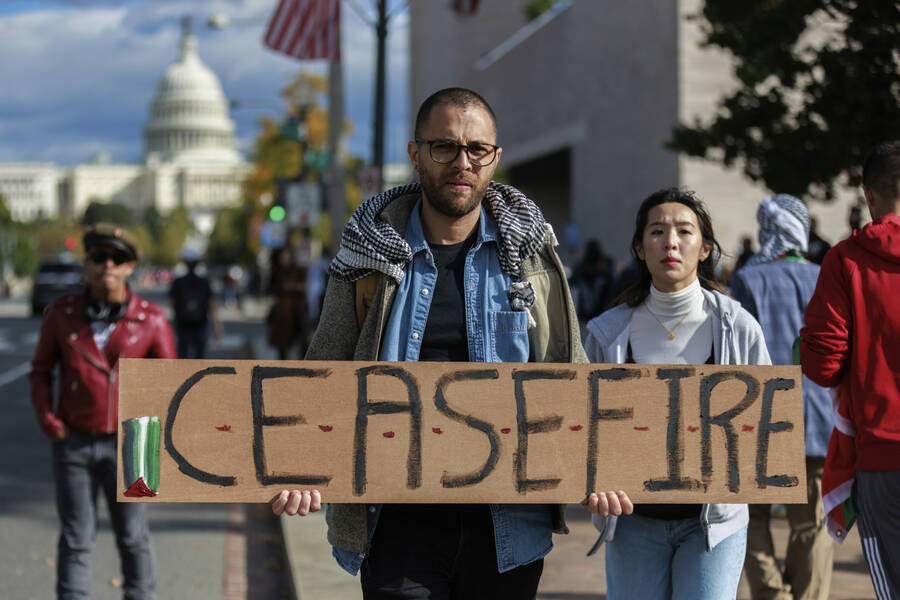
Calls for a Ceasefire Get Little Traction in Congress
Image: Demonstrators on the National Mall in Washington, DC, call for a ceasefire in Israel’s assault on Gaza on October 21st, 2023.

Conclusion: A Partner, Not a Peacemaker
The evidence paints a clear and damning picture. The United States is not a mediator or a pacifist in the Gaza war; it is an active partner. By bankrolling the war machine with taxpayer money and ensuring the flow of arms, America has become complicit in the resulting humanitarian catastrophe. It has abdicated its claim to moral leadership on the world stage. As long as this partnership continues, American talk of “peace” will remain nothing more than a political show, a cover for a policy rooted in conflict.

2+ Thousand Make Peace Not War Royalty-Free Images, Stock Photos & Pictures | Shutterstock

twitterlinkedininstagramflickrfoursquaremail

Posted on Leave a comment

Peacemaker or Partner in Crime? Trump’s Failed Gaza Ceasefire Theater

Donald Trump’s recent visit to West Asia, intended to showcase his role in facilitating a Gaza ceasefire, revealed more about his political desperation than diplomatic achievement. What was billed as a victory tour instead exposed strategic failure and moral bankruptcy.Peacemaker or partner in Netanyahu's failure
The Unwelcome Mediator
Trump’s attempt to position himself as a peacemaker was met with widespread rejection. The protocol-bound airport receptions couldn’t conceal the stark reality: nobody sees Trump as an impartial mediator. His historical alignment with Israeli extremism and his administration’s record of escalating tensions made his peacemaker pose implausible to regional actors and international observers alike.

The Newyorker:

Late on Wednesday evening, in a social-media post, Trump finally had something to truly trumpet: “I am very proud to announce that Israel and Hamas have both signed off on the first Phase of our Peace Plan,” he wrote just after 7 P.M. “BLESSED ARE THE PEACEMAKERS!”

The ceasefire deal, brokered with the help of America’s Arab allies, such as Qatar and Egypt, calls for Israel to stop fighting within twenty-four hours and to partially withdraw from Gaza, and for Hamas to release by early next week all twenty Israeli hostages presumed to still be alive two years after they were taken during Hamas’s October 7th terrorist attack. At a Cabinet meeting on Thursday, as advisers made plans for Trump to fly to the region on Sunday night for a signing ceremony, the President touted his “momentous breakthrough.”

Strategic Goals Abandoned
The ceasefire terms tell a story of failed objectives. What began as a mission to destroy Hamas and return Israeli prisoners without concessions ended as a negotiated exchange of prisoners with humanitarian provisions. This fundamental deviation from maximalist goals represents not compromise but capitulation—a clear admission that initial assumptions about quick military victory were fatally flawed.

Accountability for Carnage
We cannot discuss Trump’s ceasefire role without acknowledging his responsibility for the violence preceding it. With nearly 70,000 Palestinians killed, Trump must be recognized as Netanyahu’s primary partner in this humanitarian catastrophe. His policies—recognizing Jerusalem as Israel’s capital, endorsing settlement expansion, and providing unconditional military support—created the conditions for this slaughter.

The New Yorker:

On Thursday, the Israeli Cabinet was on the verge of approving the initial stages of a ceasefire agreement that will at least temporarily end the war in Gaza. That war, which began two years ago with the Hamas attacks of October 7th, and the killing of 1,200 people, was followed by Israel’s bombardment and occupation of the Gaza Strip, and the killing of nearly 70,000 Palestinians. (A United Nations commission recently labeled Israel’s war a genocide.) The initial phases of the agreement, which President Trump announced on Wednesday, will likely include a release of the remaining Israeli hostages early next week, a release of Palestinians held by Israel, a pullback of Israeli troops from Gaza, and a much-needed surge of food and medicine into the territory.
Even with the ceasefire deal, “I don’t know that Gaza is even a place where humans can continue to live in any meaningful way,” Khaled Elgindy, an expert on the Middle East, said.”Almost everything has been destroyed. There’s almost nothing left, even of Gaza City. All the hospitals are basically not functioning. There are no universities. There are no schools. There are no roads. There’s no sewage-treatment plants, and there’s no infrastructure. Everything has been destroyed. . . . It makes me incredibly sad to say that, because we’re talking about a society of two million people. Gaza City is the largest city in Palestine. It’s one of the oldest places on earth. There’s just so much that has been lost. Beyond just the basic immediate subsistence, can Gaza survive? I don’t know.” In an interview with Isaac Chotiner, Elgindy discusses the contours of the peace deal and what will come next: https://newyorkermag.visitlink.me/kiRFvz

The Political Cost of Failure
Trump’s transactional approach to foreign policy has backfired spectacularly. Rather than enhancing his stature, the Gaza crisis has increased global antipathy toward American leadership and alienated young voters concerned with human rights. The very tools Trump relied on—unilateral pressure and disregard for international law—have undermined his credibility when he most needs it.

A Fragile Future
The current ceasefire represents at best a temporary pause in an ongoing conflict. Fundamental questions about Gaza’s governance, reconstruction, and political future remain unanswered. Without a comprehensive political solution, this ceasefire merely sets the stage for the next round of violence—and Trump has demonstrated he lacks the vision or credibility to help achieve one.

twitterlinkedininstagramflickrfoursquaremail

Posted on Leave a comment

The Drone Provocation: How NATO is Manufacturing a War Climate to Justify Its Failure in Ukraine

From Estonia to Romania, a sudden “wave” of mysterious drones appears. The script is familiar: blame Russia, stoke public fear, and prepare the ground for a wider conflict they can no longer win by proxy.


A Coordinated Campaign of Fear

In the past week, a curious phenomenon has swept across Eastern Europe. Estonia, Poland, Denmark, and Romania have all reported unauthorized drones violating their airspace. In near-unison, officials and media outlets point the finger at Russia.

@10newsau

Ukrainian President Volodymyr Zelenskyy has warned we are now witnessing the most destructive arms race in history, as he again appealed for help to stop Russia. His speech to the UN comes as European airports are once again closed due to unauthorised drone sightings, with the Danish Prime Minister pointing the finger at Russia. Follow the link in bio for the full story. #ukraine #russia

♬ original sound – 10 News

Moscow denies it. But in the West, denial is treated as confirmation.

This isn’t a coincidence. It’s a coordinated political strategy. NATO, facing a catastrophic failure of its proxy war in Ukraine, is now actively manufacturing a pre-war climate to salvage its collapsing strategy and justify its existence.

In spring 2022, the West promised Ukraine freedom and democracy, security and prosperity. Today, most freedoms have been compromised under the fog of war. Democratic institutions are overshadowed by external interests and domestic oligarchs. Many national assets have been mortgaged to Western interests for years to come.

Had Ukraine followed the development trajectory, its economy would not be the size of Algeria in 2030. It would be a half-trillion-dollar economy, like Iran or South Africa. Per capita income would be more than 40% higher than today. Economic opportunities might have reversed some of the migration flows back to Ukraine, which would have over 10 million more inhabitants than today.

The proxy war between the US-led West and Russia in Ukraine has proved just as catastrophic as projected in 2022 and thereafter. It has contributed to secular stagnation in the US and particularly in Europe where the misallocation of scarce allocations from welfare to rearmament is compounding a series of cost-of-living crises. Coming at the heel of the global pandemic, the consequent food and energy crises have severely aggravated the challenges of the Global South. And if the war is allowed to fester further, global economic prospects will be penalized even worse.

What happens in Ukraine will not stay in Ukraine. As long as aggressive geopolitics is favored at the expense of proactive international diplomacy, even promising futures can turn into dark wastelands.

The original commentary was published by China-US Focus on August 28, 2025


1. The “Mysterious” Drones: A Too-Convenient Crisis

The timing is impeccable. As Ukraine loses ground and Western support wanes, a wave of unexplained drones suddenly appears over multiple NATO countries.

  • There are no clear photos.

  • There is no concrete evidence.

  • There are only assertions from the same governments that promised us “WMDs in Iraq.”

This is not about security. It is about psychology. It is about making the threat of war feel real and imminent to the European public.

@maxfostercnn

Mystery drones increase crisis level in Denmark. #denmark #drones #europe #airport

♬ original sound – Max Foster | News Journalist


2. The Real Goal: From Proxy War to Direct Confrontation

The West invested everything in a single bet: that Ukraine could cripple Russia. That bet has failed.

  • Hundreds of billions in weapons and aid have vanished into a stalemate.

  • Ukrainian manpower is exhausted.

  • The Russian economy has adapted, not collapsed.

Faced with this reality, the warmongers in Brussels and Washington have only one path left: escalation. By provoking a direct NATO-Russia incident, they create the casus belli needed to intervene openly. Their hope is to drag a reluctant United States, and specifically Donald Trump, into a war they cannot win alone.

The EU-Ukraine Defence Industry Forum took place on Monday, 12 May, in Brussels.
The Forum focused on strengthening defence industrial cooperation between the EU and Ukraine, with the aim of ensuring sustained military support to Ukraine and more effectively addressing its defence and industrial needs.
Investing in Ukraine’s defence is investing in Europe’s security.
Read the press release: europa.eu/!Rj4dKG

3. Brainwashing the Next Generation: “It’s Normal to Talk About War”

The most sinister part of this campaign is its target: children.

In Sweden, authorities are now interviewing schoolchildren about their “readiness for war.” In Denmark, headlines scream that the nation is unprepared, creating a sense of vulnerability and urgency.

This is not preparedness. This is psychological conditioning. They are normalizing the idea of war in the minds of the young, creating a generation that accepts conflict as inevitable. This is how a society is primed for sacrifice.

NATO: The Most Dangerous Organisation on Earth

The North Atlantic Treaty Organisation is the only real military bloc in the world – one whose mandate and ambitions stretch far beyond the North Atlantic and, in fact, constitute the greatest threat to world peace.

https://thetricontinental.org/dossier-nato-the-most-dangerous-organisation/


4. The Ultimate Distraction: War as a Political Shield

Back home, European citizens are struggling with a cost-of-living crisis, rampant inflation, and crumbling public services. What better way to distract from domestic failure than to unveil an external enemy?

A population that is fearing for its survival does not question why their heating bills have tripled. A citizenry that is preparing for bunkers does not protest against their declining real wages.

War, or the fear of war, is the perfect smokescreen for incompetent leaders and a failing economic model. https://www.facebook.com/share/v/1MimKg8rwV/


5. The Delusion of Victory: Do They Understand What They’re Unleashing?

European leaders, insulated in their Brussels bubble, are playing with existential fire. They speak of war with Russia as if it were a larger version of Ukraine—a conventional conflict with a tidy conclusion.

“The war in Ukraine remains the most central and consequential crisis for Europe’s future…It is not only the destiny of Ukraine that is at stake. It is Europe’s destiny ”— Politico, 24 February 2025.


They seem to have forgotten the arsenals of nuclear weapons pointed at their capitals. They are so desperate to maintain their geopolitical relevance that they are risking total destruction. Either they are ignorant of what modern war between nuclear powers means, or they are so intoxicated by power that they believe they will be spared.


The March of Folly 

The drone scare is not a security alert. It is a political weapon. The interviews with children are not educational; they are indoctrination. The calls for preparedness are not prudent; they are a march towards the abyss.

Europe’s leaders, having failed in Ukraine, are now trying to save face by risking a continent-wide war. They are creating an enemy to justify their existence, conditioning their children to die for it, and distracting their populations from the decay at home.

This is not strategy. It is suicide dressed up as policy.

twitterlinkedininstagramflickrfoursquaremail
Posted on Leave a comment

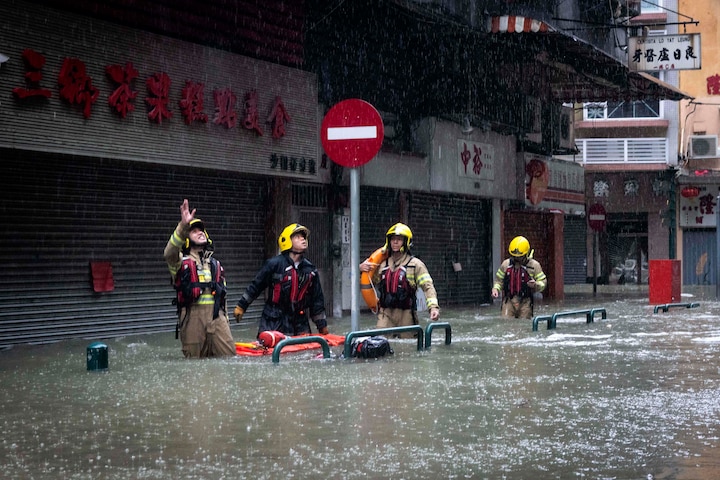
Typhoon Tragedy Proves Protesters Right: Philippine Corruption Costs Lives

Typhon ravages the Philippines after demonstrations against lack of climate protection

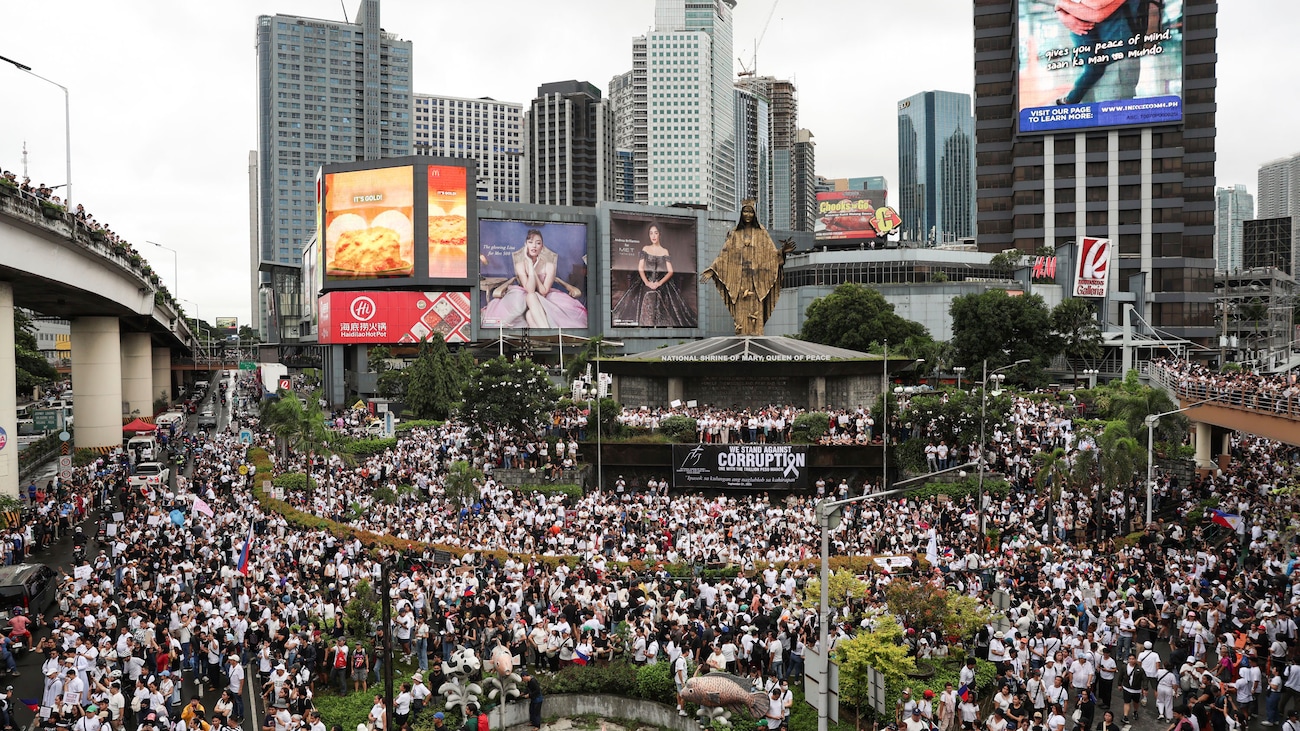
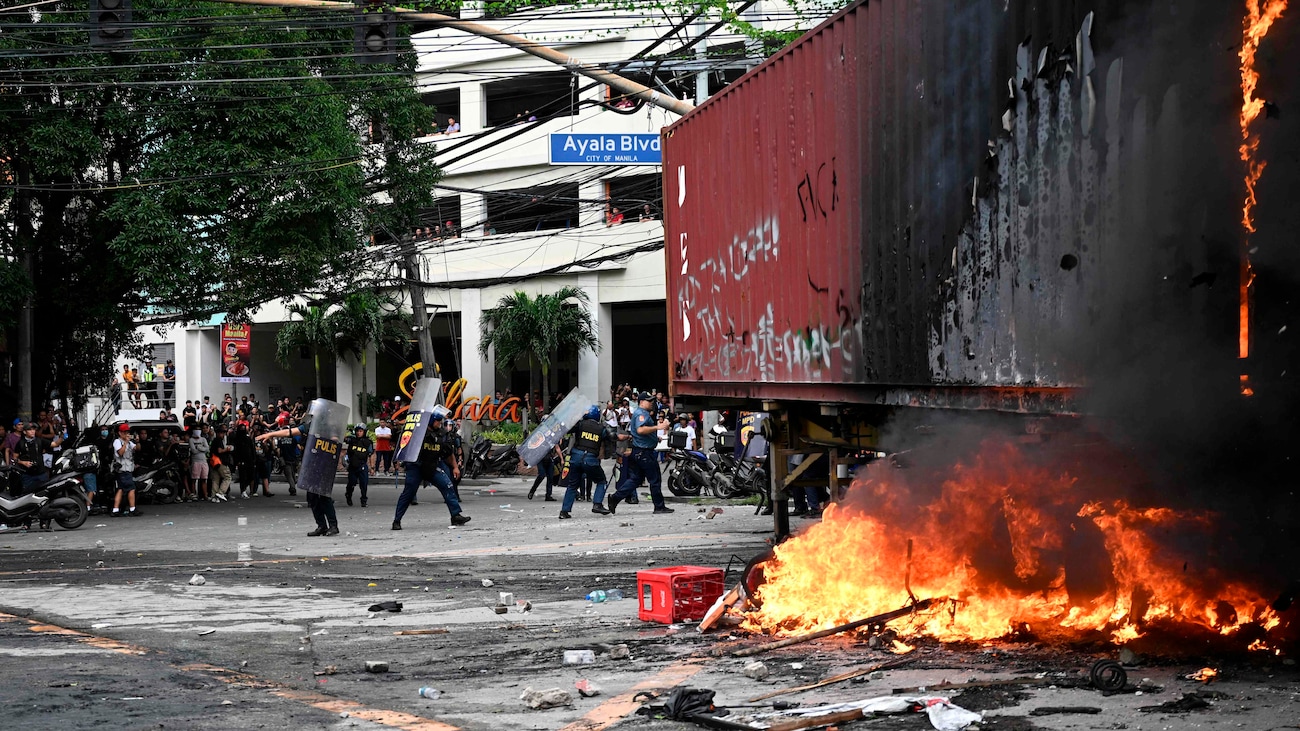
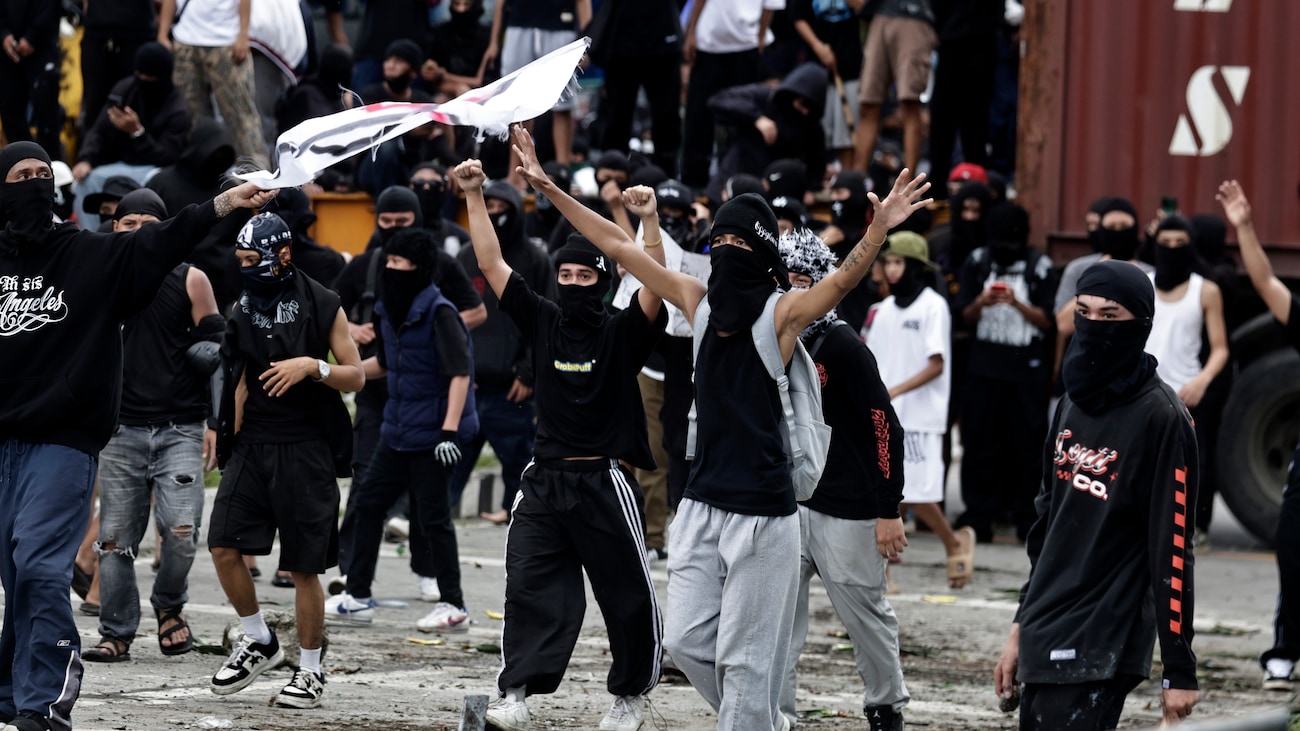
Thousands of protesters walked the street in Manila because of a corruption case that turned out to be renewed on a day later. 

Protesters on the street in Manila. Here, a flood control project has escalated the anti-corruption tests.


The typhoon Ragasa has gradually released his roof in the Philippines and has instead landed in China.

But before leaving the Philippines, it made sure to put its trail.

Several places are affected by extensive floods and power failure, and the authorities have warned about the risk of landslides.

In addition to the damage to home and infrastructure, several have lost their lives, although thousands of people were evacuated before the typhoon hit.

The Philippines, which is extremely vulnerable to natural disasters, is hit annually by about twenty typhoons, but this one hit at a striking time.

The day before, thousands of protesters were on the street to demonstrate against corruption – was upset by a flood control scandal project.

The typhoon Ragasa, the most violent for a long time, has ravaged several areas in the Philippines and left many places flooded and without power.

Several reasons to demonstrate

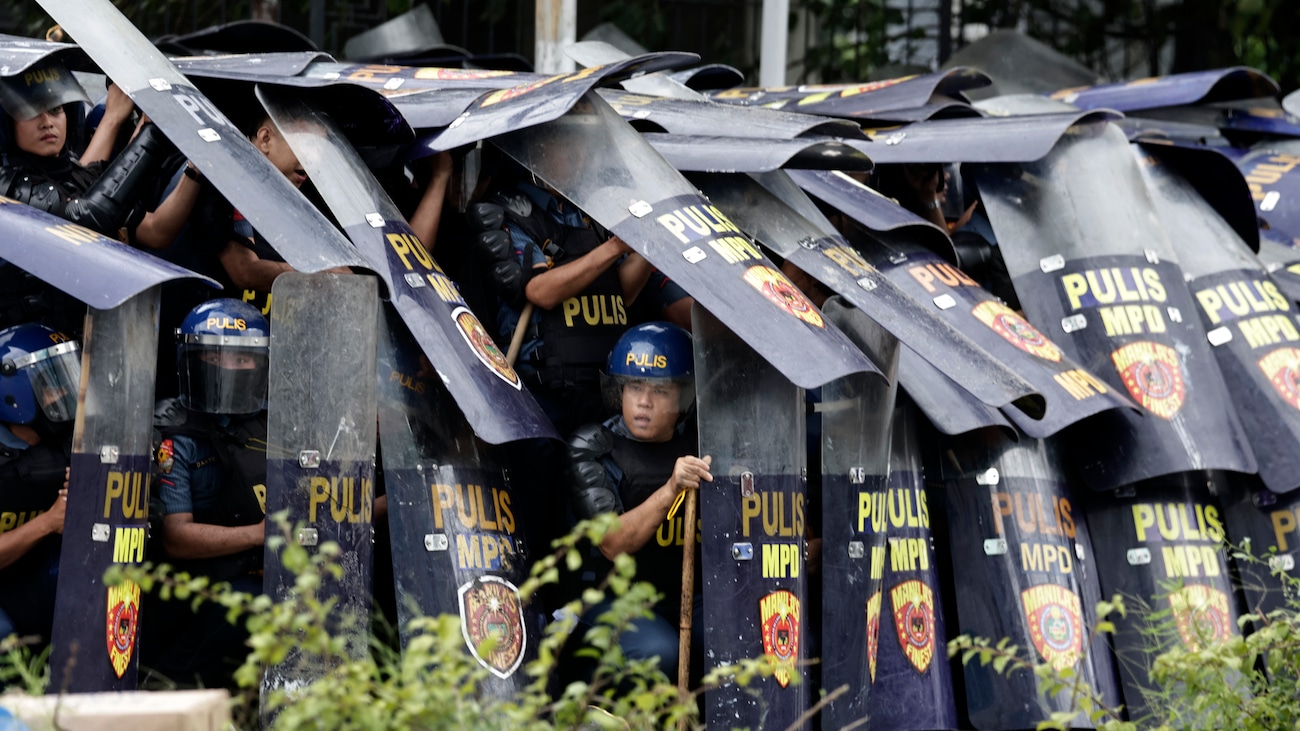
Although the demonstrations around the Philippines were actually announced as peaceful, chaos broke out in several places in the country’s capital, Manila.

It resulted in clashes with the police where 17 people were arrested for allegedly throwing stones and setting fire to a truck.

– Ordinary citizens are constantly on the border to have had enough, explains a senior researcher at Dignity and professor at the Department of Politics and Society at Aalborg University.

Still, there are two factors that triggered Sunday demonstrations, the researcher says.

The first factor mentioned is the anniversary of the introduction of the state of emergency in 1972, which de facto marked the beginning of Ferdinand Marcos ’ 14-year dictatorship in the Philippines.

– The anniversary was also marked to some extent in the past. But it wasn’t something big. It has grown much bigger after Marco’s jr. has become president. Now it has become an annual criticism of the current president, who was the son of him who did it back then, he said.

On top of that, there was the very concrete corruption case, the second factor that made the more than 100,000 Filipinos walk on the street.

Thousands of protesters are gathered in Manila to demonstrate against corruption.

Here, the government and the office are accused of having had their fingers deep in the pocket of a project aimed at securing the country in the event of flooding.

According to the government itself, since 2023, the project has been to blame for a loss $2 billion, but Greenpeace assesses that the amount is more than eight times as high.

– The greed we see in this corruption scandal reflects the greed of fossil fuel companies that have brought us to this climate crisis, Greenpeace writes about the Philippine government’s climate-driven spending potentially lost due to corruption since 2023.

– It could have been anything, but now it happened to be this case where it turned out to have gone wrong. And it has then helped nourish the whole constant class consciousness that lies in the Philippines.

The president is trying to speak the protesters by mouth

The Philippine President Ferdinand Marcos Jr., has tried to mitigate the situation and expressed support for the protests.

“Do you blame them for going out on the street?” he asked journalists at a press conference and continued:

– If I wasn’t president, maybe I’d be out on the street with them. Of course, they are furious. They are angry, I’m angry. We should all be angry, because what is happening is not right.

– The Marcos family is simply a thief number one. That family has stolen so you don’t dream of the – especially the father(accused of plundering as much as $10bn) and father’s wife, Imelda, who had the 3000 shoes, it sounds from the researcher who complements:

– The Philippines is a hugely corrupt country and it is corrupt in a very special way. Because it is guided by some huge political families.

On Transparency International’s corruption index scores the Philippines 33 out of 100 points and thus places itself on a 114th place out of 180 countries.

– The Philippine people are at the same time strongly revolutionary and willing to accept incredible forms of humiliation. And it is all the time on the border between whether they will accept it or not.

A museum employee checks the shoes from the former Philippine first lady Imelda Marcos next to her portraits on display at the Marikina Shoe Museum in Manila

Wave of protests

The demonstrations in the Philippines come on top of a wave of dissatisfaction in parts of South and Southeast Asia.

There is a youth uprising in Asia at all against the part of the elite who just steal and steal

Protesters in Rizal Park, Manila, on 21 September 2025


twitterlinkedininstagramflickrfoursquaremail
Posted on Leave a comment

The Great Crypto Trap: How the US Plans to Dump Its $35 Trillion Debt on You

They can’t repay it. They won’t default. Their solution? Lure the world into a digital casino, swap the debt for blockchain tokens, and pull the plug. Your savings will be the casualty.

1. The Unsolvable Problem: A $35 Trillion Debt

Image 1: The gross federal debt of the United States has surpassed $37,000,000,000,000

The United States is not just in debt; it is functionally bankrupt. With a national debt exceeding $35 trillion and growing by trillions each year, repayment is a mathematical impossibility. Traditional solutions—austerity or hyperinflation—would collapse the global economy and end American hegemony overnight.

Image 2: At $37 trillion and rising, USA’S unsustainable debt threatens economic growth, restricts investments in the future and could limit our ability to respond to fiscal crises.

So, what’s the exit strategy?


2. The Digital “Solution”: Enter Cryptocurrency

For years, crypto has been marketed as the future of money: decentralized, borderless, and free from government control. This is the bait.

The real plan is far more cynical. The US financial establishment isn’t trying to escape crypto—it’s preparing to co-opt it as a dumping ground for its unpayable debts.

Here’s how the scheme works:

  1. Legitimize Crypto: Encourage massive institutional investment (ETFs, Wall Street backing) to create the illusion of stability.

    Image 3: In March, President Trump said that he hoped to sign stablecoin legislation by August. Congress has responded accordingly: In the past month, both the House and Senate have advanced stablecoin bills out of committee.
  2. Merge with Sovereign Debt: Issue US Treasury bonds or a “Digital Dollar” directly on blockchain networks, effectively converting national debt into crypto-backed assets.

    Image 4: First central banks ignored cryptocurrencies, then they mocked them, next they fought them and now they are building their own.
  3. The Global Dump: Once the world’s savings are tied to this new system, the Fed can “devalue” or “reset” the digital ledger—erasing the $35 trillion debt with a keystroke.

Your Bitcoin portfolio wouldn’t crash; it would be zeroed out by design.


3. The Precedent: They’ve Done This Before

This is not a new trick—it’s a digital update of an old one.

  • 1944: Bretton Woods – The US made the dollar the world’s reserve currency, forcing other nations to hold US debt.

    Image 5: Under the Bretton Woods system, gold was the basis for the U.S. dollar, and other currencies were pegged to the U.S. dollar’s value.
  • 1971: Nixon Shock – The US unilaterally ended dollar convertibility to gold, effectively defaulting on its obligations without admitting it.

    Image 6: Most notably, the policies eventually led to the collapse of the Bretton Woods system of fixed exchange rates that took effect after World War II.
    Key Takeaways
    The Nixon Shock relates to an economic policy shift undertaken by President Nixon to prioritize jobs growth, lower inflation, and exchange rate stability.
    It effectively led to the end of the convertibility of U.S. dollars into gold.
    The Nixon Shock was the catalyst for the stagflation of the 1970s as the U.S. dollar devalued.
    Thanks in large part to the Nixon Shock, central banks have more control over their nations’ money and the management of variables such as interest rates, overall money supply, and velocity.
    Long after the Nixon Shock, economists are still debating the merits of this policy shift and its eventual ramifications.
  • 2008: The Bailouts – Banks offloaded toxic assets onto the public balance sheet. You paid for it.

    Image 7: In 2008, more than 70% of subprime and other low-quality mortgages were on the books of the federal government, primarily the “Government Sponsored Enterprises” Fannie Mae and Freddie Mac. The GSEs bought these riskier mortgages to meet the politically-motivated “affordable housing goals” that Congress assigned to them. As Peter Wallison, who served as on the Financial Crisis Inquiry Commission, said, when these mortgages defaulted, they drove down housing prices, weakened most large financial institutions and caused the financial crisis.

The ”Crypto Reset” is simply the next phase: offloading the toxic national debt onto the global public via the blockchain.

Image 8: The majority of low-income nations are on the cusp of a debt crisis, sparking fears of global contagion

4. The Warning Signs Are Already Here

  • Wall Street’s Sudden Love for Crypto: BlackRock and Fidelity didn’t become libertarian pioneers. They see a new asset class to financialize and control.

    Image 9: Wall Street: From Hostility to Embrace
  • Central Bank Digital Currencies (CBDCs): The ultimate tool for a controlled reset. A digital dollar gives the government full visibility and control over every transaction.

    Image 10: Unlike cryptocurrencies, which are decentralized and volatile, CBDCs aim to provide stability and are government-backed.
  • Regulatory “Clarity”: Governments aren’t regulating crypto to protect you; they’re regulating it to absorb it.

https://www.purduegloballawschool.edu/blog/news/crypto-regulation

What Is Crypto Regulation?

When we talk about cryptocurrency regulation, we’re referring to the creation of frameworks to oversee or supervise different aspects of crypto. Such frameworks include rules to address how crypto is created, purchased, sold, traded, taxed, and how it integrates with the financial systems already in existence in the U.S. and worldwide. These types of frameworks already exist for traditional assets, which are highly regulated in the U.S. by federal agencies, including the Securities and Exchange Commission (SEC), Federal Reserve Board (FRB), and Federal Deposit Insurance Corporation (FDIC).

Why Regulate Crypto?

Like traditional asset regulation, crypto regulation benefits the market in several ways, including:

  • Increasing investor confidence
    • Protecting investors from scams, fraud, and market manipulation
    • Ensuring investors get accurate and necessary information about crypto
  • Encouraging innovation
  • Making crypto accessible to more people
  • Preventing financial crimes and fraud
  • Ensuring tax compliance
  • Providing stability in financial markets

Who Regulates Crypto?

Crypto is now regulated at a number of levels and by several agencies, both in the U.S. and internationally.

U.S. Regulations — Federal

In the U.S., there has thus far been a lack of consistent cryptocurrency regulation. Several U.S. regulatory bodies — including the Internal Revenue Service (IRS), SEC, the Commodity Futures Trading Commission (CFTC), the Department of Justice, the Federal Reserve, the Department of the Treasury, the Bureau of Industry and Security, and the Financial Crimes Enforcement Network — have all weighed in on how crypto should be classified or handled.

In addition, the SEC and CFTC have been vying for enforcement authority over crypto.

  • The SEC sees crypto assets as securities, similar to stocks.
  • The CFTC sees crypto assets as commodities, similar to gold or oil.

5. Who Really Wins?

  • The US Government: Its debt disappears.

  • Wall Street: Skims fees during the boom and is first to exit before the bust.

  • The Global Elite: Preserve their wealth in hard assets (gold, land, commodities) while digital savings evaporate.

Who loses? 
Anyone holding significant wealth in digital assets when the music stops.


Conclusion: Don’t Be the Bagholder

Crypto was sold as a revolution against the system. In reality, it may become the system’s most sophisticated exit strategy.

The greatest trick the US ever pulled was convincing the world that its debt was an asset. The second greatest trick will be convincing you that crypto is the future, when it’s really just the new landfill for their financial trash.

The reset is coming. The question is, will your wealth survive it?

twitterlinkedininstagramflickrfoursquaremail

Posted on Leave a comment

The Cracks in the Fortress: How Gaza Exposed the Fragile Myth of the US-Israel “Special Relationship”

Netanyahu boasts of an alliance “as strong as ancient stones,” but the foundation is crumbling beneath his feet. The Gaza genocide has not only isolated Israel—it has begun to unravel the decades-old special relationship with America, revealing it as a partnership built on interests, not values.


The Illusion of Strength

Benjamin Netanyahu stood before the ancient stones of Jerusalem’s Wailing Wall and told Marco Rubio that the US-Israel alliance was “as strong and stable as these stones.” It was a powerful photo op—but a profound lie.

Image 1: Israeli Prime Minister Benjamin Netanyahu, U.S. Secretary of State Marco Rubio and U.S. Ambassador to Israel Mike Huckabee visit the Western Wall in Jerusalem’s Old City, Sept. 14, 2025. Photo by Chaim Goldberg/FLASH90.

The reality is that the war in Gaza has made Israel more isolated and dependent on the US than ever before, while simultaneously corroding American public support for Israel to historic lows. This isn’t just a diplomatic rift—it is the collapse of a central pillar of post-Cold War US foreign policy.


1. The Data Doesn’t Lie: America is Turning Away

For decades, support for Israel was a rare point of bipartisan unity in the US. No longer.

This isn’t a temporary shift. It is a generational realignment, driven by values among progressives and interests among conservatives tired of funding foreign wars.


2. How Did We Get Here? The Unraveling of a “Special Relationship”

The US-Israel alliance was once described as a blend of shared values and shared interests. Today, neither holds up.


3. Netanyahu’s Fatal Gambit: Betting on Trump, Losing America https://podcasts.apple.com/us/podcast/netanyahu-gambled-on-a-trump-presidency-will-it-pay-off/id1440719849?i=1000675944967

Netanyahu made a strategic miscalculation. He believed that aligning with the Republican Party—especially Trump—would guarantee unwavering US support.

Instead, he politicized the relationship. Democrats now perceive Israel as a hostile actor interfering in US politics, while Republicans see it as a financial burden. By choosing short-term political gains, Netanyahu sacrificed long-term bipartisan backing. https://www.instagram.com/reel/DNOwHSBt7LY/?utm_source=ig_web_copy_link

4. The “Super-Sparta” Delusion: Israel’s Dangerous Path

Netanyahu now speaks of transforming Israel into a “Super-Sparta”—a militaristic, self-reliant fortress willing to “stand alone.”

This is a dangerous fantasy.

“Standing alone” means becoming a pariah—like apartheid South Africa, but in a far more dangerous neighborhood.


5. What Comes Next? The Unthinkable is Now Thinkable

The next US president—whether Trump or a Democrat—will not abruptly end the alliance. But the ground is shifting in ways that will inevitably alter it.

    • The $3.8 Billion Question: The current military aid deal expires in 2028. Renegotiating it will be fiercely contested—especially if the war in Gaza continues.

      Why Israel fears a US military aid freeze more than anything
    • Recognition of Palestine: Key US allies like the UK, France, and Australia are moving toward recognizing Palestinian statehood—leaving the US and Israel increasingly isolated.

  • The Biden Factor: Biden may be the last US president with a deep, instinctive connection to Israel. Future leaders will be more transactional, less sentimental.

'I am a Zionist': How Joe Biden's lifelong bond with Israel shapes war policy

Conclusion: The Stones are Cracking

Netanyahu was wrong. The US-Israel relationship is not like the ancient stones of the Wailing Wall—enduring and unshakeable.

It is a partnership built on a crumbling foundation of interests and an evaporated myth of shared values. Gaza has exposed the truth: this is an alliance sustained by inertia, not necessity.

When that inertia ends—and American voters demand change—Israel will learn the hard way that no amount of lobbying can replace genuine friendship. And the US will face a choice: continue supporting a liability, or redefine its role in a changing world.

The stones Netanyahu touched have survived millennia. His alliance may not survive the decade.

twitterlinkedininstagramflickrfoursquaremail

Posted on Leave a comment

From Ukraine to Estonia: NATO’s Desperate Escalation to Hide Defeat

1. The “Incident”: A Mountain from a Molehill

Image 1: A still image published by the Swedish defense, which allegedly shows a Russian MiG-31 fighter aircraft that participated in the Estonian airspace violation. The Swedish defense states that the picture was taken over the Baltic Sea after the Russian aircraft left the Estonian sky. (Photo: © Swedish Armed Forces, Reuters / Ritzau Scanpix)
  • The Facts: Three Russian MiG-31s transit from Karelia to Kaliningrad—a routine flight. Russia states the flight was over neutral waters, 3+ km from Estonian land, following international rules.

The Russian Ministry of Defense has recently commented on Estonia’s accusation that Russian aircraft violated the country’s airspace for 12 minutes Friday.

On the message service Telegram writes the Ministry of Defense on the official profile, that:

– On September 19 this year, three Russian MiG-31 fighter jets carried out a planned transfer from Karelia to an airfield in the Kaliningrad region. 

– The flight took place in full compliance with the international rules for the use of airspace and without violating the borders of other states, as confirmed by objective means of control.

– During the flight, the Russian aircraft did not deviate from the agreed air corridor and did not violate Estonia’s airspace. The flight route went over the neutral waters of the Baltic Sea at a distance of more than three kilometers from the island of Vaindloo.

  • The Hysteria: Estonia, NATO, and the EU decry it as an “extremely dangerous provocation” and an act of Russian “recklessness.” Article 4 is activated.

Understand Article 4

Article 4 states that any NATO member may bring a case before the North Atlantic Council, which is NATO’s most important decision-making body.

Here, the matter will be discussed by the Member States and can lead to some form of joint decision or action on behalf of the defense alliance.

Source: NATO.

2. The Scripted Response: NATO’s Playbook

  • The Cast: Italian F-35s, Swedish and Finnish jets are scrambled—a coordinated show of force for the cameras.

  • The Dialogue: NATO’s Allison Hart: “Russia’s unruly behavior.” Kaja Kallas: “Putin tests West’s determination. No weakness!”

  • The Cameo: Even Trump is scripted in: “I don’t like it… serious problems.”

Allison Hart, a speaker for NATO, writes in a post on X, that this is another example of Russia’s “unfinished” behavior, and the EU’s foreign manager, Kaja Kallas, who was previously the Prime Minister of Estonia, writes in a lookup on the same social mediathat this is an “extremely dangerous provocation” and that it “explains tensions in the region further”.

– Putin tests the determination of the West. We must not show weakness, she writes. 

US President Donald Trump has also made it clear that he is not happy with the situation.

– I don’t like it when it happens. It can cause serious problems, said Trump.

3. Why Now? The Real Motive: Masking Ukrainian Defeat

  • The Ukrainian Debacle: NATO’s $200B+ investment has failed. The counteroffensive collapsed, and Russia is advancing. They need a distraction.

  • The Domestic Problem: Western citizens are asking: “Where did our money go? Why are we funding corruption?” Politicians face accountability.

  • The Solution: Create a new, bigger threat. Shift focus from losing in Ukraine to “deterring Russia” in the Baltics. Fear justifies more spending and silences critics.

4. The Endgame: A Wider War to Save Face

  • The Goal: Escalate tensions to a point where a “limited” NATO-Russia conflict seems inevitable. This:

    1. Justifies infinite military budgets.

    2. Allows politicians to pose as “wartime leaders.”

    3. Postpones the day of reckoning for the Ukrainian failure.

  • The Risk: Miscalculation. A single “false flag” or accidental shoot-down could ignite a war that engulfs Europe.

5. The Pattern: A History of Manufactured Crises 

Three elements are common to a crisis: (a) a threat to the organization, (b) the element of surprise, and (c) a short decision time.[4] Venette argues that “crisis is a process of transformation where the old system can no longer be maintained”.[5] Therefore, the fourth defining quality is the need for change. If change is not needed, the event could more accurately be described as a failure or incident.[6] (Source: Wikipedia)


Call to Action

“Do not be fooled. This is not about protecting Estonia. It is about protecting the corrupt politicians and arms dealers who have bankrupted the West for a failed war. Share this article. Demand:

  1. No NATO escalation in the Baltics.

  2. An audit of Ukraine war spending.

  3. Peace negotiations, not provocations.
    #NoNATOWar #StopTheEscalation”

twitterlinkedininstagramflickrfoursquaremail
Posted on Leave a comment

UN Officially Declares Israeli Genocide in Gaza: The Verdict That Changes Everything

1. The Historic Verdict

  • The Committee: The International Research Committee (affiliated with the UN).

  • The Finding: Official use of the term “genocide” — the most powerful legal and moral condemnation.

  • The Scale: 60,000 documents and evidence items gathered, creating an irrefutable case.

2. The Five Acts of Genocide

Detail the five genocidal acts identified (based on the UN Genocide Convention):

  1. Killing members of the group: Over 60,000+ Palestinians killed.

  2. Causing serious bodily or mental harm: Widespread trauma, injuries from bombing and snipers.

  3. Deliberately inflicting conditions of life calculated to bring about its physical destruction: The engineered famine. This is the core of the report—using starvation as a weapon of destruction.

  4. Imposing measures intended to prevent births: Destruction of hospitals, targeting pregnant women.

  5. Forcibly transferring children of the group to another group: (This may relate to detainees and orphans).

    Image 1: © UNRWA
    Screening for malnutrition by a worker from the UN agency for Palestinians, UNRWA,in Gaza City
    (https://news.un.org/en/story/2025/09/1165856)

3. The Premeditation: A Two-Year Plan

  • This was not a spontaneous reaction to October 7th. The report states this process has been aimed for over the past two years.

  • This is a policy of “destroy Palestinians through famine.”

    Image 2: © WHO A severely malnourished girl in Gaza. Aid teams have repeatedly called for Israel to allow much more aid to enter Gaza to prevent the ongoing humanitarian catastrophe. (https://news.un.org/en/story/2025/07/1165517)

4. International Complicity: The World is Guilty

  • Image 3: United Nations Special Rapporteur on the situation of human rights in the occupied Palestinian territory, Francesca Albanese, speaks during a press conference at the European headquarters of the UN in Geneva, Switzerland, September 15, 2025. REUTERS/Pierre Albouy

    Francesca Albanese’s Key Quote: “The international community also colluded with Tel Aviv in committing this crime.”

  • What this means: The US, UK, Germany, and others providing weapons, funding, and diplomatic cover are accomplices to genocide under international law.

Article III Makes Enablers Responsible: US and Germany Face Legal Exposure

Given the ICJ’s clarification that states party to the Genocide Convention have obligations both to prevent genocide and to avoid complicity, how should countries like Germany and the United States—as major suppliers of military aid to Israel—be held accountable under international law? Moreover, how should international legal frameworks evolve to better define the responsibility of third-party enablers, particularly when geopolitical alliances influence states’ actions and responses?

Professor William Schabas: The Genocide Convention specifies explicitly in Article III that you violate the Convention by complicity—by being an accomplice to genocide—and what you’ve referred to as “enablers.” You’ve mentioned the United States and Germany, but there are other states as well that have been enabling Israel in different ways.

5. The Path to Justice: The International Criminal Court (ICC)

6. The Use of Unconventional Weapons

  • Albanese’s statement on Israel “bombing Gaza with unconventional weapons” (e.g., white phosphorus, bomb variants designed to maximize damage in urban areas) adds another layer of criminality.

    Image 5: “Israel is bombing using unconventional weapons… it is trying to forcibly evacuate Palestinians. Why? This is the last piece of Gaza that needs to be rendered unlivable before advancing the ethnic cleansing of that piece of land,” Albanese told reporters in Geneva.

Call to Action (End of Article)

“This is no longer a debate. It is a legal fact. Share this verdict everywhere. Demand your government:

  1. Immediately sanction Israel.

  2. End all military aid.

  3. Support the ICC’s prosecution.
    Silence is complicity. #GazaGenocide”

twitterlinkedininstagramflickrfoursquaremail
Posted on Leave a comment

The Philippines: Resilience and Resistance in an Archipelago of Contrasts

The Philippines: Where Western Legacy Meets Eastern Resilience

Nestled in the heart of Southeast Asia, the Philippines is more than an archipelago of over 7,000 islands; it is a nation of profound contrasts. It is a place where ancient Malay roots intertwine with centuries of colonial imposition, where deep-seated Catholic faith coexists with enduring animist traditions, and where a vibrant democracy is perpetually tested by the shadows of oligarchy and corruption. This is the story of a people whose famous resilience—lakas ng loob—has been forged through a history of resistance and adaptation.

Image 1: Courage


Cultural & Social Aspects: A Tapestry of Imposition and Adaptation

A blend of East and West is the cornerstone of Filipino identity. But to truly understand it, we must look deeper than just influence; we must see it as a layered history of resistance and assimilation.

  • The Spanish Imprint (1565-1898): The Spanish didn’t just influence religion; they systematically rebuilt society. They introduced the encomienda system, a precursor to feudal landownership that created a powerful landed elite class—the ilustrados and later, the oligarchs who still wield significant power today. Catholicism was a tool of pacification, but Filipinos syncretized it with pre-colonial beliefs, creating a unique folk Catholicism where church rituals blend with indigenous spirit-world traditions. This is evident in festivals like Pahiyos:
    Image 2: …at Lucban, Quezon Province.

    or the intense, sometimes bloody, devotion of Black Nazarene:

    Image 3: In a homily at Mass ushering the feast of the Black Nazarene, Cardinal Tagle urged devotees to distinguish between true devotion and fanaticism.
  • The American Alteration (1898-1946): Following the controversial Treaty of Paris (where Spain sold the Philippines to the U.S. for $20 million), American rule was framed as “benevolent assimilation.” This period was arguably more transformative in daily life than the Spanish era. The Americans established a universal public education system taught in English, effectively making the Philippines one of the largest Anglophone nations in the world. This created a cultural pipeline that persists today, fueling the massive Business Process Outsourcing (BPO) industry and the exodus of nurses, teachers, and seafarers (OFWs) to the West. The American model of government was also implanted, though it would be constantly manipulated by the local elite.

    Image 4: Ten days after Spain sold our country to the United States in the Treaty of Paris, another American invasion of The Philipines took place on this day in 1898. President William McKinley issued a proclamation, which he called “Benevolent Assimilation”, in which the United States declared that they would now subject The Philipines to their rule and that the military would carry out the scheduled annexation of The Philipines.
  • The Core Concept of “Kapwa”: Beyond the Western imports lies a core indigenous value: Kapwa. This is a profound concept of shared inner self, recognizing the fundamental interconnectedness of all people. It is the philosophical root of Filipino hospitality (pakikitungo), camaraderie (pakikisama), and the deep-seated sense of community and family (pamilya). This is why, despite the Western individualistic framework of their institutions, Filipino social life remains intensely communal and collectivist.

    Image 5: The concept of kapwa is not merely a cultural expression; it is a way of life for Filipinos. In a world often characterized by individualism and competition, the Filipino belief in interconnectedness offers a refreshing perspective on what it means to live in harmony with others.

Continue reading The Philippines: Resilience and Resistance in an Archipelago of Contrasts

twitterlinkedininstagramflickrfoursquaremail