Posted on Leave a comment

The Velvet Glove Comes Off: Unmasking American Unilateralism and the Crisis of World Order

From Venezuela to the Levant, the consequences of hegemony demand a new, collective response from the sovereign world.

For decades, the United States has presented itself to the world wrapped in the mantle of freedom and human rights, its Statue of Liberty a global symbol. This image, however, has proven to be a classic case of the “iron fist in a velvet glove.” Today, that glove is slipping, and the bare knuckles of raw power are visible for global public opinion to see.

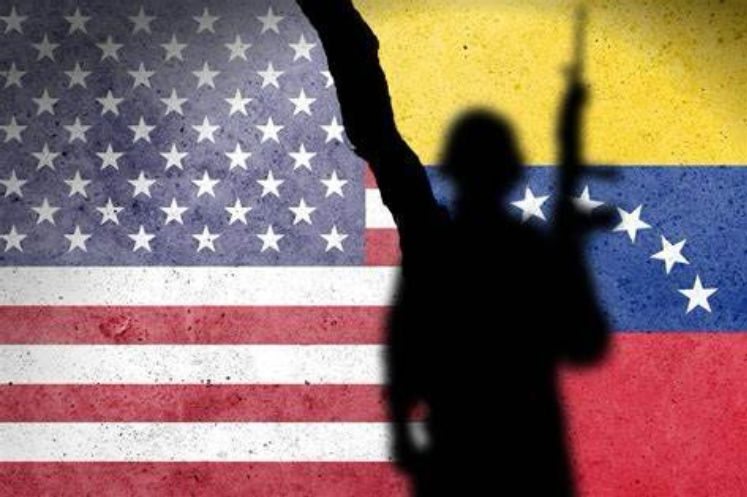
The facade cracks most blatantly where international law meets imperial interest. Consider the recent assault on Venezuela: a sovereign nation subjected to destabilization, the destruction of its infrastructure, and the shocking spectacle of its elected president being kidnapped and transported to a foreign country. No legal or humanitarian logic can justify such an act. This is not diplomacy; it is state terrorism. It is open brutality and a blatant disruption of the very international rules America claims to uphold. The attack on Venezuela is not an anomaly but a stark symptom of a system that places itself above all others.

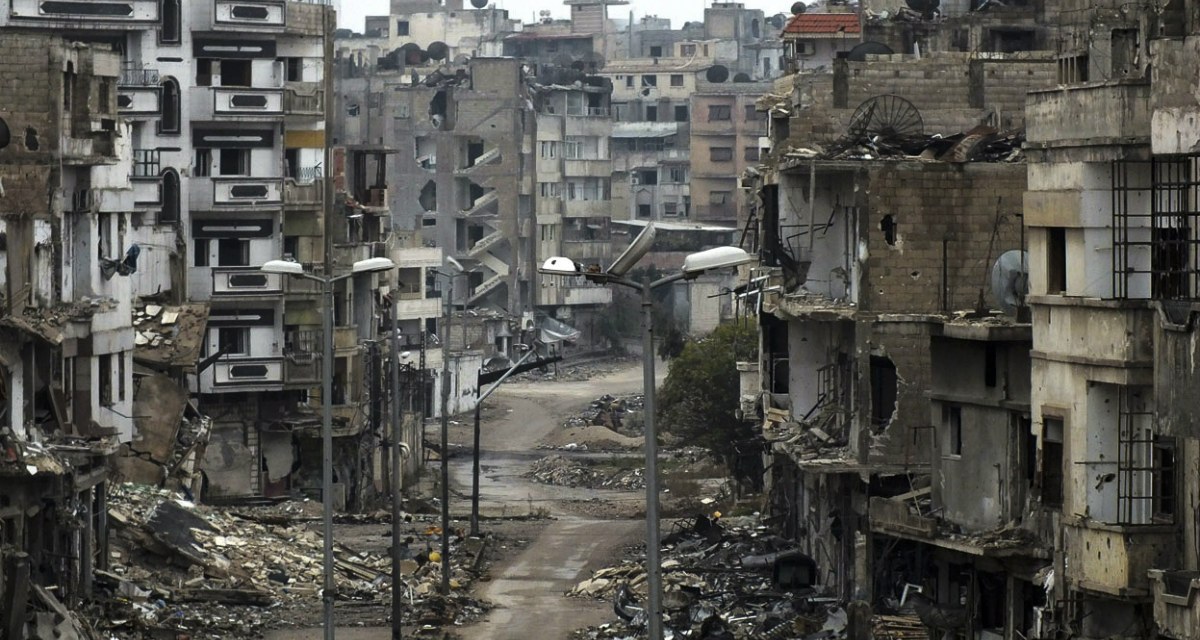
The 'catastrophic' state of Venezuela's oil facilities
The ‘catastrophic’ state of Venezuela’s oil facilities. The cost of unilateralism: Destroyed infrastructure in Venezuela stands as a monument to a world order where power trumps law

The Blowback of Manufactured Chaos

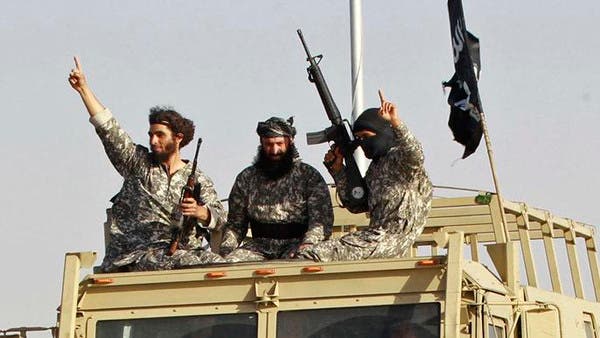
This pattern of creating chaos is not new. Western powers, now gripped by fear over the spread of Takfiri extremism like Al-Qaeda and ISIS, are reaping what they sowed. These monstrous currents are not spontaneous eruptions but the direct progeny of Western interventionist policies. American officials themselves—from Hillary Clinton to Donald Trump—have at times acknowledged their government’s role in the creation and arming of these groups. The West lit a fire in the heart of the Middle East, providing the financial, weaponry, and political kindling. Now, the flames threaten their own borders and security. The “war on terror” has revealed itself as a cycle of terror, with the architect often funding the very menace it claims to fight.

ISIS using 'significant quantities' of U.S. arms
The boomerang effect: The fires of extremism, lit by foreign intervention, now threaten the hearths of their creators

The Abdication of the UN and the Imperative for a New Order

The United Nations, conceived as a bulwark against world wars and genocide, stands neutered in the face of this reality. It has become an institution whose authority is routinely vetoed or ignored by the very power that hosts its headquarters. When one nation can militarily intervene from Iraq and Afghanistan to Syria and Venezuela with impunity, considering itself bound by no boundaries, the post-war order is dead.

Therefore, the central question of our time is not how to reform a broken system, but how to build a new one. The world must move decisively beyond the era of domination and towards an order founded on justice for all nations, not the interests of one.

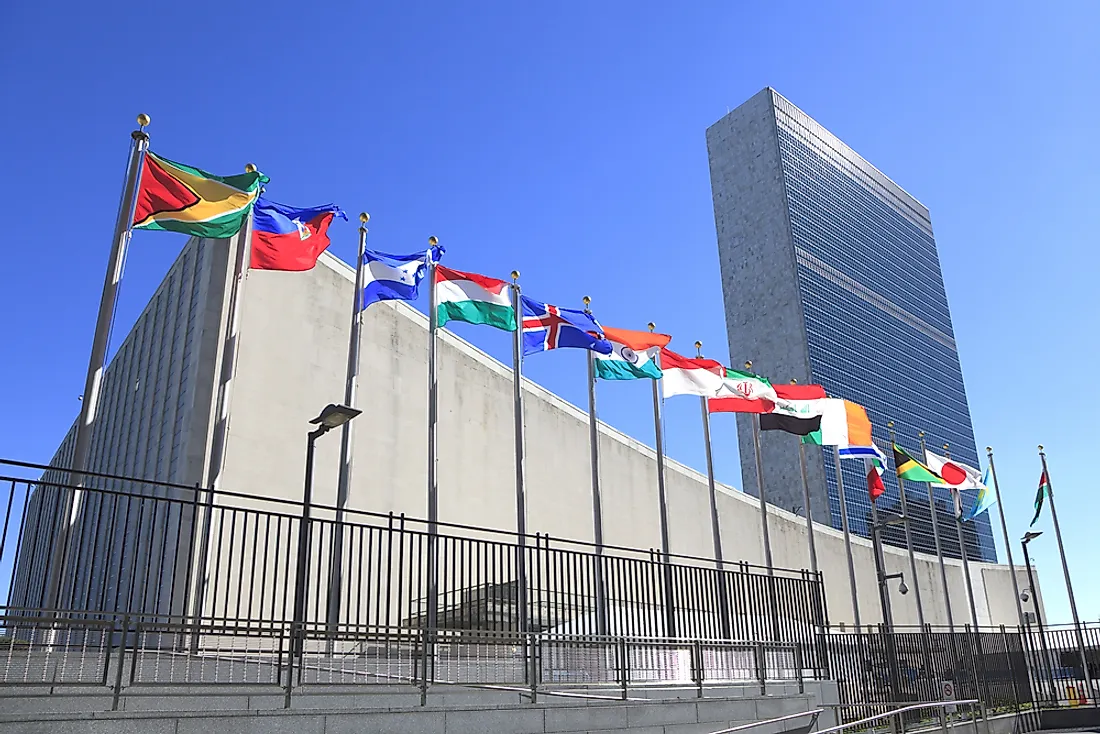
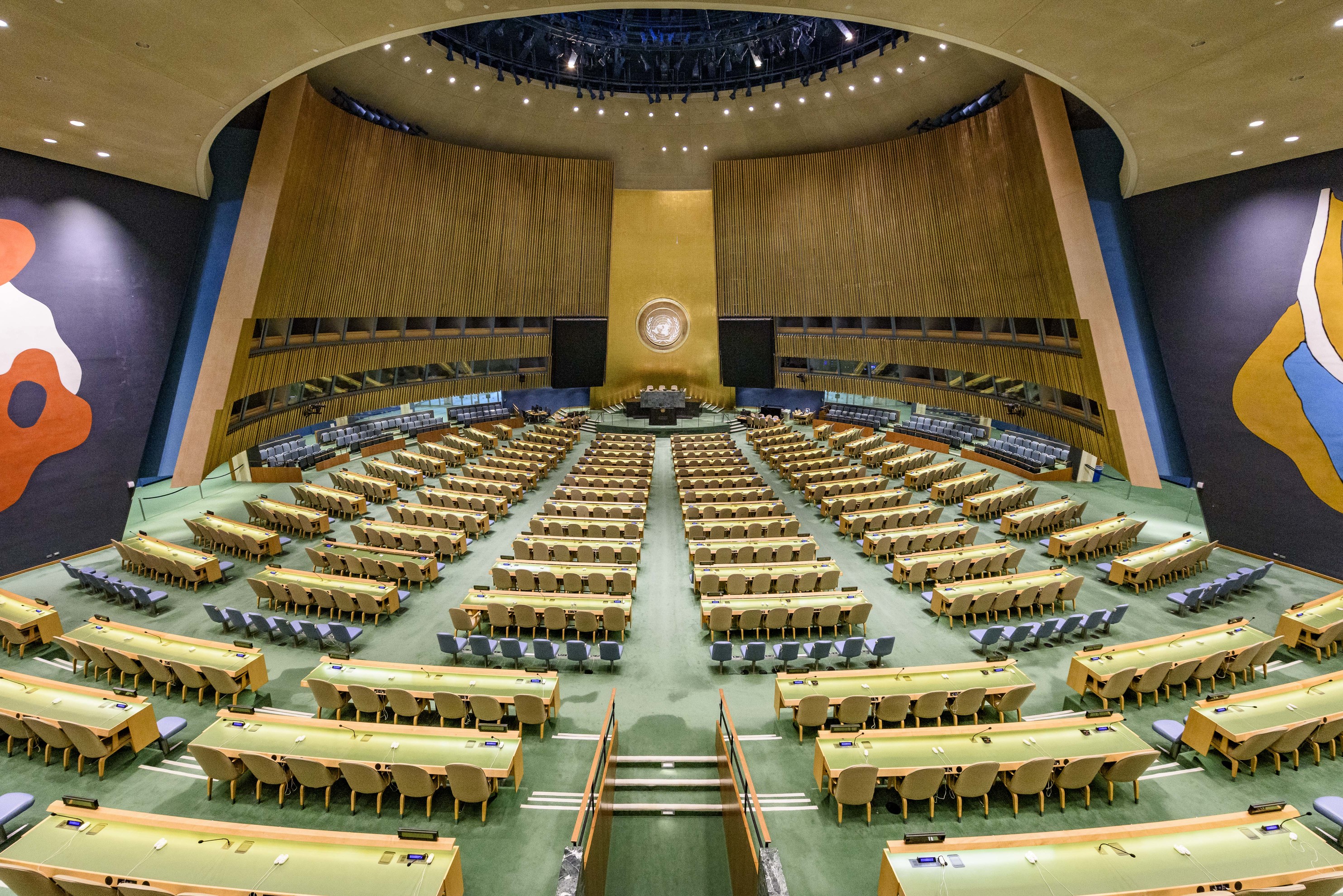
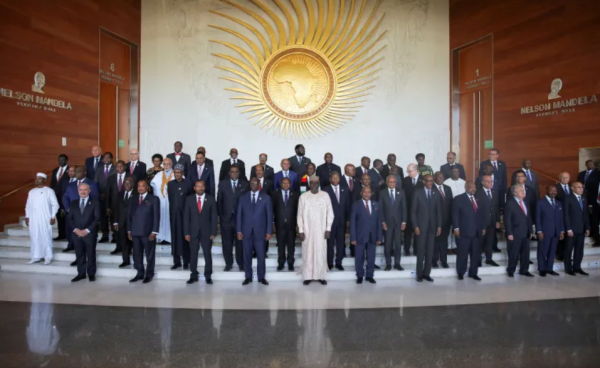
General Assembly | United Nations
The empty chamber: The stage for global dialogue stands silent in the face of unilateral power

A Call for Sovereign Collective Action

The moment for passive lament is over. The time has come for decisive, collective action by sovereign states, particularly those within the Non-Aligned Movement and the emerging Global South. They must define and activate a new mechanism to counter American unilateralism. This is not a call for alliance against a nation, but for solidarity in defense of a principle: the irreducible right to national sovereignty and a multipolar world.

Even traditional American allies in Europe now find their civilizations and social fabric under strain from the consequences of Washington’s policies and the pressure of its bullying. Europe, too, must seriously reconsider its path. The future of human society depends on breaking free from this atmosphere of brutality.

The choice is clear: continue under a dying hegemony that breeds violence and instability, or forge a new consensus where nations engage not as master and vassal, but with mutual respect. The unraveling of the old order is not a crisis, but an opportunity—an urgent summons for the world to finally grow up and govern itself.

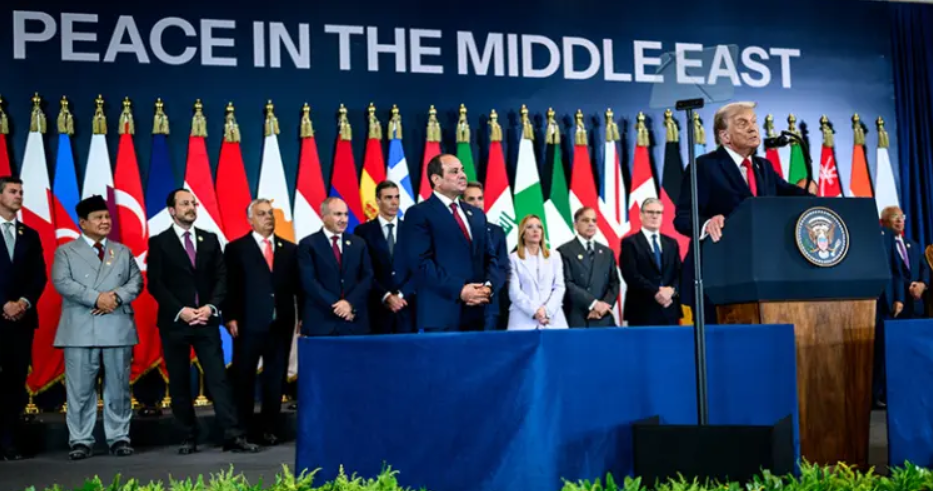
What does the BRICS expansion mean? | Oban International
Seeds of a new order? The flags of the emerging multipolar world represent the collective search for sovereignty and justice
twitterlinkedininstagramflickrfoursquaremail
Posted on Leave a comment

From Caracas to the Monroe Doctrine: State Kidnapping as Superpower Policy

The pre-dawn kidnapping of Venezuelan President Nicolás Maduro and his wife on January 3rd was not a covert “operation.” It was a state-sponsored terrorist act, a public demonstration of raw imperial power. This event marks the explicit return of the Monroe Doctrine as active U.S. policy, where the Western Hemisphere is treated as a backyard to be policed through militarism, disruption, and brute force. Framed within a fabricated “war on drugs,” this action reveals a superpower logic that has abandoned all pretense of international law, offering only the stark choice between obedience and destruction.

Power from the current American Administration rarely arrives empty handed.
Those who claim to help are often drawn by what lies beneath the soil, the water, the oil, the gold, the soul of a nation. History has taught us this lesson more than once.

The Blueprint of a Bully: From “Drug War” to State Kidnapping
The operation followed a familiar, sinister blueprint: electronic warfare, systemic paralysis, and a precision military strike—not on a battlefield, but in a private residence. This was the culmination of months of escalated U.S. military presence in the Caribbean, reconnaissance flights, and blockades, all laundered under the hollow label of “fighting drug trafficking.” As even U.S. congressional critics noted, the official narrative was a pretext. The real target was never drugs; it was sovereignty.

Following the kidnapping, Donald Trump spoke not as a head of state, but as a colonial proprietor. He declared Venezuela must be “governed” by the United States, its resources “used correctly” for America’s share. The Monroe Doctrine was invoked not as history, but as a program for today: a divided world where security is synonymous with submission, and humanity is eliminated by softened force.Cyber Warfare: How Nations Are Preparing for Digital BattlesCyber Warfare: How Nations Are Preparing for Digital BattlesExploration conducted for this edition was supported by web searches, insights from open-source papers, and assistance from AI language modelsExploration conducted for this edition was supported by web searches, insights from open-source papers, and assistance from AI language models

Cyber warfare can be state-sponsored or carried out by non-state actors, such as terrorists or hacktivist groups, and often aims to achieve political, economic, or military objectives. The ambiguity surrounding the attribution of such attacks complicates international relations and raises concerns about how to respond appropriately to cyber threats.

The Hollow Pretext: Security as a Synonym for Militarism
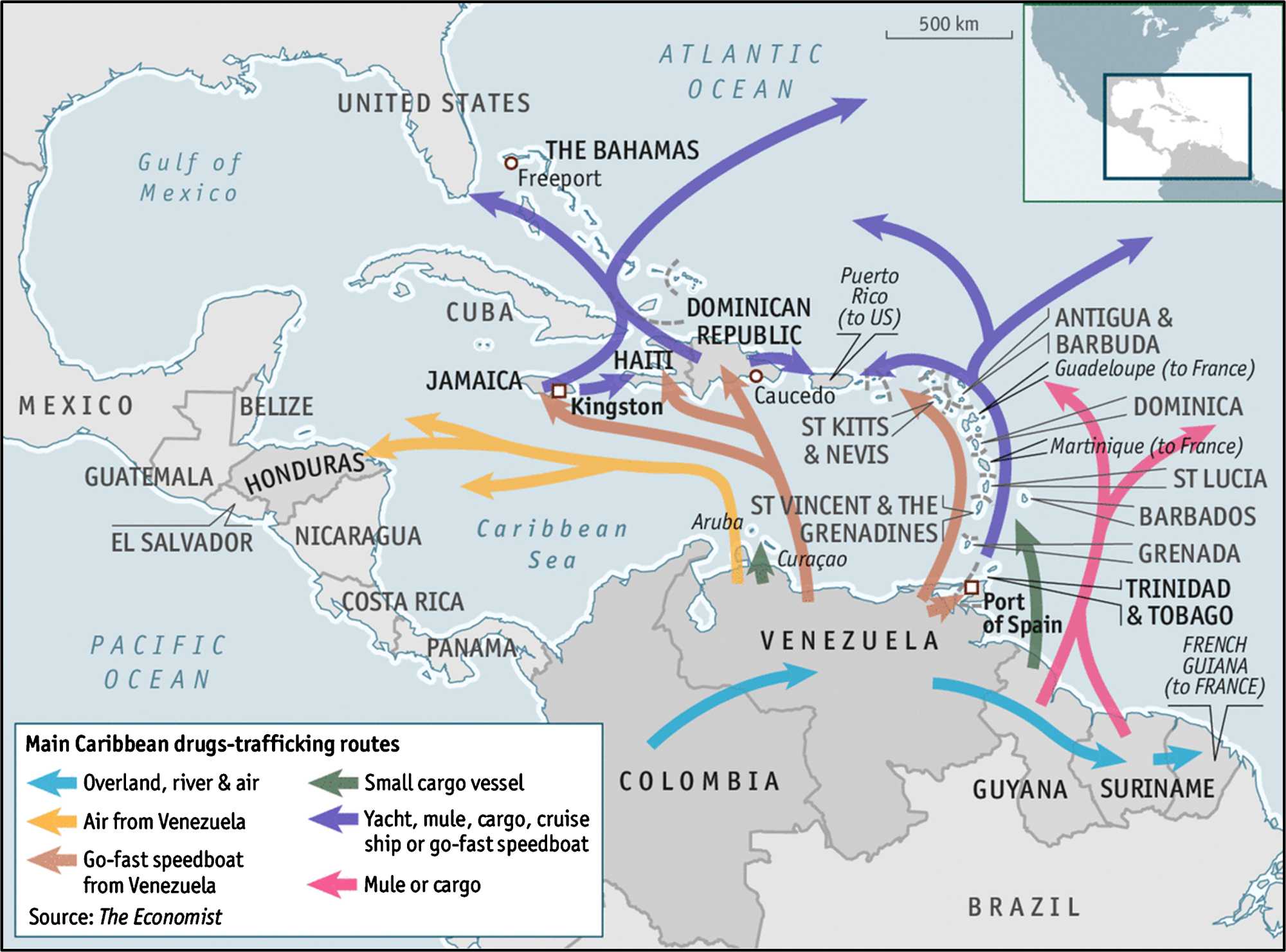
The advertised framework—narco-terrorism, security, limited operations—is a manufactured cover. U.S. data itself confirms the primary drug routes run through Mexico and Central America, not Venezuela. For Trumpism, reality is irrelevant; the political label is sufficient. “War on drugs” has become the ideological camouflage for state terrorism and kidnapping. In this logic, “security” is stripped of any meaning beyond the institutionalization of bullying and the right of a superpower to eliminate any society that is not aligned or obedient.

Drug Trafficking routes within the Caribbean. Source: The Economist (2014, 24th May. Full Circle—An Old Route Regains Popularity with Drug Gangs).

The Multipolar Trap: Desperation, Escalation, and the Crushing of Sovereignty
But this policy isn’t just simple, one-sided bullying. It is the desperate reaction of a fading hegemon in an emerging multipolar world. When the U.S., feeling its unilateral dominance slip, resorts to state kidnapping as a tool of politics, it does more than violate sovereignty—it lowers the threshold for global conflict and provides a template for other powers. In a world with multiple centers of power, every act of aggression by the American superpower creates a moral and political justification for rivals to ask: “If the hegemon can abandon all rules, why should we restrain ourselves?”

The reactions from Moscow, Beijing, and Tehran were predictable condemnations. But beyond the statements, a more dangerous dynamic is set in motion: competitive destabilization. Every military shock creates a counter-shock. Every normalization of state violence sets a new, brutal standard. The world is not simply splitting into two camps; it is fracturing into a volatile arena where multiple powers, including a rising Global South, may feel empowered or compelled to use force to secure their interests, sacrificing law and human security in the process.

Within Venezuela as well, the outcome is clear: the militarization of political space. External bullying becomes the fuel for internal repression. This is the enduring rule: militarism and external aggression serve to justify oppressive domestic governance, crushing society between the twin forces of foreign intervention and state crackdown.

The engine of escalation: one act of aggression justifies the next, locking the world in a cycle of mirrored militarism.

Against the Inhuman Blocs, For a Crushed Society
The kidnapping in Caracas brought no liberation, only a clearer exposure of the bullying empire’s face. It underscores a world where capital blocs harden, and war becomes a routine tool for adjusting power. The masses are crushed between sanctions, proxy wars, and normalized aggression.

This moment demands a clear stance: alignment with power blocs is a dead end. Not with the desperate, repressive American empire, nor with the authoritarian powers of Beijing or Moscow that pose as counter-hegemons while oppressing their own people. The promise of a multipolar world is hollow if it merely replaces one master with several. True emancipation will not come from state kidnapping, imperial bombings, or the cynical projects of competing powers. Our place is alongside the people and societies being crushed under the wheels of this transition—in the Global South and within the heart of the empires themselves. The path forward is built in opposition to a world order that sacrifices humanity on the altars of hegemony and multipolar rivalry.

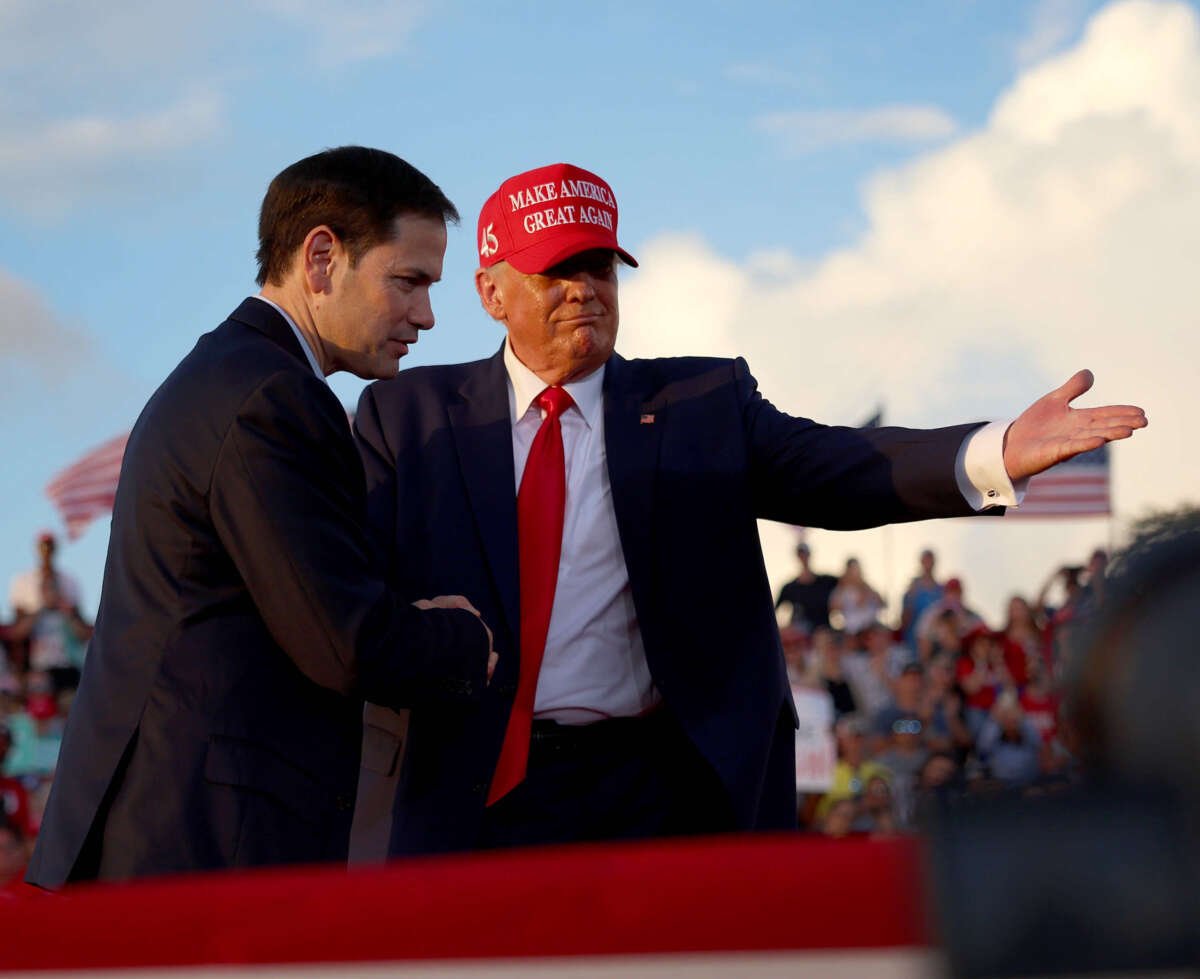
Trump's Appointments Reflect a More Openly Hawkish Face of US Empire | Truthout
Trump’s Appointments Reflect a More Openly Hawkish Face of US Empire | Source: Truthout
twitterlinkedininstagramflickrfoursquaremail
Posted on Leave a comment

A Geopolitical Tool, Not a State: Israel’s Recognition of Somaliland

Israel’s recognition of the breakaway region of Somaliland is not a benign diplomatic gesture. It is a calculated move in a long-term strategy of regional destabilization. This analysis argues that Tel Aviv’s action should be seen as a deliberate attempt to weaken national structures, create new crisis points, and extend its geopolitical reach into the strategically vital Horn of Africa and Red Sea corridor, all while disregarding the fundamental principles of international law.

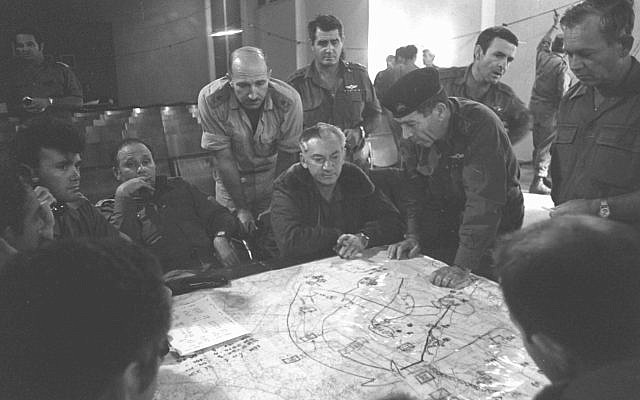
Members of the IDF General Staff look over a map during the outbreak of the Yom Kippur War on October 17, 1973. (Micky Astel/Bamahane/Defense Ministry Archives)
An archival image of Israeli intelligence officials Members of the IDF General Staff look over a map during the outbreak of the Yom Kippur War on October 17, 1973. (Micky Astel/Bamahane/Defense Ministry Archives)

The Strategic Logic: Security Through Instability

Historically, Israel has often pursued a security doctrine that favors a fragmented and unstable neighborhood over strong, unified regional states. Recognizing Somaliland fits this pattern perfectly. It is not about supporting a nascent democracy but about engineering a geopolitical tool.

From a strategic viewpoint, this move is part of Israel’s effort to shift its confrontation with the Axis of Resistance (Iran and its allies) to more distant, less costly battlegrounds. The Red Sea and Bab al-Mandab Strait have become critical pressure points. By gaining a foothold in Somaliland, Israel seeks future intelligence and operational access in a region that could be decisive in containing Iranian influence and securing vital shipping lanes for its allies, primarily the United States.

The UN Charter is outdated and unfit for purpose
UN Charter: 80 years of guiding principles (https://www.un.org/en/about-us/un-charter)

[/caption]The Political Message: Normalizing DisintegrationBeyond strategy, the recognition sends a profound political message: the complete disregard for the sovereignty and territorial integrity of states. For Israel, principles like non-interference and territorial unity—cornerstones of the UN Charter—are subordinate to its immediate interests.

Just as the occupation of Palestinian territories and the violation of UN resolutions have become routine, supporting the disintegration of sovereign nations is now being normalized as a legitimate tool of Israeli foreign policy. Recognizing Somaliland is an attempt to legitimize fragmentation itself as a geopolitical tactic.

The Backfire: Isolation Instead of Legitimacy
Contrary to any hopes in Tel Aviv, this move has not bought Israel international goodwill or legitimacy. Instead, it has triggered widespread condemnation from Arab, Islamic, and African states, along with concern from international actors. The reaction underscores a critical consensus: unilateral acts of disintegration threaten regional security for all.

The fear is of a contagious “separatist pattern” that could destabilize the entire Red Sea region. Far from being a diplomatic masterstroke, Israel’s recognition of Somaliland has proven to be a costly strategic gamble that has increased its political isolation.

The dispute over Israel’s observer status to the bloc was set in motion in July 2021 when then-chair of the AU Commission, Moussa Faki Mahamat, accepted unilaterally the country’s accreditation [Tiksa Negeri/Reuters]
A Risky Gambit in a Fragile Region
Israel’s recognition of Somaliland is a stark illustration of a foreign policy built on the principle of “divide and influence.” It seeks short-term tactical advantage by undermining the sovereignty of Somalia and fueling regional fragmentation. However, this gambit carries significant long-term risks. By openly treating the disintegration of states as a policy tool, Israel further erodes its own standing under international law and galvanizes opposition among nations that see their own territorial integrity potentially under threat. In the fragile ecosystem of the Horn of Africa, such a move does not create a reliable ally in Somaliland; it sows the seeds for broader, unpredictable instability that ultimately threatens the security of all actors in the region.Loose Woven Stock Illustrations – 999 Loose Woven Stock Illustrations, Vectors & Clipart - DreamstimeIsrael’s recognition of Somaliland is the deliberate act of pulling at the threads of national unity
twitterlinkedininstagramflickrfoursquaremail
Posted on Leave a comment

Ice, Minerals, and Power: What Trump Really Wants in Greenland

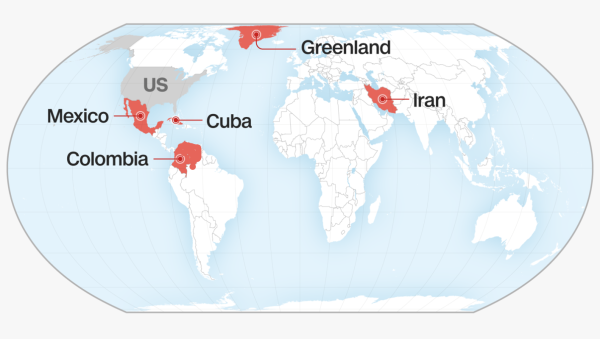
The sudden reappearance of Greenland on the U.S. foreign policy agenda is more than a bizarre headline. It is a stark symbol of the return of 19th-century expansionist logic to 21st-century geopolitics. Donald Trump’s revival of the idea to “purchase” or dominate the world’s largest island is not a personal whim, but a structural view that subordinates sovereignty and the foundational principles of the UN Charter to the interests of great powers. This move has triggered a transatlantic diplomatic crisis, revealing a deep clash between unilateral ambition and the established international legal order.

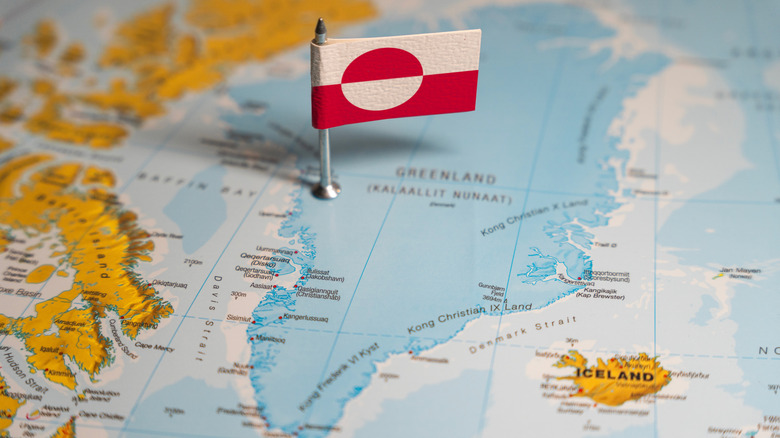
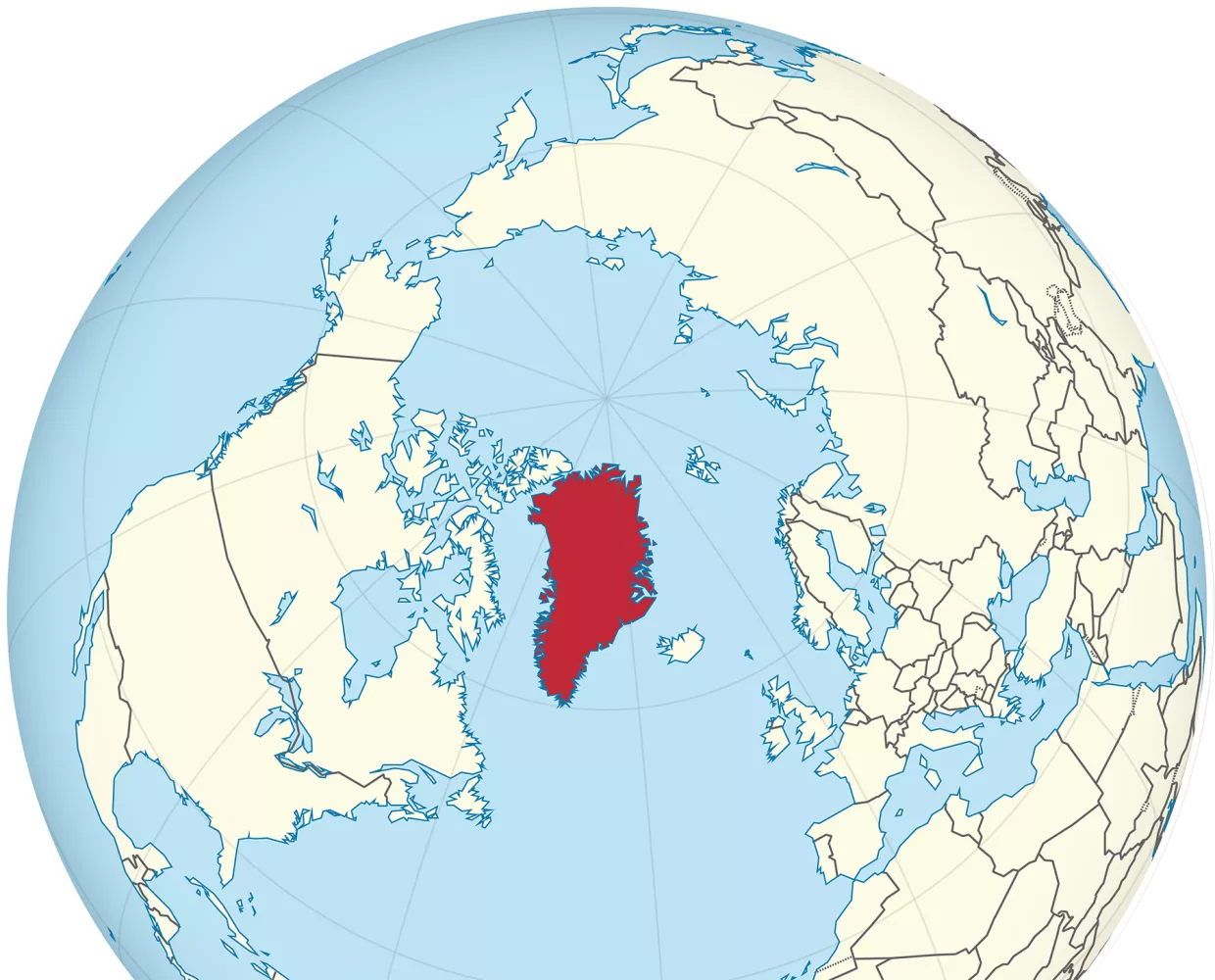
A map showing Greenland's location on the globe.
Greenland hosts Pituffik Space Base, formerly Thule Air Base, a U.S. military installation key to missile early warning and defense as well as space surveillance.

From Frozen Frontier to Geopolitical Prize
Once a remote, frozen periphery, Greenland has been thrust into the center of global power competition. Climate change is unlocking new shipping routes and, crucially, exposing vast reserves of rare earth elements and strategic minerals vital for advanced technology, renewable energy, and defense industries. This transformation has made the island a key geopolitical node, and the U.S., under Trump, is seeking to secure direct access, bypassing traditional diplomatic norms.

Geopolitical Interests Stock Photos - Free & Royalty-Free Stock Photos from Dreamstime
Trump, is seeking to secure direct access, bypassing traditional diplomatic norms.

The Tool: “Special Representative” or Agent of Pressure?
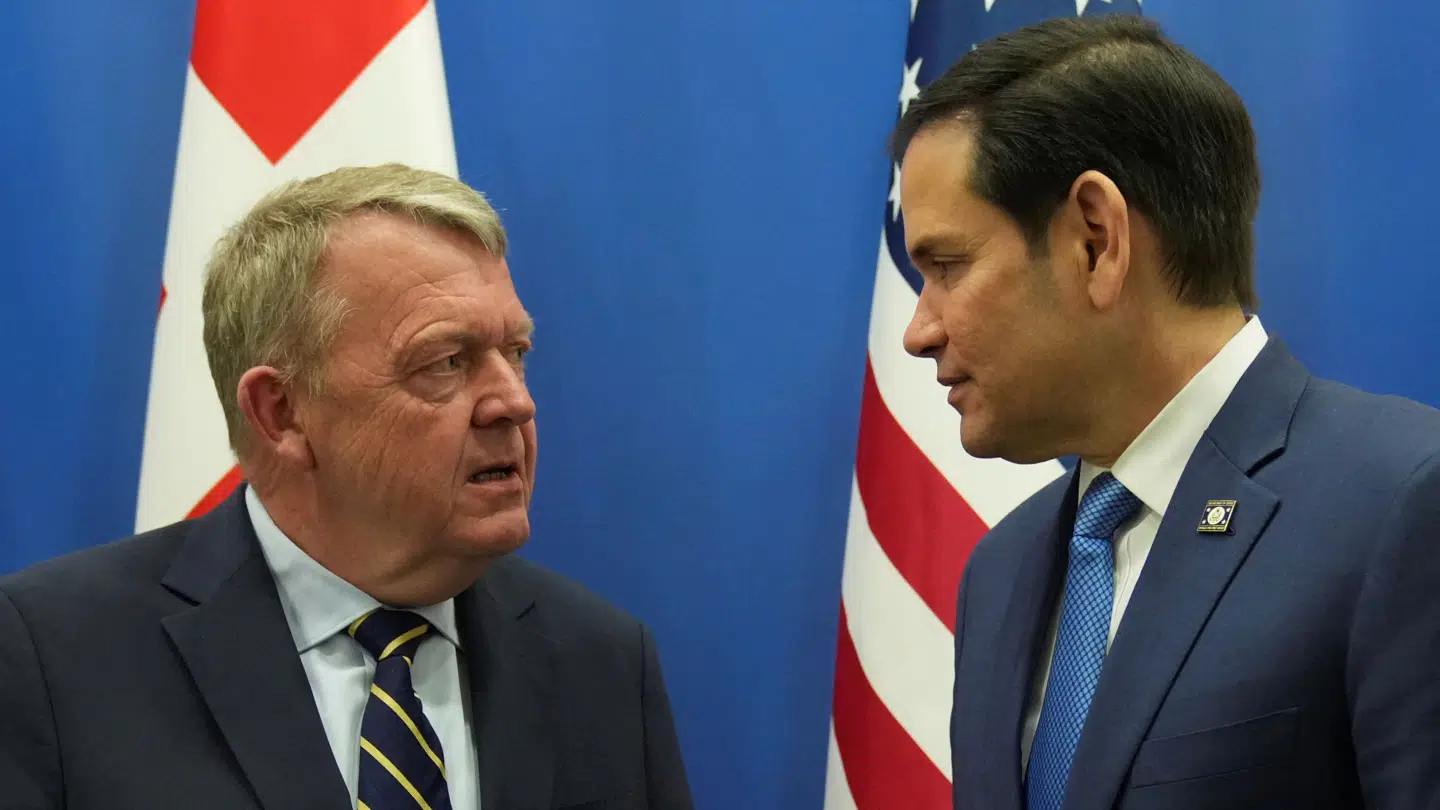
The appointment of a U.S. “Special Representative to Greenland”—a diplomatic tool typically reserved for crisis zones—was a provocative act. Denmark rightly condemned it as unacceptable intervention. Public musings about Greenland “joining” the U.S. stripped away any pretense, revealing an ambition that goes far beyond security cooperation. This move directly challenges Danish sovereignty and signals to allies and adversaries alike that Washington is willing to exert pressure wherever it identifies a strategic interest.

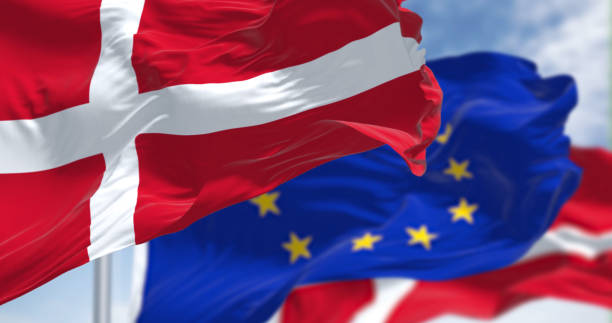
860+ Eu And Danish Flags Stock Photos, Pictures & Royalty-Free Images - iStock
Denmark alongside with the other EU countries shaping a united frontier.

Europe’s Response: A Line in the Ice
Denmark’s swift and firm response—”Greenland is not for sale”—represents a defense of a fundamental European principle: respect for territorial sovereignty. For the EU, this is a precedent-setting case. If pressure is accepted today on a European territory, it could target any member tomorrow. The Greenland crisis has thus become a rallying point for European resistance against a U.S. policy driven purely by a “power right” doctrine, reviving fears of a modern Monroe Doctrine applied to allies.

No photo description available.
Greenland holds vast, largely untapped mineral resources, including rare earth elements, graphite, lithium, and other critical minerals. 🪨⚡ These resources could play a key role in the future of green energy, technology, and global supply chains — making Greenland a potential hotspot for strategic development.  Source:https://www.facebook.com/groups/3623312684642776 Photo: Wall Street Journal

The True Prize and the Transatlantic Rift
Beyond the sensational headlines lies the cold reality: Greenland’s immense mineral wealth is the hidden driver of this crisis. Trump’s policy seeks a blend of resource dominance, strategic positioning, and political influence, treating an ally’s territory as a geopolitical chess piece.

This crisis exposes a foundational rift in transatlantic relations. Europe’s security is built on a framework of respected international law and multilateral cooperation, as embodied in the UN system, while Trump’s America operates on a logic of unilateral power and transactional gain. The aggressive pursuit of Greenland may offer Washington short-term strategic advantages, but it comes at a devastating long-term cost: eroding trust, fracturing alliances, and pushing Europe toward strategic independence. In the frozen waters of the Arctic, a new, colder chapter in U.S.-Europe relations is being written.

Crystal Clear Ice Cube Melting Dark Surface Water Droplets Stock Photos - Free & Royalty-Free Stock Photos from Dreamstime
The transient political cooperation is melting away to reveal hard, enduring interests. 
twitterlinkedininstagramflickrfoursquaremail
Posted on Leave a comment

“A Nation of Contradictions: The Illusion of American Power”

A stark look at the disconnect between domestic decay and global piracy.

Tattered american flag waving on transparent background, symbol of  resilience 66950324 PNG
The symbol and the pursuit. A fraying banner of domestic struggle obscures the relentless machinery of global resource extraction.

What is the true measure of a nation’s power?

Is it the ability to project military force across oceans, or the capacity to care for its own people at home? The United States presents a glaring paradox, a portrait of a superpower in profound decline.

Internally, the foundations are crumbling:

  • A nation bankrupt in spirit and drowned in national debt.

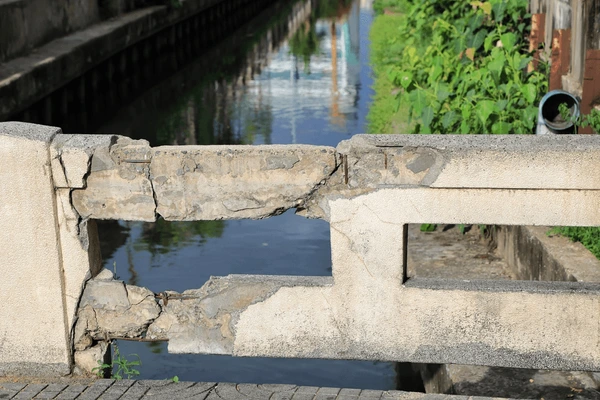
  • A landscape of collapsing bridges and failing infrastructure.

  • A society where basic survival—a home, life-saving medicine like insulin—is a luxury millions cannot afford.

  • A political system so fractured it cannot perform its most fundamental duty: passing a budget without threatening a government shutdown.

This is not the portrait of a healthy state. This is a picture of dependence—dependence on financial instruments, on global hegemony, and on the myth of its own invincibility.

Yet, on the world stage, this same nation postures as an enforcer.

  • For decades, Washington has treated the world’s oceans as its private domain.

  • Like modern-day pirates under a flag of legality, it seizes shipments and impounds tankers.

  • It weaponizes the global financial system, imposing illegal sanctions that starve nations.

  • And then, in a breathtaking act of doublespeak, it labels this piracy and collective punishment as “law enforcement.”

The seizure of another nation’s resources in international waters is not a victory. It is an admission. It reveals a power that is no longer built on innovation and prosperity at home, but on coercion and extraction abroad.

True power is sustainable, just, and rooted in the well-being of a nation’s people. What we are witnessing is its illusion.

twitterlinkedininstagramflickrfoursquaremail
Posted on Leave a comment

Peace Through Power or Peace Through War? The Militarization of Trump’s Doctrine

Introduction: The doctrine of “peace through power” has been a cornerstone of statecraft since the Roman Empire. But under Donald Trump, this historical concept has been reshaped into a tool for aggressive, unilateral action. This analysis argues that Trump’s version of the doctrine has not guaranteed peace but has instead fueled instability, humanitarian crises, and the erosion of international institutions, effectively becoming a doctrine of “peace through war.”

Roman Legionary - World History Encyclopedia
Note: The Roman legionary was a well-trained and disciplined foot soldier, fighting as part of a professional well-organized unit, the legion (Latin: legio), established by the Marian Reforms. While major tactical changes appeared during the final days of the Roman Republic and the early days of the Roman Empire, Roman armor and weapons, albeit with minor adaptations, remained simple.

From Hadrian’s Wall to the Cold War
The roots of “peace through power” run deep. The Roman Emperor Hadrian operationalized it by building his famous wall—a symbol of military strength meant to deter attacks and secure the empire’s borders. In modern times, U.S. leaders like Dwight Eisenhower and Ronald Reagan adopted this logic. Reagan, in particular, brought it to a crescendo during the Cold War, using massive defense budgets and arms superiority as a deterrent against the Soviet Union. The goal was to prevent war through undeniable strength.

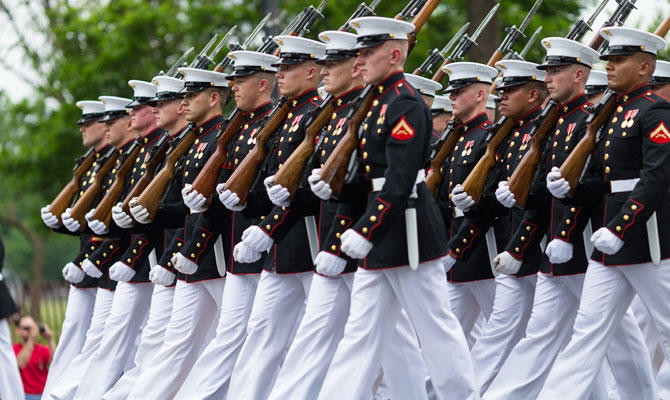
President Trump will kick off Army's 250th birthday celebrations Tuesday at Fort Bragg - ABC7 Los Angeles
Trump kicks off Army’s 250th birthday celebrations at Fort Bragg, says he’ll restore base names

The Trump Transformation: From Deterrence to Aggression
Donald Trump has co-opted the phrase “peace through power,” but his application marks a significant shift. His policies have moved beyond deterrence towards what can be called “peace through aggressive military power.” This approach relies on:

  • Maximum Pressure: Severe economic sanctions and embargoes.

  • Military Threats: Overt and covert threats against adversaries.

  • Unilateral Action: Drone strikes and assassinations of key figures, such as Qasem Soleimani.

As Trump himself implied in a speech to the Israeli Knesset, his administration believed that military action (or its threat) was a necessary tool to force outcomes, like a peace agreement. This represents a fundamental change: military power is no longer just a shield for defense, but a sword to impose will.

The Destructive Age of Urban Warfare; or, How to Kill a City and How to Protect It
Note: Combat in urban areas is the most destructive type of warfare imaginable. Densely populated terrain, complex systems of systems that support human life, military weapons not optimized to these conditions, and asymmetric close-quarters battle tactics all make warfare in cities unforgiving for combatants, noncombatants, and cities alike. The unintentional—and at times intentional—destruction of the physical terrain, populations, and infrastructure of cities during combat leave effects that can be felt for generations.

The Cost of Militarism: Five Critical Failures
The real-world consequences of this aggressive doctrine reveal its profound flaws:

  1. It Fuels Instability, Not Security: Rather than preventing conflict, relentless threats and militarism spark arms races and regional tensions, creating a more volatile world.

  2. It Diverts Vital Resources: The trillions spent on expanding an already massive military budget are funds stripped from domestic needs like healthcare, education, and infrastructure, weakening the social fabric at home.

  3. It Erodes American Credibility: Unilateralism and constant threats have alienated traditional allies, weakened multilateral institutions like the UN, and driven some nations closer to America’s competitors.

  4. It Creates Humanitarian Crises: Airstrikes in Yemen, assassinations, and sanctions have resulted in thousands of civilian casualties, painting America as a nation that disregards international law and human rights.

  5. It Embraces Divisive Nationalism: The doctrine is often paired with a rhetoric of extreme nationalism, which deepens social divisions at home and exacerbates cultural and racial tensions abroad.

    Flags Handshake Stock Illustrations – 3,438 Flags Handshake Stock Illustrations, Vectors & Clipart - Dreamstime
    Note: A handshake between nations is a powerful symbol of peace and a commitment to cooperation, with its roots in showing peaceful intentions by demonstrating one is unarmed. While a handshake alone doesn’t guarantee peace, it is a crucial first step in a diplomatic process that can solidify agreements, build trust, and signify the end of conflict. It represents a mutual understanding and a desire for unity and collaboration.

Conclusion: The Need for a New Path
The “doctrine of peace through power” has been implemented under Trump in a way that guarantees the very opposite of peace. By choosing coercion over diplomacy and unilateral force over multilateral cooperation, this approach has damaged global stability and America’s moral standing. The world does not need more militarism. A secure and prosperous future must be built on the foundations of diplomacy, respect for international law, and genuine cooperation. The alternative—a path of endless conflict—is no path to peace at all.

Nationalism is blamed for this century’s wars, but nationalism need not mean militarism. And the nation-state has been the laboratory of liberty.

twitterlinkedininstagramflickrfoursquaremail