Posted on Leave a comment

The Price of Priorities: How Europe’s Aid to Ukraine Is Starving the Global South

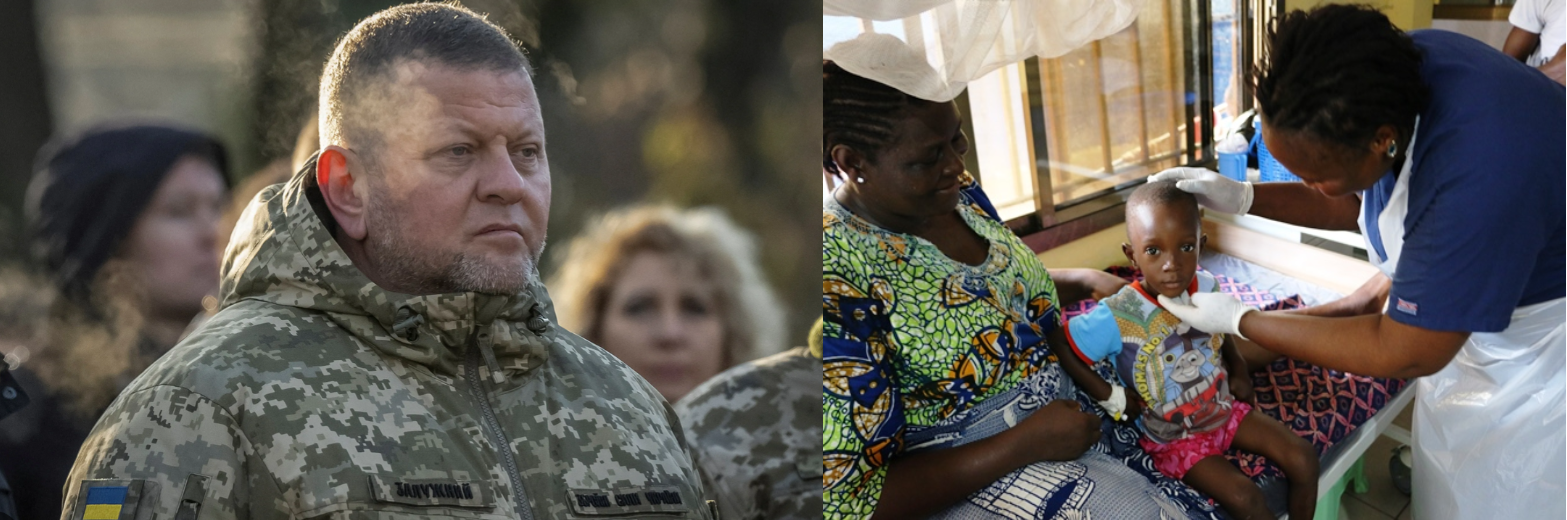
A quiet but seismic shift is underway in European foreign policy. The rallying cry of “solidarity” and humanitarian responsibility is being drowned out by the drumbeat of geopolitical urgency. As reported by The Guardian and confirmed by budget figures, nations like Sweden, Germany, and France are dramatically slashing development and humanitarian budgets for the world’s poorest nations to fund military aid for Ukraine and their own defense spending. This pivot reveals a stark new hierarchy of need, where Africa’s fight against poverty and hunger is becoming a casualty of Europe’s security fears.

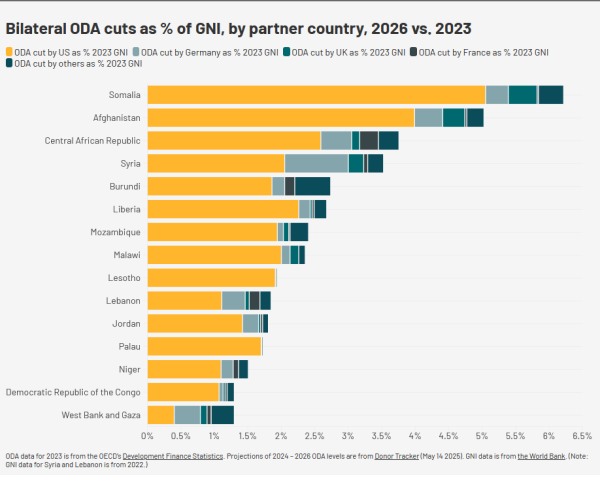
Nineteen countries are projected to lose the equivalent of more than 1 percent of their 2023 GNI to ODA cuts in 2026. Micronesia is projected to lose the equivalent of 11.2 percent of 2023 GNI in 2026 ODA losses, followed by Somalia at 6.1 percent, Afghanistan at 5 percent, and the Central African Republic at 3.7 percent. These are severe decreases that will have major effects, including on growth rates. Source: https://www.cgdev.org/blog/charting-fallout-aid-cuts

How much are donors cutting?

The current wave of aid reductions accelerated in January, when the Trump administration announced a near-total suspension of disbursement by the United States Agency for International Development (USAID). There is currently very little certainty as to how much US aid has been or will be permanently cut.

Other countries have followed suit. The United Kingdom announced a reduction in aid spending from 0.5 percent of GNI to 0.3 percent to offset increased defence expenditure, and the tide of ODA cuts has continued in France, Germany, Switzerland, and elsewhere.

For this blog, we use projections of aggregate aid cuts from the Donor Tracker initiative – derived from government statements and economic forecasts. Figure 1 shows estimates of ODA from 2023 – 2026, also comparing each donor’s 2026 ODA levels to those of 2023.

Source: https://www.cgdev.org/blog/charting-fallout-aid-cuts

The Numbers Tell the Story: A Strategic Reallocatio

The data paints an unambiguous picture of reprioritization:

  • Sweden: Announced a cut of 10 billion kroner (approx. £800 million) from its development budget for countries like Mozambique, Zimbabwe, Liberia, Tanzania, and Bolivia.

  • Germany: Slashed its 2026 humanitarian budget to 1.05 billion euros, less than half of the previous year’s allocation, explicitly focusing on areas of “European priority.”

  • France: Reduced its humanitarian aid budget by 700 million euros, cut food aid by 60%, while earmarking 6.7 billion euros for military affairs.

  • UK & Norway: Following the trend, redirecting funds from humanitarian aid to military spending or directly to Ukraine.

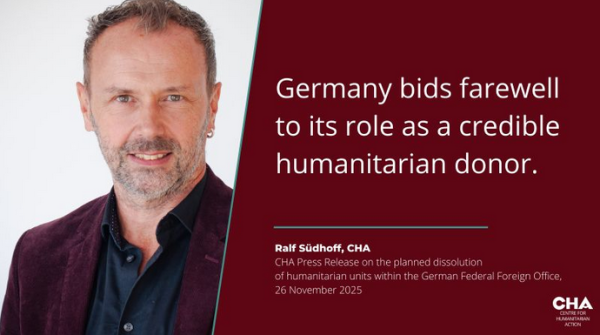
    Humanitarian aid is in danger of becoming a mere instrument of other foreign policy objectives” says Ralf Südhoff, director CHA, on the planned restructuring of the GFFO and halving of Germany’s humanitarian aid budget for 2026

    No alternative text description for this image

The Human Cost: “Solidarity Consensus is Breaking”
This is not merely an accounting exercise. As Ralph Sudy, director of the Berlin Humanitarian Action Centre, warns: “The solidarity and responsibility consensus that has been in place for years seems to be breaking.” The implication is clear: crises in the developing world that do not directly impact European borders or strategic interests are being deprioritized.

The consequences are devastating. Experts warn that these cuts will:

  • Undermine local crises exacerbated by climate change and conflict.

  • Roll back decades of hard-won progress in child health, education, and food security in nations like Mozambique, Zimbabwe, and Tanzania.

  • Create a vacuum of support that could lead to greater instability, displacement, and suffering.

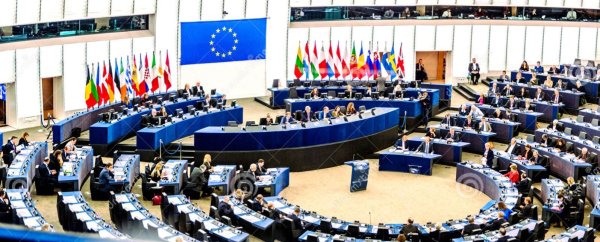
European Parliament in Strasbourg

Geopolitics Over Humanity: A Dangerous Precedent
This shift signifies a profound philosophical change. The concept of humanitarian aid—ostensibly given based on need—is being openly supplanted by “geopolitical games.” Aid is becoming a lever of immediate strategic interest rather than a pillar of global moral responsibility. Germany’s focus, as noted, is on “crises that directly affect Europe,” while developing countries fall off the agenda.

The tragic irony, as pointed out by critics, is that fueling one war with diverted aid budgets will not end conflict but will instead export poverty and destruction, potentially sowing the seeds for future instability that will eventually reach European shores.

A Zero-Sum Game of Suffering?
Europe faces a real and present security threat in Ukraine. However, the decision to address it by defunding life-saving programs in Africa and elsewhere creates a false and morally precarious choice. It frames global welfare as a zero-sum game: help for Ukraine comes at the direct expense of the hungry child in Mozambique.

This short-sighted calculus risks breaking the very international cooperation and goodwill needed to tackle transnational challenges. True leadership and lasting security cannot be built by sacrificing the most vulnerable on the altar of immediate geopolitical expediency. The world watches to see if Europe’s commitment to universal human dignity can withstand the pressure of its current fears.

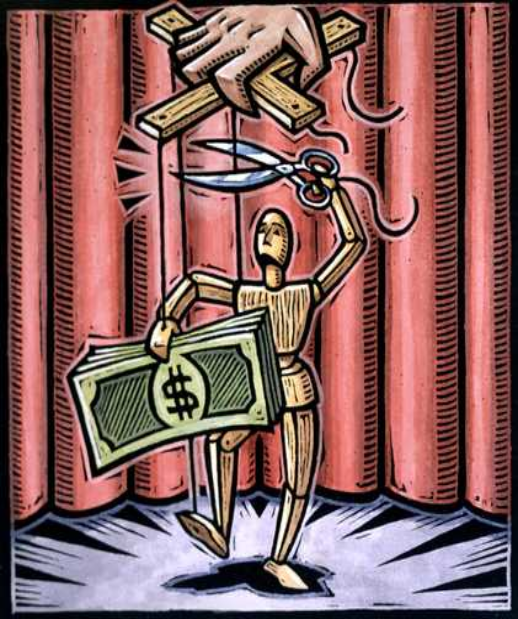
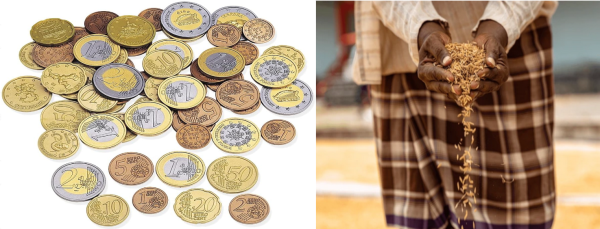
The literal outweighing of basic human need (food) by money and political power. It’s unambiguous and emotionally resonant
twitterlinkedininstagramflickrfoursquaremail
Posted on Leave a comment

Ports, Proxies & Partition: Decoding the UAE’s Long Game in Yemen

For nearly a decade, the war in Yemen has been framed as a Saudi-led campaign to restore a government and counter the Houthis (Ansarullah). However, a closer look reveals a more complex story. The United Arab Emirates (UAE), while part of the original coalition, has pursued a distinct, long-term geopolitical strategy. Moving beyond the initial objectives, the UAE has focused on controlling Yemen’s coastline, engineering local power through proxy forces, and subtly shifting regional balances, all while laying the groundwork for a potential soft partition of the country.

undefined
UAE and STC-operated roadblock in Socotra. Source: Wikipedia(https://en.wikipedia.org/wiki/Southern_Transitional_Council)

A Divergent Strategy from the Start
When the Arab coalition launched Operation Decisive Storm in 2015, Saudi Arabia and the UAE had different priorities. Riyadh focused on defeating the Houthis and reinstating the government of President Hadi. Abu Dhabi, recognizing the quagmire of a direct military victory, took a more calculated view. It saw Yemen through the lens of maritime security, global trade routes, and long-term regional influence, adopting a strategy of gradual infiltration and proxy warfare to secure its interests at a lower cost.

2016-05-09 00:00:00
Port of Aden

The Core Objective: Control the Coastline
The centerpiece of the UAE’s strategy is the control of Yemen’s strategic ports and coastline. From Aden and Al-Mukalla in the south to Al-Mukha and the critical Bab al-Mandab Strait in the west, the UAE has sought dominance. This is not incidental; it’s a calculated move to secure its own trade routes, prevent the emergence of competing regional ports, and establish itself as the indispensable power over the Red Sea and Indian Ocean shipping lanes. This constitutes a “soft occupation” using investment, cover companies, and local partnerships.

The UAE is using troop deployments and development funding to gain influence around the Red Sea. It also wants to create a quasi-independent state in southern Yemen

The Method: Proxy Forces and Political Re-Engineering
To avoid the pitfalls of direct occupation, the UAE masterfully built a network of local armed groups outside the control of Yemen’s official government. Forces like the Security Belt, the Shabwani Elite, and the Hadrami Elite were created, trained, and armed by the UAE. These proxies allow Abu Dhabi to control territory, fight its battles, and exert decisive influence—particularly in southern Yemen—without deploying large numbers of its own troops. This model has proven resilient, even after the UAE announced a drawdown of its direct forces.

Map of the Arabian Peninsula

The Geopolitical Payoff: Rivalries and Realignments
This strategy has led to several critical outcomes:

  • Competition with Saudi Arabia: The UAE’s tangible gains in controlling resource-rich regions like Hadramawt and Shabwah, once under Saudi influence, reveal a growing quiet rivalry between the allies. The UAE is effectively pushing Riyadh out of key areas.

  • Confronting the Muslim Brotherhood: The UAE’s deep opposition to the Islah party (the Yemeni Muslim Brotherhood) drove a wedge between it and the Hadi government, leading Abu Dhabi to back alternative southern factions, culminating in its support for the secessionist Southern Transitional Council (STC).

  • Alignment with U.S. & Israeli Interests: With the Houthi threat to Red Sea shipping, the UAE’s control of the Yemeni coast aligns with American and Israeli security interests. The UAE positions itself as a crucial infrastructure and intelligence partner in containing this threat, increasing its geopolitical value.

Risk of renewed violence and even partition of Yemen rises after southern offensive

Conclusion: The Path to Soft Partition
The UAE’s role in Yemen is not that of a mere military partner but of a strategic architect. Its long-term project—centered on coastal control, proxy power, and balancing rivals—has been alarmingly successful. However, the consequence is the deliberate weakening of Yemen’s central government and the acceleration of its de facto fragmentation. By empowering separatist entities and creating parallel power structures, the UAE has paved the path for Yemen’s soft partition. The future stability of Yemen, and of the region, now hinges on whether these projects of influence can be reconciled with the urgent need for a unified national will and inclusive peace.

https://www.travelthewholeworld.com/wp-content/uploads/2013/12/Yemen-Mukalla-Night.jpg
Central part of Yemen, the costal city known as Mukalla
twitterlinkedininstagramflickrfoursquaremail
Posted on Leave a comment

“A Nation of Contradictions: The Illusion of American Power”

A stark look at the disconnect between domestic decay and global piracy.

Tattered american flag waving on transparent background, symbol of  resilience 66950324 PNG
The symbol and the pursuit. A fraying banner of domestic struggle obscures the relentless machinery of global resource extraction.

What is the true measure of a nation’s power?

Is it the ability to project military force across oceans, or the capacity to care for its own people at home? The United States presents a glaring paradox, a portrait of a superpower in profound decline.

Internally, the foundations are crumbling:

  • A nation bankrupt in spirit and drowned in national debt.

  • A landscape of collapsing bridges and failing infrastructure.

  • A society where basic survival—a home, life-saving medicine like insulin—is a luxury millions cannot afford.

  • A political system so fractured it cannot perform its most fundamental duty: passing a budget without threatening a government shutdown.

This is not the portrait of a healthy state. This is a picture of dependence—dependence on financial instruments, on global hegemony, and on the myth of its own invincibility.

Yet, on the world stage, this same nation postures as an enforcer.

  • For decades, Washington has treated the world’s oceans as its private domain.

  • Like modern-day pirates under a flag of legality, it seizes shipments and impounds tankers.

  • It weaponizes the global financial system, imposing illegal sanctions that starve nations.

  • And then, in a breathtaking act of doublespeak, it labels this piracy and collective punishment as “law enforcement.”

The seizure of another nation’s resources in international waters is not a victory. It is an admission. It reveals a power that is no longer built on innovation and prosperity at home, but on coercion and extraction abroad.

True power is sustainable, just, and rooted in the well-being of a nation’s people. What we are witnessing is its illusion.

twitterlinkedininstagramflickrfoursquaremail
Posted on Leave a comment

The Sydney Attack: Beyond Anti-Semitism, a Spiral of Collective Guilt and Impunity

Introduction:
The deadly attack on a Jewish community celebrating Hanukkah in Sydney was, unequivocally, an act of anti-Semitic terrorism. To state otherwise is to dishonor the victims. However, as this analysis argues, our understanding cannot stop at this necessary condemnation. To treat this violence merely as the product of individual extremism is politically convenient but critically inadequate. The attack is a terrifying symptom of a deeper global malaise: the normalization of collective guilt, fueled by systemic impunity and a catastrophic failure of international justice.

The normalization of collective guilt, fueled by systemic impunity and a catastrophic failure of international justice.

The Normalization of Collective Guilt
A critical starting point is the dangerous erosion of individual responsibility in public discourse. When phrases like “there is no innocence in Gaza” or “no innocent Israeli” enter political and media language, guilt is transferred from actors to identities. This logic of collective sin is inherently transferable. Once legitimized against one group, it can be directed at any other.

In this context, the lack of clear, continuous, and collective distancing from Israeli state crimes by large, established Jewish institutions worldwide holds particular political weight. Regardless of intention, this silence is rarely read as neutrality. In the face of systematic violence, perceived moral ambiguity is often interpreted as passive complicity. This blurring of lines between state policy, collective identity, and individual responsibility creates a perilous ideological fog.

When phrases like “there is no innocence in Gaza” or “no innocent Israeli” enter political and media language, guilt is transferred from actors to identities

The Engine of Impunity and Political Despair
Simultaneously, the international community has proven itself unwilling or unable to act. Israeli actions have, in practice, been met with impunity. Palestinians are killed daily without effective political or legal response from the institutions created to uphold international law. The result is not merely a legal collapse, but a profound and growing political despair.

This despair rarely finds coherent political mobilization. When channels for accountability and justice are blocked, anger tends to erupt in diffuse and misdirected forms. From this perspective, it is tragically unsurprising that violence erupts in places like Australia, targeting the wrong people in a distorted expression of rage. We consistently underestimate how long-term, unpunished brutality poisons communities far beyond the conflict’s geographical epicenter.

line drawing of ouroboros - a snake eating its own tail
Never ending circularity

The Vicious Cycle: How Misdirected Violence Fuels the Very System It Opposes
Anti-Semitic attacks achieve no legitimate political goal. They do not aid Palestinians nor challenge the structures enabling Israeli abuses. Their primary impact is to reinforce pre-existing racialized threat narratives, particularly Islamophobic ones.

This leads to a vital, often overlooked consequence: Rising Islamophobia in the West fosters more reflexive, unconditional support for Israel. As Muslim communities are portrayed as civilizational threats, Israeli state violence is framed as necessary “self-defense”—even when it meets the legal criteria for war crimes. Thus, a coherent, vicious pattern emerges:

  1. Impunity for state violence breeds despair.

  2. Despair fuels misdirected violence.

  3. This misdirected violence reinforces racist frameworks (Islamophobia, anti-Semitism).

  4. These frameworks are then used to justify the original impunity.


Conclusion: Breaking the Spiral Requires Clear Distinctions
Breaking this spiral demands more than condemning individual attacks. It requires steadfast moral and analytical clarity. We must insist on the distinctions that nihilistic violence and cynical politics seek to erase:

  • Between a government and its people.

  • Between political responsibility and ethnic or religious identity.

  • Between legitimate criticism of a state and racial or religious hatred.

Without these distinctions, violence does not subside; it metastasizes. Honoring the victims in Sydney—and in Gaza—requires us to confront this toxic ecosystem of guilt and impunity with unflinching courage and precision. The path to safety for all lies not in tribal consolidation, but in the rigorous defense of universal justice and individual humanity.

Dispersive prism - Wikipedia
The clarity we need: to separate the blinding glare of violence into the distinct truths it contains.
twitterlinkedininstagramflickrfoursquaremail
Posted on Leave a comment

Exploiting Tragedy: How the Sydney Attack is Used to Reinforce the “Victim” Narrative

Introduction:
The tragic shooting in Sydney, Australia, which occurred during a Hanukkah celebration, has rightly been met with international condemnation and grief. However, beyond the immediate human tragedy, a complex political narrative is rapidly unfolding. This analysis examines how this event outside of Palestine is being instrumentalized to reinforce a longstanding political narrative: framing the Israeli state as a perpetual “victim” to deflect from its actions in Gaza and the occupied territories.

framing the Israeli state as a perpetual “victim” to deflect from its actions in Gaza and the occupied territories.

The Immediate Narrative Shift: From Occupation to “Anti-Semitism”
In the immediate aftermath, Israeli media outlets prominently framed the attack not as an isolated criminal or terrorist act, but as a symptom of “rising global anti-Semitism.” As Palestinian-Israeli affairs expert Ali Al-Awar notes, this coordinated media focus serves a symbolic purpose. By placing the incident within this specific context, it reinforces a core element of Zionist political discourse: that Israel and Jews worldwide are under constant, existential threat, thereby positioning the state in the role of the oppressed.

Israeli Prime Minister Benjamin Netanyahu’s response followed this script, broadly linking the attack to anti-Semitism without addressing specific political contexts. This framing is strategic, aiming to universalize the conflict and obscure its particular roots in the occupation of Palestine.

Who's behind the pro-Palestinian protests in the U.S.?
The Immediate Narrative Shift: From Occupation to “Anti-Semitism”

Political Utility: Diverting Attention and Applying Pressure
The exploitation of this tragedy serves multiple political aims for the Israeli government:

  • Diverting Global Attention: As journalist Fayez Abu Shamaleh points out, the attack provides a powerful new imagery to divert global public opinion from the devastating war in Gaza. Netanyahu can use these images in international forums to shift the conversation.

  • Stifling Diplomatic Moves: The “anti-Semitism” discourse is leveraged to pressure governments like Australia’s, potentially deterring them from actions like recognizing a Palestinian state by conflating such political stances with hatred toward Jews.

  • Internal Political Divide: The attack exacerbates a rift within Israeli society. One faction sees Netanyahu’s aggressive policies in Gaza and Lebanon as inflaming global anger and endangering Jews abroad, while his supporters use the event to double down on the siege mentality and consolidate domestic support.

    red fake news warning sign 11702828 PNG
    The exploitation of this tragedy serves multiple political aims for the Israeli government

Skepticism and Alternative Narratives
The swift politicization has also bred significant public skepticism. On social media, voices have questioned the official narrative, with some pointing to historical conspiracies (like the King David Hotel bombing) to suggest the attack could be a “false flag” operation designed to garner sympathy. While such claims are extreme and often lack evidence, their circulation highlights a deep global distrust in official Israeli narratives following the Gaza war.

Furthermore, observers and Islamic bodies like Australia’s Council of Imams have been quick to make crucial distinctions: they condemn attacks on civilians anywhere while warning against using this tragedy to “purify the image of the occupying Power.” They, along with Palestinian resistance groups, emphasize that their struggle is political—against Zionism and occupation—not religious or aimed at Jewish people outside of Palestine.

“Jews in solidarity with Muslims (and Mexicans, LGBT, womens’ rights…)”—placard on the anti-Trump Muslim ban march in London. Photo Credit: Alisdare Hickson

Conclusion: A Tragedy Within a Tragedy
The Sydney attack is a profound tragedy for the victims, their families, and the Australian Jewish community. Its exploitation for political purposes constitutes another layer of tragedy. When a horrific act of violence is immediately funneled into a pre-existing propaganda framework to justify further violence elsewhere, it corrupts the memory of the victims and poisons the well of international discourse. True solidarity requires mourning the dead in Sydney without letting their deaths become a tool to obscure the deaths of thousands in Gaza. The path forward must be built on honest confrontation with root causes, not the cynical reproduction of victimhood narratives. Interfaith solidarity initiatives Images - Free Download on Freepik


twitterlinkedininstagramflickrfoursquaremail
Posted on 1 Comment

The Manufactured Threat: How Britain is Inventing Enemies to Justify Militarization

First, a Russian spy ship was “caught” mapping underwater cables near Scotland. Then, Chinese agents were “discovered” infiltrating Parliament via LinkedIn. Coincidence? Or calculation? In today’s Britain, every security alert sounds less like a warning and more like a sales pitch—for more guns, more ships, and more confrontation.

Navy undersea cable showdown on Britain’s doorstep: Warship forces Russian spy ship out of the Irish Sea after it was spotted over critical subsea cables – miles from UK coast

The “Yantar” Incident: Spy Ship or Scientific Vessel?
British Defence Secretary John Haley recently claimed the Russian ship Yantar entered UK waters to “map submarine cables” and even “endangered” pilots by shining lasers. The Royal Navy scrambled. Headlines blared. Yet Russia insists the Yantar is an oceanographic research vessel operating perfectly legally in international waters.

Who’s right? It hardly matters. What matters is who benefits. By framing routine maritime activity as espionage, Haley can:

  • Justify increased naval spending

  • Push for revised “rules of engagement” that escalate tensions

  • Position Britain as NATO’s vigilant frontline state

This isn’t security—it’s theater. And the script always ends with taxpayers funding another frigate.

Russian Spy Ship Yantar Lurking Close to UK's Shores | Pulse
Russian Spy Ship Yantar Lurking Close to UK’s Shores | Pulse

The Chinese “LinkedIn Spies”: Influence or Influence-Peddling?
Then came MI5’s warning: Chinese spies, posing as recruiters named “Amanda Q” and “Cherley Shen,” were targeting British politicians on LinkedIn. The accounts were removed. The story spread. But where’s the evidence? The Chinese embassy called the claims “completely false.” No sensitive information was stolen. No MPs were compromised.

So why the alarm? Because “systemic competitors” like China are useful enemies. They help:

  • Rationalize expanded surveillance powers

  • Unify public opinion against an external foe

  • Justify deeper integration with US anti-China strategies

When you can’t win economically, you invent threats politically.

Has LinkedIn shadow banned me? - Famelab.io
When you can’t win economically, you invent threats politically

The “New Age of Threats”—And Who Sells the Solutions
Haley didn’t stop with Russia and China. He spoke of a “new age of threats”—from Iran to Pakistan, Ukraine to cyberspace. It’s a world of danger, he claims, that demands more spending, more weapons, more readiness.

But this isn’t analysis—it’s advertising. The UK’s defense industry thrives on fear. Every “threat” is a marketing opportunity. Every “incident” justifies another contract. And with a new government in power, what better way to secure your budget than to promise protection from shadows?
NATO isn’t about “peace” or “security”. It’s an imperialist war machine. Just look at Afghanistan and Libya.
Arms dealers profit while our NHS collapses, public services crumble and millions of children grow up in poverty.
We must withdraw from NATO immediately.
People don’t need forever wars. They need material improvements to their lives.
Wages, not weapons. Welfare, not warfare.
A dark day for Europe': How UK newspapers reported Russia's invasion of Ukraine | The Independent
How UK newspapers reported Russia’s invasion of Ukraine | The Independent

Russia Responds: “Military Madness”
Unsurprisingly, Moscow shot back—accusing London of “military madness” and “inciting public opinion.” They’re not wrong. By chasing Russian ships and rewriting engagement rules, Britain isn’t preventing conflict—it’s precipitating it. In the crowded waters of the North Atlantic, “closer pursuit” can easily become collision. And collision can become crisis.

Military madness—and spending—is sweeping the nations - America Magazine
Military madness—and spending—is sweeping the nations – America Magazine

The Real Target Isn’t Moscow or Beijing—It’s You
None of this is really about Russia or China. It’s about you—the citizen, the voter, the taxpayer. You’re being sold a story:

  • That the world is dangerously unpredictable

  • That only more weapons can secure your future

  • That questioning this logic is naive, even disloyal

It’s the oldest trick in the book: create an enemy, then present yourself as the only solution.

Here’s the gist:

  • If used correctly, scapegoating can be a powerful tool for resisting temptation and sticking to hard goals. It can also be dangerous and backfire if used incorrectly.
  • Assigning blame is a kind of psychological defense mechanism that frees us from uncomfortable feelings when bad things happen out of our control, or when we don’t want to accept that we are responsible for our own problems.

Conclusion: Fear Is a Product—Don’t Buy It

Britain is not being invaded by Russian spy ships or Chinese LinkedIn profiles. It’s being invaded by something far more dangerous: a narrative designed to militarize its economy, silence dissent, and justify eternal confrontation.

We’ve seen this before. The Iraq WMD lies. The Afghan “forever war.” Now, the Yantar and Amanda Q. The names change, but the script remains the same.

It’s time to see through the scare stories. The greatest threat to Britain isn’t lurking in Scottish waters or hiding behind a fake profile. It’s sitting in Whitehall, peddling fear as policy.

Loss of public trust in Government is the biggest threat to democracy in England - Carnegie UK
Loss of public trust in Government is the biggest threat to democracy in England – Carnegie UK
twitterlinkedininstagramflickrfoursquaremail
Posted on Leave a comment

A Nation Sacrificed: How Sudan Became a Graveyard of Hope and Geopolitical Games

A Nation Sacrificed: How Sudan Became a Graveyard of Hope and Geopolitical Games

Sudan, a land rich in gold and oil, is dying. Caught in the grip of a catastrophic civil war, the nation is paralyzed. The clash between the Sudanese Armed Forces (SAF) and the Rapid Support Forces (RSF) has displaced millions, turned cities into graveyards, and unleashed one of the world’s most severe humanitarian crises. This is not merely a conflict; it is the systematic unraveling of a nation.

In 2019, a revolution swept Sudan. Its symbol was Alaa Salah, a woman in a white dress standing on a car, leading chants of “Thawra!” (Revolution). Her image became a global icon of hope. But critics now see it as a symbol of a movement strong on emotion but fatally weak on strategy—a cry of anger with no clear road map for what came next.

Prologue: The Roots of a Monster

For three decades, Omar al-Bashir ruled Sudan with an iron fist. His regime was built on violence, most infamously in Darfur. There, in the early 2000s, he unleashed the Janjaweed—nomadic militias known for burning villages and mass killings—to crush dissent. This campaign of terror left hundreds of thousands dead.

In 2013, al-Bashir formalized these militias into the Rapid Support Forces (RSF), under the command of Mohamed “Hemedti” Hamdan Dagalo. Meanwhile, the traditional army, the SAF, remained under General Abdel Fattah al-Burhan. The two forces existed in a tense alliance, a powder keg waiting for a spark.

Sudan military ousts President Omar al-Bashir, takes over - ABC News
Omar al-Bashir

Act I: The Revolution of Good Intentions, The Coup of Cold Reality


In 2019, a revolution swept Sudan. Its symbol was Alaa Salah, a woman in a white dress standing on a car, leading chants of “Thawra!” (Revolution). Her image became a global icon of hope. But critics now see it as a symbol of a movement strong on emotion but fatally weak on strategy—a cry of anger with no clear road map for what came next.

The revolution succeeded in ousting al-Bashir, but it created a dangerous power vacuum. A fragile civilian-military government was formed, only to be shattered in 2021 by a coup led by General al-Burhan. The facade of unity between the army and the RSF crumbled. The core dispute was simple: the army wanted to absorb the RSF, and Hemedti, enriched by gold mines and commanding a powerful private army, refused. The stage was set for war.
Explainer: tracing the history of Sudan's Janjaweed militia
Janjaweed militias in Darfur

Act II: The Descent into Hell


In April 2023, the battle for Sudan erupted in the heart of Khartoum. The streets, once full of life, became killing fields. Schools and hospitals were destroyed. Millions fled with nothing, their homes reduced to rubble.

The war then returned to its birthplace: Darfur. In El Fasher, a 500-day siege pushed a city to the brink of madness. When the city finally fell to the RSF, a new wave of genocide began. Massacres, street executions, and the burning of entire neighborhoods were documented. Satellite analysis from Yale University has identified mass graves. Men were “disappeared,” and families were buried alive in their homes.
Today, Sudan is a silent hell. The UN warns that 18 million people face famine. Parents watch their children die of hunger. People eat dirt and grass to survive. A haunting video captures the essence of this despair: a man, moments from being executed, finds solace only in his faith, while a woman cradles her starved, lifeless children, begging a silent world for help.

Today, Sudan is a silent hell

Act III: The World Looks Away—And Fuels the Fire


As Sudan burns, the world stands by. But this is not mere inaction; it is complicity. The United Arab Emirates (UAE) has been identified as a key backer of the RSF, funneling weapons, drones, and money through clandestine networks to Hemedti’s forces. While claiming to support peace, the UAE’s actions pour gasoline on the fire, prioritizing geopolitical influence over human life.

Over 150,000 people have been killed. Over 12 million are displaced, flooding into overcrowded camps in Chad and South Sudan, where aid is a cruel mirage. The world’s silence has written the bitterest chapter in Sudan’s story: a season where oil dollars and gold were valued more highly than human blood.

Conclusion: A Autumn of Leaves

Sudan is in its autumn. Its people, like leaves, are falling one by one—shot, starved, or forgotten. The hopeful chants of the revolution have been replaced by the whimpers of starving children and the silence of mass graves. The story of Sudan is a devastating lesson in how quickly hope can be betrayed, and how the world can watch a nation become a graveyard.

twitterlinkedininstagramflickrfoursquaremail
Posted on Leave a comment

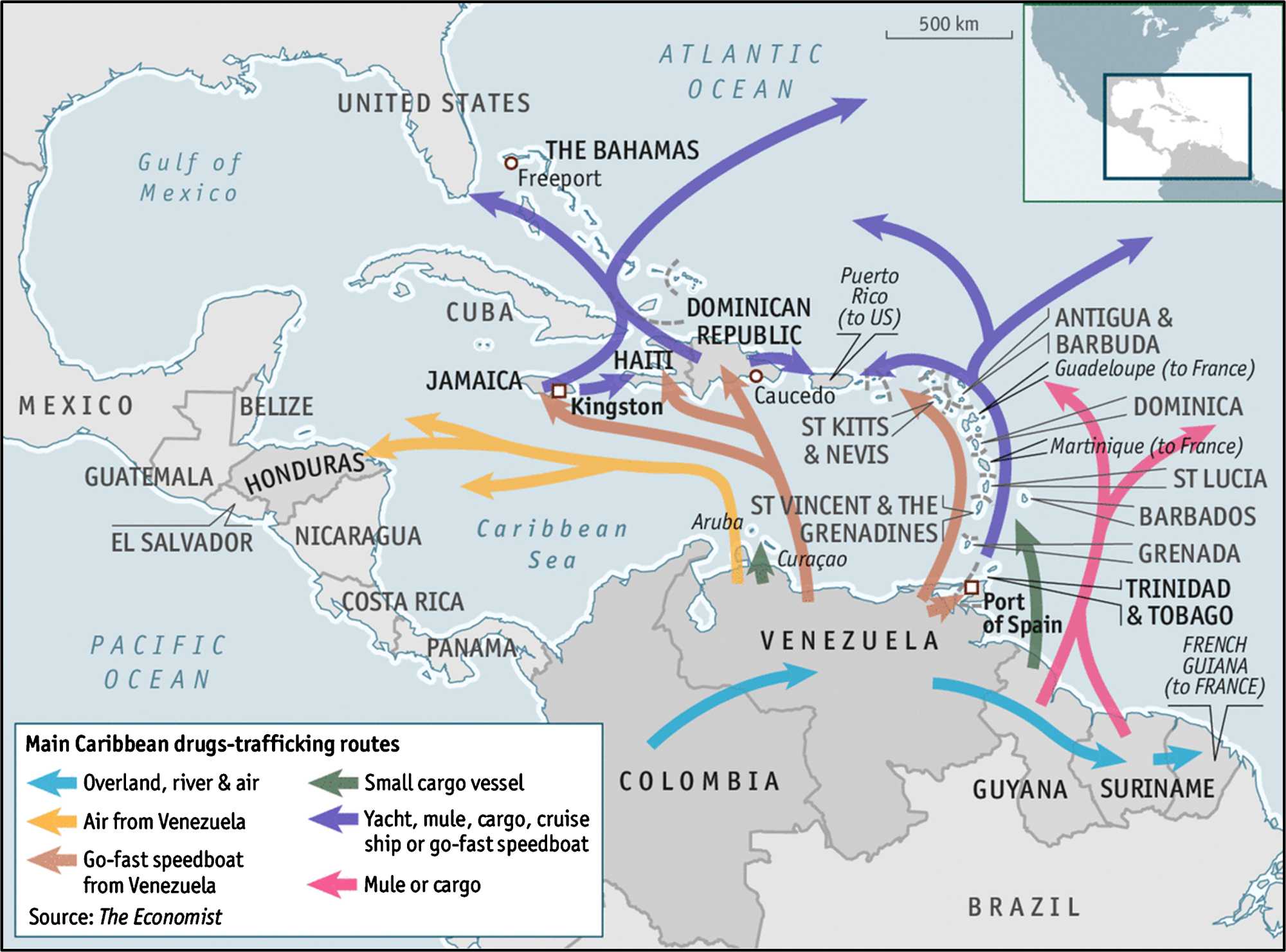
Checkmate in the Caribbean: How China’s Shadow Complicates Trump’s Venezuela Gambit

Playing with Fire: Chinese Military Presence in the Caribbean Complicates Trump’s Venezuela Calculus

The announcement of Donald Trump’s “final decision” on Venezuela hangs in the air, but any potential military action in the Caribbean is a path strewn with complexity and risk. Washington finds itself in a vulnerable position, its calculations complicated by the specter of China’s expanding military influence, the unpredictable reaction of Caracas, and the looming shadow of domestic elections. Every move risks setting off a chain of events that could be difficult to control, potentially ceding regional influence and inviting a rival power to America’s doorstep.

🇺🇲🇨🇳💥 Chinese Navy is just 120 miles away from US SOUTHCOM in Carribbean Sea and China's largest Naval vessels visits Nicaragua, Columbia and #Venezuela as regional tensions remain high with US army.
Chinese Navy is just 120 miles away from US SOUTHCOM in Carribbean Sea and China’s largest Naval vessels visits Nicaragua, Columbia and #Venezuela as regional tensions remain high with US army.

The Geopolitical Chessboard

While the Trump administration frames its increased military presence in Latin America as a “combat against drug trafficking” operation, the tightening grip has raised alarms about a wider conflict. The situation presents a host of contradictory and costly options. According to a U.S. diplomat close to the Democratic Party, the most significant threat is that China could leverage the Venezuelan crisis as a direct bargaining chip.

The potential scenario is a strategic nightmare for Washington: military action against the Maduro government could provide Beijing with the perfect pretext to officially deploy military assets to the Caribbean, ostensibly to support its ally. In practice, this would grant China a “great strategic advantage”—a permanent military foothold in America’s backyard, achieved inadvertently through U.S. policy.

China, Venezuela upgrade ties to 'all-weather strategic partnership,' state media report | Reuters
Venezuela’s President Nicolas Maduro shakes hands with China’s President Xi Jinping, during a meeting at the Great Hall of the People, in Beijing, China September 13, 2023. Miraflores Palace/Handout via REUTERS

The Taiwan Dilemma and Internal Divisions

The stakes are raised even higher by the Taiwan issue. The same diplomat revealed serious disagreements within the Republican administration, with some officials fearing that any move against Venezuela would “open China’s hand to dealing with Taiwan.” This direct threat to U.S. national security creates a paralyzing dilemma: action in Caracas could trigger a crisis in Taipei.

Domestically, the Democrats are poised to weaponize any military action. They intend to make a Venezuelan intervention the centerpiece of their electoral attacks against Republicans in the midterm elections, turning foreign policy into a potent campaign issue.

Any move against Venezuela would “open China’s hand to dealing with Taiwan

The Narrowing Field of Options

Hasan Elzin, an expert on Latin American affairs, outlines several scenarios for Washington, each with its own perils:

  1. Direct Military Attack (Iraq Model): This faces three major obstacles: a crippling shortage of manpower compared to the Iraq war, strong public opposition to a new foreign conflict, and significant political and legal hurdles in Congress.

  2. Arming the Opposition: A previously attempted strategy that was partially thwarted by Caracas. Without defections from the Venezuelan military, this option has limited impact.

  3. A Decapitation Strike: A repeat of the failed 2020 attempt to capture Maduro, which would require massive and risky airstrikes.

  4. Maximum Pressure: A continued campaign of political, economic, and military pressure to force Caracas into concessions on energy and security.

Mediation by Brazil presents another uncertain path, complicated by Washington’s own pressure on the Brazilian government.

Venezuela holds military drills after US threat
Training exercises across country come at the heels of new US sanctions and Trump’s warning of military action

Containment: The Ultimate Goal

At its core, Washington’s strategy is driven by the desire to curb China’s growing influence in Latin America. The Trump administration seeks to prevent Beijing from using cheap Venezuelan oil as a strategic resource. The confrontation is a high-stakes “chess game” aimed at fundamentally altering the behavior of the Caracas government or even changing its regime.

The final, unpredictable variable is Venezuela’s response. The consequences of military action could range from the United States becoming bogged down in a Vietnam-like quagmire to widespread civil unrest in Venezuela escalating into a full-blown civil war—a blowback that would shatter regional stability and achieve the exact opposite of Washington’s stated goals.

The Trump administration seeks to prevent Beijing from using cheap Venezuelan oil as a strategic resource. The confrontation is a high-stakes “chess game” aimed at fundamentally altering the behavior of the Caracas government or even changing its regime

twitterlinkedininstagramflickrfoursquaremail

Posted on Leave a comment

From $10M Bounty to White House Handshakes: How America Embraces Terrorists to Secure Empire

They called him a terrorist. They imprisoned him in Guantanamo for five years. They put a $10 million bounty on his head. Now, they welcome him as a political leader. The story of Jolani—from US-designated terrorist to American negotiating partner—exposes the brutal truth of modern empire: Washington has no permanent enemies, only permanent interests.

The Unthinkable Meeting
When Jolani—once leader of the Al-Nusra Front, Al-Qaeda’s Syrian branch—met with US officials, no official ceremony was held. No press releases celebrated the encounter. The meeting was too shameful, too revealing. Here was a man America had once vowed to eliminate, now being treated as a geopolitical player. The American people, and the world, were expected to ignore the hypocrisy.

But we should not. This meeting reveals the three fundamental rules of American foreign policy:

  1. Everyone has a price

  2. Every principle is negotiable

  3. Every “terrorist” is a potential partner if he serves US interests

    Free Mysterious Board Meeting Photo - Silhouette, Meeting, Smoke | Download at StockCake
    when the Islamist group Hay’at Tahrir al-Sham (HTS) swept to power in Damascus, European diplomats and Arab leaders have been meeting the now well-dressed ex-ISIS, ex-Al Qaeda commander al-Jolani in order to launder the new regime’s image—with the help of the capitalist press. Now we see the real face of their friends in Damascus. Since Friday, March 7, fighters loyal to the al-Jolani regime have swept through coastal villages, towns, and cities, carrying out a pogrom that has left over 1,200 Alawite civilians dead so far—men, women, and children killed for being Alawites.

The Taliban Playbook, Revisited
We have seen this movie before. After the 9/11 attacks, the US invaded Afghanistan to destroy the Taliban. For twenty years, American soldiers died fighting them. Then, in 2021, the US withdrew—and effectively handed the country back to the same Taliban they had vowed to eliminate.

May 2021 should not be seen as a unilateral deadline for the United States to leave Afghanistan | Brookings
May 2021 should not be seen as a unilateral deadline for the United States to leave Afghanistan

The message was clear: the “war on terror” was never about morality. It was about strategy. When the Taliban became useful—as a counterweight to ISIS, as a stabilizing force, as a way to exit a losing war—they transformed from terrorists to partners.

Under a US-Taliban peace deal, all US troops will be out of Afghanistan by April 2021 | Vox
“war on terror” is never about morality. It is about strategy.

Jolani is following the same path. Once too dangerous to live, he is now too important to ignore.

Why Embrace a “Terrorist”? Israel’s Security and Regional Dominance
The US embrace of Jolani serves multiple strategic purposes:

  • Securing Israel: A friendly actor in Syria reduces threats to Israel’s northern border

  • Pushing Out Rivals: Marginalizing Turkey, Russia, and Saudi Arabia from influence in Syria

  • Creating Leverage: Jolani becomes a card to play against Damascus and its allies

The goal is not peace. The goal is control—and Jolani, for now, is a useful tool to maintain it.

It’s all about the security of Israel!

The Collapse of Western Liberal Democracy’s Moral Authority
Western leaders once claimed their foreign policy was based on values—human rights, democracy, the rule of law. The Jolani meeting proves this was always a lie. Liberal democracy, in practice, has no intellectual or moral barriers when power is at stake.

The same Western nations that lecture the Global South about terrorism today negotiate with terrorists tomorrow. The same countries that invade nations to “spread democracy” later empower the very extremists they claimed to be fighting.

Broken Lady of Justice 3d Rendering Stock Photo - Image of judge,  judicature: 93539710
Liberal democracy, in practice, has no intellectual or moral barriers when power is at stake.

Syria Will Survive This Too
Despite American attempts to carve up Syria through proxies like Jolani, the Syrian people have repeatedly demonstrated their commitment to territorial integrity. Syria is not a board game for foreign powers—it is a nation with a rich history and a resilient population.

The field may be narrow for terrorists and their sponsors, but Syria has survived empires before. It will survive this chapter of American hypocrisy too.

Syria, Split Between State and Non-State | The Washington Institute
Syria, Split Between State and Non-State. And the winner?

Conclusion: The Mask Is Off
The journey of Jolani—from Guantanamo to geopolitical player—is not an anomaly. It is the logical endpoint of an empire that recognizes no rules but its own advantage. When the US hugs terrorists, it is not making peace. It is making calculations.

The world should see this clearly: America’s only lasting principle is power. And as that power wanes, its embrace grows more desperate, more hypocritical, and more revealing.

Broken Theater Mask Stock Photos - Free & Royalty-Free Stock Photos from  Dreamstime
The USA’s real face?
twitterlinkedininstagramflickrfoursquaremail
Posted on Leave a comment

The American Playbook: How the US Engineered Imran Khan’s Ouster to Control South Asia

Leaked cables reveal Washington pressured Pakistan to remove its prime minister for pursuing independence. This isn’t diplomacy—it’s imperial manipulation.

When Imran Khan visited Moscow on the very day Russia invaded Ukraine, it wasn’t just a diplomatic snub to Washington—it was an act of defiance. For that, he would pay the ultimate political price. Recently leaked diplomatic cables confirm what many suspected: the United States pressured Pakistani officials in 2022 to remove their prime minister. Within months, Khan was out of office, then arrested, while Pakistan signed a new defense agreement with the United States. This isn’t coincidence—it’s the modern imperial playbook in action.

The Coup That Wasn’t Secret
The leaked cables reveal a systematic campaign to undermine Khan’s government. Why? His foreign policy vision directly challenged American hegemony. While previous Pakistani leaders had balanced between Washington and Beijing, Khan unequivocally pivoted toward China and Russia. He embraced China’ Belt and Road Initiative, pursued energy deals with Moscow, and most provocatively, maintained Pakistan’s neutrality in the Ukraine conflict—a stance Washington viewed as alignment with its adversaries.

Khan’s removal followed a familiar pattern: political instability engineered, a pliable successor installed, and then—crucially—a new defense pact signed that locked Pakistan deeper into America’s security architecture. The entire operation took less than a year.

This document, known as a cipher, is a clandestine piece of correspondence that has now emerged as a focal point within Pakistan’s political landscape due to the tumultuous removal of Prime Minister Imran Khan.

In a development that has sent shockwaves through Pakistan’s political sphere, The Intercept, an American news organization, has unveiled a copy of the notorious cipher. This document sheds light on what the publication describes as unequivocal interference, vested interests, and the active role played by the United States in orchestrating the downfall of Prime Minister Imran Khan’s government. The news agency claims that Imran Khan’s foreign policy goals were the main reason behind his ouster, for example strengthening bilateral relations with China and Russia.

The Great Game 2.0: Playing India Against Pakistan
Washington’s strategy in South Asia is a masterclass in “divide and rule.” On one hand, the US cultivates India as a counterweight to China, supplying advanced weapons and intelligence. On the other, it maintains Pakistan as a check on Indian power—a nuclear-armed rival that ensures Delhi never becomes too independent.

This balancing act serves multiple purposes:

  • It keeps both nations dependent on American military equipment

  • It prevents the emergence of a united South Asian bloc

  • It ensures Washington remains the ultimate arbiter of regional disputes

The US doesn’t want India to win—it wants both countries to remain perpetually engaged in managed conflict, forever needing American mediation.

India and pakistan flag print screen on paw chess.now both countries have  economic tariff trade war and patriotic conflict. | Premium Photo
Washington’s strategy in South Asia is a masterclass in “divide and rule.” On one hand, the US cultivates India as a counterweight to China, supplying advanced weapons and intelligence. On the other, it maintains Pakistan as a check on Indian power—a nuclear-armed rival that ensures Delhi never becomes too independent.

Pakistan’s Strategic Value: More Than Just Real Estate
With over 200 million people and nuclear weapons, Pakistan represents the ultimate “swing state” in Asia. Its location offers access to Central Asia, the Middle East, and critically—the Indian Ocean. China recognized this years ago, investing heavily in the China-Pakistan Economic Corridor. The US now seeks to counter that influence by drawing Pakistan back into its orbit.

But Washington’s interest isn’t in Pakistan’s development—it’s in Pakistan’s utility. As one analyst noted, “The US wants to have its cake and eat it too: use India against China, while using Pakistan against India.”

CHINA PAKISTAN ECONOMIC CORRIDOR (CPEC): THE MARITIME-STRATEGIC DIMENSION
US Military Bases and Facilities in the Middle East | ASP American Security  Project
US Military Bases and Facilities in the Middle East | ASP American Security Project

The Inevitable Next Target
If the US succeeds in containing China, India will inevitably become Washington’s next “problem.” A nation of 1.4 billion people with its own civilizational ambitions cannot permanently serve as another country’s lieutenant. American strategists understand this—which is why they work to ensure no regional power becomes strong enough to challenge US primacy.

The same playbook used against Pakistan—strengthening neighbors, planting narratives of aggression, economic pressure—will eventually be deployed against India once it outlives its usefulness as a Chinese counterweight.

India Is Trump's Next Tariff Target
“Next Target?”

Conclusion: Sovereignty as the Ultimate Rebellion
Imran Khan’s real crime wasn’t corruption or incompetence—it was asserting Pakistan’s right to an independent foreign policy. In today’s unipolar world, that remains the ultimate rebellion. The leaked cables exposing US interference should serve as a warning to all nations seeking strategic autonomy: Washington still believes it has the right to choose other countries’ leaders. IndependenceIndependence

But the era of American unipolarity is ending. As China rises and regional powers assert themselves, the US will find it increasingly difficult to manipulate nations like chess pieces. The people of South Asia—whether in Islamabad or Delhi—are waking up to the reality that their conflicts often serve interests an ocean away. True sovereignty begins when they recognize the manipulator behind the mediation.

The people of South Asia—whether in Islamabad or Delhi—are waking up to the reality that their conflicts often serve interests an ocean away. True sovereignty begins when they recognize the manipulator behind the mediation.

IndependenceIndependenceIndependenceIndependence

Independence

twitterlinkedininstagramflickrfoursquaremail